


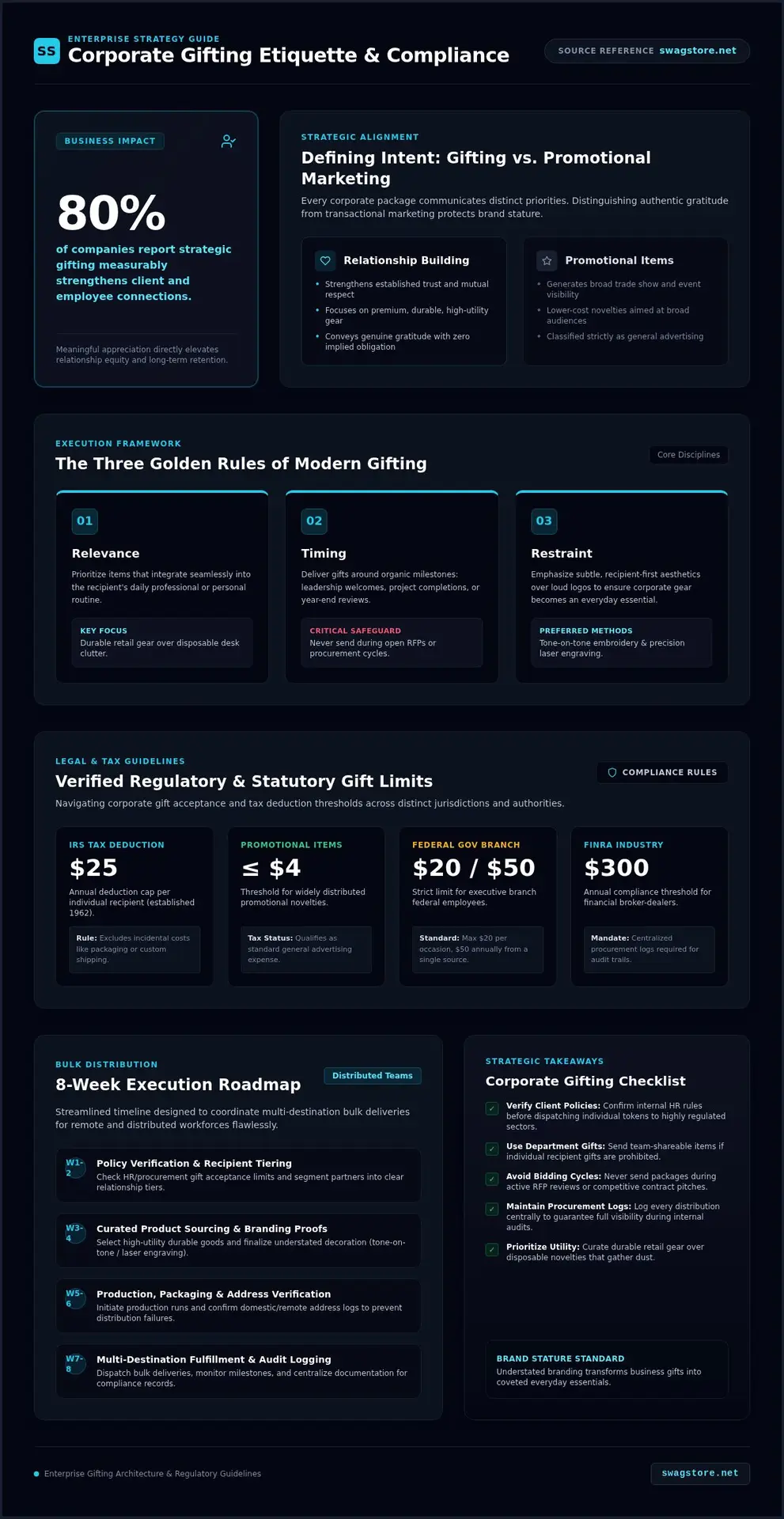
A well-timed gift can cement an invaluable partnership, but an accidental compliance misstep can shred that trust in seconds. Finding the sweet spot between authentic relationship-building and strict regulatory boundaries is why we created this corporate gifting etiquette guide. You already know that meaningful appreciation drives loyalty; 80% of companies report that strategic gifting measurably strengthens client and employee connections. Even so, dreading tax deduction confusion, strict ethics policies, or low-quality merchandise that tarnishes your reputation often freezes teams in their tracks.
You shouldn’t have to choose between compliance peace of mind and memorable brand impact. Here, you’ll master modern corporate gifting etiquette to elevate your professional stature while effortlessly aligning with IRS rules, organizational limits, and refined co-branding standards. We’ll examine verified regulatory thresholds, outline how to curate high-utility items for each recipient tier, and map out seamless bulk distribution strategies that reflect genuine excellence.
Modern corporate gifting etiquette is an intentional strategy of professional appreciation. It turns routine business interactions into lasting partnerships. When executed thoughtfully, a gift acts as an enduring symbol of mutual respect and shared success. When mishandled, it risks feeling hollow or self-serving. This corporate gifting etiquette guide establishes how to build lasting goodwill without compromising professional standards.
The line between authentic appreciation and transactional pressure is sharp. Genuine gratitude asks for nothing in return. If an exchange implies a quid pro quo, or coincides suspiciously with pending contract renewals, recipients quickly categorize the gesture alongside unethical and illegal gifts. Recipient perception dictates your impact. If they feel valued as an essential partner, relationship equity rises. If they feel targeted by a sales pitch disguised as a present, brand trust dissolves.
Every corporate package sends a distinct message about your priorities. While low-cost promotional items excel at generating broad trade show visibility, relationship-driven gifting serves a completely different function. Mass marketing novelties seek quick attention from strangers. Executive gifting strengthens trust with people who already know your organization. Delivering high-utility, premium merchandise shows that you hold the recipient’s partnership in high regard.
Mastering modern corporate gifting etiquette requires executing three core disciplines:
Most traditional advice treats business gifting as simple social etiquette, ignoring the legal boundaries that govern enterprise commerce. In high-stakes environments, goodwill quickly turns into liability if an exchange violates corporate ethics or statutory thresholds. A modern corporate gifting etiquette guide must prioritize regulatory awareness alongside thoughtfulness to protect both the giver and the recipient.
Heavily regulated sectors such as healthcare, defense, and finance often enforce strict limits or blanket bans on corporate tokens. Government entities operate under especially rigorous standards; executive branch employees must adhere to strict federal guidelines on gifts that cap acceptable items at $20 per occasion and $50 annually from a single source. Before dispatching any package, contact the recipient’s human resources or procurement department to confirm their internal policy. If individual gifts are prohibited, consider team-shareable items delivered to an entire department instead.
Tax compliance requires careful categorization. The IRS caps business gift deductions at $25 per individual per calendar year, a threshold established in 1962 that excludes incidental costs such as packaging or custom shipping. While this limits your tax deduction, it isn’t an absolute ceiling on what you can spend to celebrate a partnership. Widely distributed promotional items costing $4 or less qualify as general advertising expenses. Meanwhile, specialized industries like financial broker-dealers follow higher compliance limits, such as the $300 annual threshold under FINRA rules. Maintain centralized procurement logs to ensure full visibility during internal audits.
Timing can transform an innocent gesture into an apparent ethics violation. Presenting luxury merchandise during open RFP submissions, pitch reviews, or contract renewals risks severe scrutiny under anti-bribery statutes and the Foreign Corrupt Practices Act (FCPA). Establish strict sales blackout periods: pause all outbound gifts to prospects and active accounts sixty days before and during formal procurement evaluations.
Planning bulk shipments that respect compliance caps requires careful coordination. Partnering with a dedicated bulk provider like SwagStore.NET helps your team curate high-perceived-value merchandise packages that effortlessly align with enterprise compliance rules.
A successful corporate gift hinges on choosing an object that fits the relationship tier. Generic trinkets end up forgotten in desk drawers, damaging your brand equity. In contrast, thoughtful curation signals true respect for the partnership. Relying on an actionable corporate gifting etiquette guide helps teams align high-utility lifestyle goods with specific audience tiers while honoring established corporate gifting best practices. To discover high-retention product ideas that recipients actually keep, explore curated cool promotional items designed for long-term daily use.
High-stakes partnerships require gifts that reflect executive prestige. Outfit top-tier clients with durable, retail-recognized items that deliver constant daily function. Premium double-wall drinkware like branded YETI and Stanley tumblers commands instant respect in boardrooms and home offices. Pair these vessels with laser engraved metal pens or custom branded Moleskine notebooks to provide dependable tactile value during high-level strategy meetings.
Celebrating internal milestones calls for gifts that build authentic workplace pride. Welcoming new team members with curated custom employee onboarding kits creates immediate belonging from day one. When rewarding tenure or project milestones, offer embroidered Nike and Under Armour polos. Quality apparel pairs professional polish with athletic performance, making staff feel valued whether they’re on-site or working remotely.
Certain product categories present avoidable compliance risks or personal awkwardness. Steer clear of these missteps:
Swap out volatile novelties for universally appreciated tech essentials. Reliable custom logo power banks and tech accessories eliminate guesswork, providing everyday utility across every recipient tier.
A gift succeeds or fails based on visual execution. While classic etiquette manuals advocate omitting corporate marks entirely, modern enterprises understand that subtle, artistic decoration reinforces partnership value without cheapening the gesture. The cornerstone principle of this corporate gifting etiquette guide is simple: honor the recipient’s daily lifestyle above brand visibility. When aesthetics take priority, recipients reach for your gift daily instead of leaving it packed away.
Restraint transforms simple merchandise into an executive keepsake. Avoid vibrant, billboard-sized graphics that make clients feel like unpaid advertisements. Instead, choose understated decoration techniques like matte tone-on-tone screen printing, subtle tonal embroidery, or refined laser engraving on metal finishes. Position logos on secondary surfaces, such as the lower hip hem of a polo, the base band of drinkware, or the rear blind-deboss of a notebook. Exploring strategies for monogrammed gifts reveals how subtle individual details turn bulk items into cherished professional possessions.
Presentation establishes half of a gift’s emotional resonance before the recipient touches the primary item. Brown utility mailers and plastic poly bags instantly signal low-cost marketing swag. Replace mundane packaging with intentional, tactile presentation layers:
Elevating your brand image requires thoughtful restraint, premium retail craftsmanship, and flawless fulfillment. Partner with SwagStore.NET to build custom executive gift kits that balance sophisticated branding with unforgettable unboxing presentation.
Flawless logistical execution separates an impressive campaign from a chaotic headache. Sourcing premium merchandise represents only half the challenge; coordinating production schedules, multi-destination drop shipping, and timely arrival completes the experience. This corporate gifting etiquette guide outlines a dependable eight-week operational roadmap to guarantee your bulk campaigns arrive on time and in pristine condition.
Initiate your gifting campaign at least eight weeks before your target delivery date. Q4 holiday demand strains supply chains nationwide, making mid-October the ideal deadline to lock in bulk orders. Early commitments secure high-demand stock like brand-name tumblers, jackets, and curated onboarding essentials before seasonal shortages occur. Building a two-week buffer into your production schedule allows ample time for digital art proofs and physical pre-production samples of custom screen printed t-shirts or custom logo power banks, eliminating last-minute rush fees.
Delivering packages across hybrid workforces requires thoughtful logistics and strict privacy standards. Never request personal residential addresses via public email threads or shared spreadsheets. Instead, follow these professional distribution protocols:
The gifting journey doesn’t end at delivery. Have account managers send a brief, warm note a few days after arrival simply asking if the package was enjoyed. Never attach an invoice, contract renewal, or sales pitch to this check-in; let the goodwill breathe on its own. Keep a small buffer of extra gifts on hand to replace items lost or damaged in transit without hesitation. Finally, record recipient sizing and preferences in your CRM so your team can execute subsequent gifting initiatives with even greater personal relevance.
Modern business relationships thrive when authentic appreciation meets strict compliance. As detailed throughout this corporate gifting etiquette guide, lasting impact comes from balancing regulatory thresholds with premium, high-utility merchandise your partners actually use. Choosing subtle decoration over loud advertising and structuring multi-destination bulk shipments well in advance protects your professional integrity while deepening critical business connections.
Executing a memorable campaign across distributed workforces doesn’t have to derail your internal schedule. Design your custom corporate gift kits with SwagStore.NET to access retail favorites like YETI, Stanley, Nike, and Moleskine. We deliver expert bulk customization through precise laser engraving and tonal embroidery, supported by seamless nationwide fulfillment for enterprise teams. Start curating meaningful packages that protect compliance, delight recipients, and elevate your brand stature with effortless distinction.
Acceptable limits depend entirely on the recipient’s industry and relationship tier rather than a single universal figure. While standard business gifting budgets typically adjust to relationship value, statutory rules dictate hard boundaries. Federal executive employees cannot accept items exceeding $20 per occasion, while FINRA caps broker-dealer gifts at $300 per person annually. Always confirm internal compliance thresholds with the recipient’s procurement department before purchasing bulk gifts.
Yes, provided you apply your branding with aesthetic restraint rather than aggressive sales promotion. Modern corporate gifting etiquette guide practices recommend subtle decoration techniques like tone-on-tone embroidery, debossing, or miniature laser engraving positioned in secondary spots. Loud, oversized branding makes gifts feel like cheap advertisements, whereas quiet placement transforms quality retail products into items recipients proudly carry everywhere.
Mid-year milestones, employee onboarding dates, and major project completions provide exceptional gifting opportunities outside the crowded December rush. Sending packages during late summer, autumn re-engagement pushes, or company anniversaries guarantees your gesture gets undivided attention. Off-cycle gifting prevents your package from disappearing beneath a mountain of holiday parcels, ensuring your gratitude stands out vividly to clients and staff alike.
No, delivering gifts during active deals, open pitches, or RFP processes violates essential ethical standards. Even an innocent token sent during active procurement reviews risks scrutiny as an improper inducement or potential bribe under corporate compliance rules. Establish a strict blackout policy across your sales team that pauses all outbound gifts until negotiations conclude and contracts are fully executed.
Distributed teams require privacy-conscious logistics and reliable nationwide drop-shipping. Collect employee home addresses through secure, encrypted submission links rather than shared team documents to protect personal data. Consolidate your inventory with a bulk fulfillment partner who manages individual parcel assembly and direct doorstep delivery. Automated tracking alerts ensure recipients know when their packages arrive, building anticipation across every home office.
Respond immediately with grace and complete professional understanding. Never express frustration or make the contact feel awkward for complying with strict corporate governance rules. Thank them warmly for their transparency, update your CRM database to prevent future shipments, and pivot your appreciation toward compliant gestures like a charitable donation made in their honor or a heartfelt letter of gratitude.
Business gifts are deductible, but federal regulations impose strict ceilings. Under IRS rules, businesses can deduct only up to $25 per individual recipient each tax year, a limit that excludes incidental costs like engraving, gift wrap, and shipping. Widely distributed promotional items costing $4 or less qualify separately as general advertising expenses. Review our corporate gifting etiquette guide and consult your tax advisor to categorize expenses accurately.