


Swag can be one part of a sense of belonging, alongside the broader ways employees are treated. Creating a sense of belonging with swag works best when useful, thoughtful items reinforce how employees are welcomed, included, and recognized. Choose merchandise that reflects your culture and gives people a tangible connection to shared moments, whether they work in the office or remotely.
It’s natural to see a welcome gift or team T-shirt as a simple perk. The opportunity is to make each item feel considered, relevant, and connected to the employee experience, rather than like a generic giveaway. Shape your swag program around onboarding, events, and milestones, and choose practical items that support team identity and organizational pride. Swag works best alongside the everyday actions that help people feel heard, supported, and valued.
Branded merchandise can connect company moments with a shared identity. Welcome gifts, event items, and milestone recognition give employees tangible markers of participation.
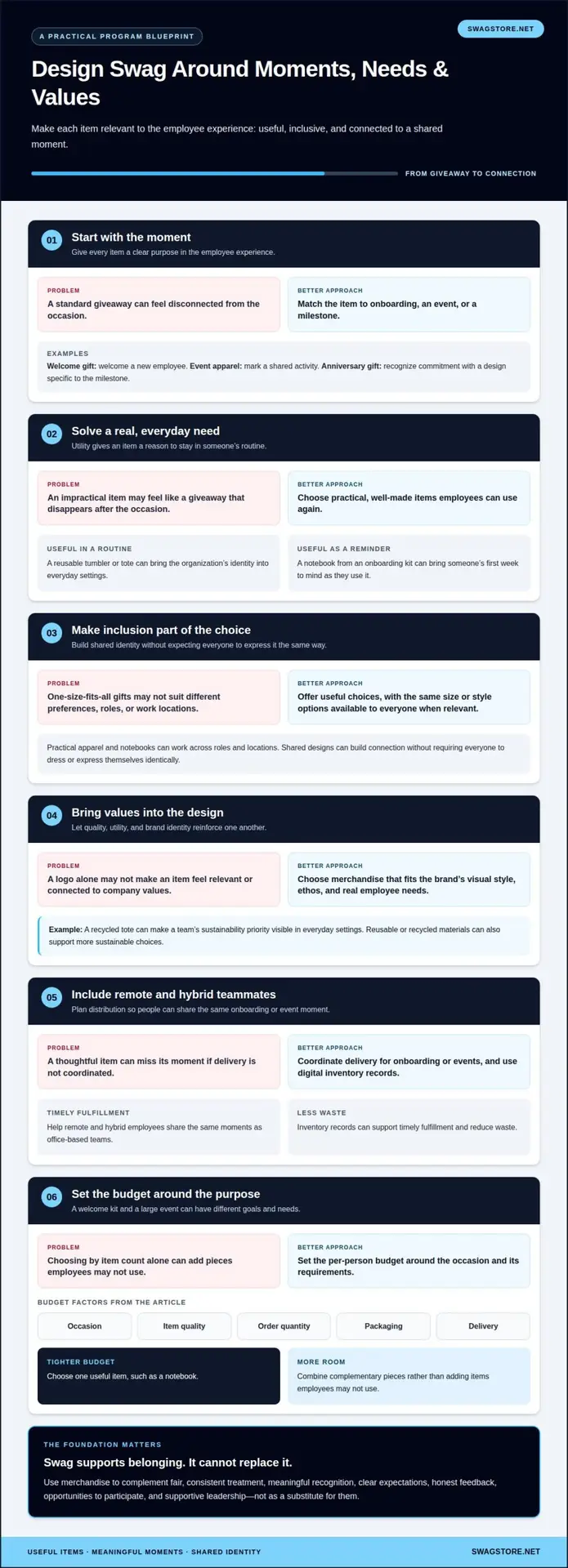
Everyday-use swag brings a company’s brand into ordinary routines. A reusable tumbler on a desk or a tote carried to work keeps an organization’s identity visible beyond a single event. When an item meets a real need, employees have a reason to use it again. Each use becomes a relevant reminder, rather than a giveaway that disappears after the occasion.
A tangible branded item gives employees a physical cue that can bring a company or shared moment to mind. A notebook from an onboarding kit, for example, may remind a new hire of their first week whenever they use it. Unlike a digital message that leaves the screen, a useful object can stay in someone’s workspace or routine. For teams creating a sense of belonging with swag, these reminders can connect everyday tasks with a shared organizational identity.
Quality and utility show how a company’s brand identity translates into the employee experience. A well-made item that meets daily needs can reflect care; an impractical giveaway may feel disconnected from company values. Choose merchandise that fits the brand’s visual style and ethos. For a team that values sustainability, a recycled tote can make that priority visible in everyday settings.
Give each item a clear purpose. An onboarding gift can welcome a new employee, while event apparel can help a team mark a shared activity. A work anniversary gift can recognize commitment when its design reflects the milestone instead of repeating a standard giveaway. These choices make creating a sense of belonging with swag more intentional by connecting each item to a specific moment.
Limited-edition event items can make a gathering distinctive and give attendees a keepsake tied to the experience. When employees value and use the item, that positive association may support brand loyalty. Keep the design useful and true to the organization, so exclusivity enhances the occasion rather than becoming the item’s only appeal.
Start with the connection you want each item to support. A clear program links merchandise to shared experiences, employee needs, and company values.
Swag connects people to an organization when it represents a shared identity they can use or display. For employees, matching apparel at a team event can make participation visible; on campus, a welcome item can help students feel connected to their university, faculty, and peers. Choose inclusive items people can use across roles and locations, such as practical apparel or notebooks.
To support community and inclusion, offer useful choices that suit different preferences instead of relying on one-size-fits-all gifts. Shared designs can build connection without requiring everyone to dress or express themselves identically.
An item linked to a meaningful event can become a physical reminder of the people and experience behind it. A surprise keepsake offered near the end of a company gathering, for example, can help anchor a positive memory. Make the design specific to the occasion, then connect it to a shared story or achievement. That emotional relevance gives the item meaning beyond its logo.
A thoughtful distribution strategy helps remote and hybrid employees share the same moments as office-based teams. Coordinate delivery so items arrive for onboarding or an event, and use digital inventory records to support timely fulfillment and reduce waste. Offer a choice of sizes or styles when relevant, with the same options available to everyone. For more sustainable choices, consider reusable or recycled materials and prioritize suppliers that communicate sourcing practices. Connecting a team item to a community initiative can also make its purpose visible.
Set the per-person budget around the occasion, item quality, order quantity, packaging, and delivery needs. There’s no single allocation that suits every team: a welcome kit and a large event have different goals. With a tighter budget, choose one useful item, such as a notebook. With more room, combine complementary pieces rather than adding items employees may not use.
Compare options by everyday usefulness and fit with company values, not just item count. Explore thoughtful team swag options as you shape a program that feels relevant across roles and work locations.
Thoughtful swag can make company values visible in daily work. Its influence is strongest when it supports a culture employees already experience through fair, consistent treatment.
Swag supports the employee experience when it reflects the behaviors and values behind company culture. A recognition gift, for example, can reinforce appreciation when it accompanies specific feedback about someone’s contribution. Practical items can also help employees express a shared identity at work or in public. People feel valued through meaningful recognition, support after setbacks, and the ability to speak up safely.
A branded item cannot replace those conditions. Use it to complement recognition and participation, not as a substitute for clear expectations, honest feedback, or access to growth.
Culture-aligned swag translates organizational values into visible, usable choices. If a company emphasizes sustainability, a reusable item can support that message; if it values collaboration, team apparel for a shared event can signal collective identity. The design should feel relevant to employees’ varied preferences, rather than implying one style represents everyone. Offering a choice can preserve shared branding while leaving room for individual expression.
That distinction helps keep a symbol of belonging from becoming a test of conformity. Employees should be able to participate without wearing or displaying an item publicly.
Measure whether a swag program supports belonging by pairing short employee pulse questions with engagement indicators. Ask whether people feel recognized, included, and comfortable speaking up, then review responses alongside participation in relevant events. Compare patterns over time and across teams to identify where experiences differ.
The main risks are treating merchandise as a fix for deeper workplace problems, choosing items that exclude some employees, and creating waste through unwanted giveaways. A single apparel style may not suit everyone, while a gift without meaningful recognition can feel performative. Connect each item to a real employee need, and keep listening to the people the program is meant to include.
Employee swag supports belonging when it gives people a shared symbol without making everyone express themselves identically. A team shirt worn at a volunteer day, for example, can connect colleagues through a common experience. The item serves as a reminder of participation, while its design makes organizational identity visible. That meaning comes from the people and activity behind the merchandise, not the logo alone.
Remote employees can miss informal cultural touchpoints, such as hallway conversations or seeing colleagues’ team gear. A welcome item for a remote hire creates a tangible connection to the organization, even before an in-person gathering. A coordinated onboarding experience can also help new employees recognize shared values across locations. The key is inclusion: remote and office-based staff should have access to the same moments and symbols.
Swag used in public can act as social proof when employees choose to wear or carry it. A branded tote at a community event, for instance, makes organizational pride visible beyond the workplace. That visibility is meaningful when the item reflects a positive employee experience. Employees should feel free to use it, though; public display should remain an invitation, not an expectation tied to loyalty.
Build pride around participation. Invite employees to suggest designs, recognize a team achievement with a shared item, or connect event merchandise to a cause colleagues support. These strategies give employees a role in shaping what the symbol represents. A useful onboarding gift kit can also help a new hire feel included from the start, especially when it comes with a personal welcome and clear introductions to the team.
Keep the takeaway simple: merchandise can make belonging visible, but everyday respect gives it substance. Pair shared items with listening, recognition, and opportunities to contribute. To bring that connection into your employee experience, plan thoughtful employee swag around the moments your team values.
SwagStore.NET helps organizations turn employee experience goals into cohesive, custom-branded merchandise programs. Whether you’re welcoming new hires, bringing colleagues together at an event, or recognizing team identity, choose items suited to the moment and useful beyond it.
Options include Custom Screen Printed T-Shirts, Embroidered Nike and Under Armour Polos, Branded YETI and Stanley Tumblers, Custom Logo Power Banks and Tech Accessories, and Custom Branded Moleskine Notebooks. Select merchandise that reflects your organization’s culture and gives employees a practical way to carry its identity into their workday. A consistent visual direction can help different items feel like part of one thoughtful program.
Consider your audience, occasion, and intended use when shaping a coordinated order. Contact SwagStore.NET to discuss custom-branded merchandise for your employee program.
Let your swag program evolve alongside your people. As teams change, invite employees to share what feels useful, representative, and meaningful to them. Their perspectives can guide future choices and help ensure the program reflects the culture you’re building, not just the brand you’re displaying. Creating a sense of belonging with swag means making room for that ongoing dialogue.
Start with one upcoming moment, such as welcoming new colleagues or bringing a distributed team together. Decide what you want employees to feel and remember, then choose an item that supports that experience. Keep the purpose clear, make participation comfortable, and use feedback to shape what comes next. The most resonant programs grow through attention and shared ownership.
Ready to develop an idea for your team? Contact SwagStore.NET about your swag program. A considered next step can help turn your organization’s values into an experience employees are proud to share.
Swag is branded merchandise an organization gives to employees, new hires, event attendees, clients, or prospects. It can include apparel, drinkware, notebooks, bags, and tech accessories. The term covers both practical everyday items and keepsakes connected to a specific occasion. In a workplace program, swag may welcome a new colleague or give event participants a tangible reminder of the organization.
Company swag can help employees feel included by giving them a shared way to participate in workplace moments. For example, invite a project team to choose between a few design options before ordering apparel for a launch. This gives employees input while the shared item marks their contribution. Keep wearing or displaying it optional, so participation feels welcoming rather than like a test of loyalty.
Organizations can choose inclusive swag by gathering employee perspectives before finalizing designs, colors, and item choices. Offer a small range of options instead of assuming one visual style suits everyone. Invite feedback from people with different roles and backgrounds, and consider whether wording or imagery could carry unintended meanings. A review process can help the final selection feel relevant without asking any employee to represent an entire culture.
There’s no single per-person budget that suits every team. Set it according to the occasion, item quality, order quantity, packaging, and delivery needs. With a tighter budget, choose one useful item.