
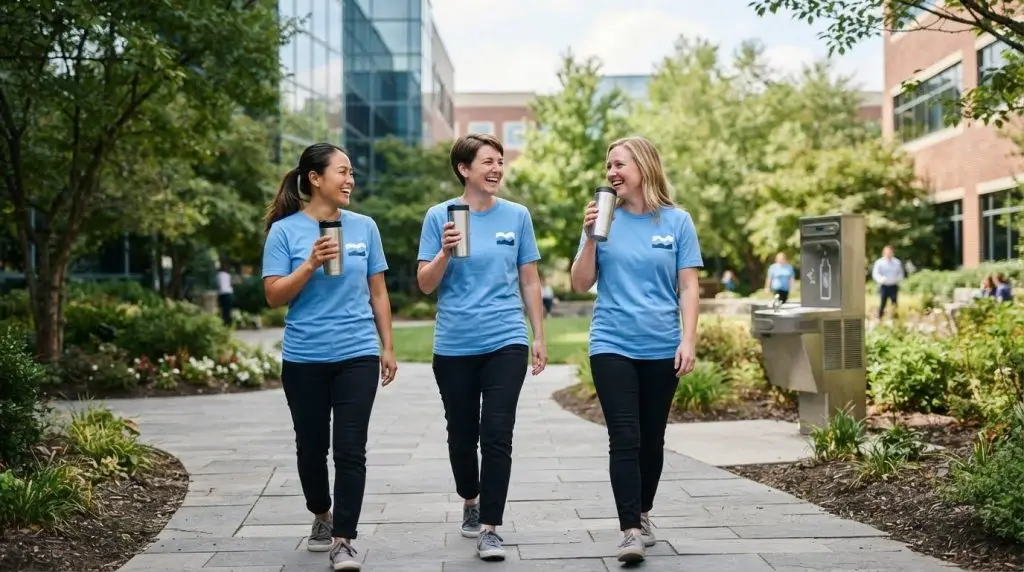
The wellness swag employees keep is the kind that fits a real routine, not simply the one with the largest logo. Branded gear for corporate wellness programs has a stronger purpose when it reflects employees’ priorities, abilities, and work settings. For onboarding, pair 2 to 3 useful wellness items with branded apparel instead of filling a kit with unrelated giveaways.
A giveaway can seem like a smart wellness investment, yet end up unused. Branded gear for corporate wellness programs makes a difference when employees find it relevant and practical. Choose items that fit everyday habits, and focus the budget on usefulness rather than volume.
This guide explains how to choose wellness merchandise for a varied workforce, plan orders around program milestones, and include useful items in onboarding. It also covers budgeting and ways to create a cohesive employee experience.
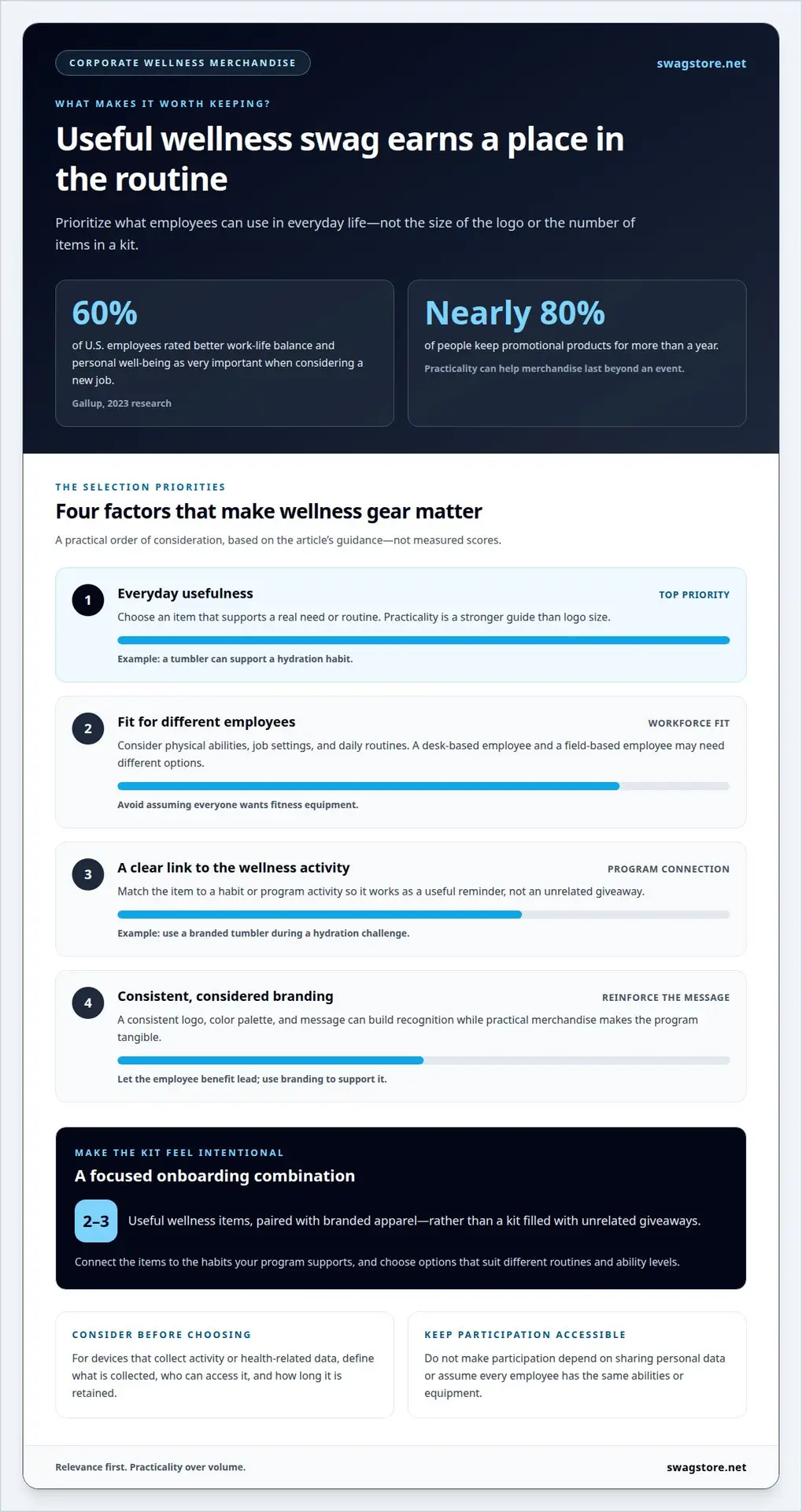
Branded gear for corporate wellness programs earns a place in daily routines when it supports a real employee need. According to Gallup’s 2023 research, 60% of U.S. employees rated better work-life balance and personal well-being as very important when considering a new job. That makes relevance a stronger selection guide than logo size. A useful tumbler can support a hydration habit, while a wearable item can make a workplace wellness challenge more visible.
Nearly 80% of people keep promotional products for more than a year. Practicality helps explain why wellness merchandise can outlast generic giveaways: employees can use it at work, during a commute, or at home. Connect each item to a program activity, such as using a branded tumbler during a hydration challenge. When a product reminds employees of a useful habit, the brand stays present without interrupting their day.
Set the budget by matching item choices to the program’s purpose and workforce. Select products that fit different physical abilities, job settings, and daily routines, rather than assuming every employee wants fitness equipment. For onboarding, pair 2 to 3 wellness items with branded apparel, then keep the kit focused on the habits the program supports. A desk-based employee and a field-based employee may need different practical options.
In the U.S., tax treatment can depend on the merchandise’s purpose, value, and how the employer records it. Include finance in launch planning so your organization can assess the specific items and their treatment.
For sustainable branded wellness products, look for U.S. promotional-merchandise vendors that identify materials and recycled content clearly. Compare those details against your program’s needs, then select items employees can realistically use.
Wellness devices that collect activity or health-related data can raise privacy concerns. Before including one, define what information it collects, who can access it, and how long it is retained. Keep participation independent of sharing personal data.
Align the program’s promise with employee priorities. Choose products and communications that reinforce the intended benefit. A consistent logo, color palette, and message can build recognition, while practical merchandise makes the program tangible.
Plan backward from the launch, allowing time for design, digital proofs, production, packing, and distribution. The schedule depends on order quantity, decoration method, product choice, and delivery destinations. A single-site rollout has fewer distribution steps than one serving remote employees. Set the launch date first, then establish a decision deadline for each stage.
A common mistake is choosing products before defining the activity. A hydration initiative calls for different merchandise than a movement challenge, and neither should assume all employees have the same abilities. Also account for storage and shipping: a bulk shipment to one office may not reach remote staff. Map recipients, work settings, and distribution points before selecting items.
Minimums and production timelines depend on the product, customization, and quantity. A bulk order can simplify a coordinated launch, while staged distribution may suit a program running over time. Whichever approach you choose, approve artwork and digital proofs early. Check that the logo is legible on the selected material and that colors support a consistent campaign.
Branded gear for corporate wellness programs can reinforce recruitment and retention when it makes the organization’s wellness culture visible. It can also support productivity by linking a practical reminder to a program employees can join. For example, remote and in-office teams could receive the same campaign message, with distribution arranged through office pickup or direct delivery. Keep participation accessible rather than tying recognition to one physical ability.
Branding options can include a company logo, colors, or a short wellness message; placement and decoration depend on the product’s material and imprint area. For a cohesive rollout, review a digital proof for every item before approving production. Explore coordinated branded merchandise as you map products to your launch plan.
Yes. Include promotional fitness gear in onboarding when it supports a clear activity, such as walking breaks or a team challenge. A useful item can help new employees join the organization’s wellness culture from the start. Branded gear for corporate wellness programs works best when it suits different routines and ability levels.
Options include branded fitness apparel, activity gear, and mats for stretching or movement breaks. Choose according to how employees work: a mat may suit home-based sessions, while apparel can create a shared look at an in-person event. Keep choices voluntary and adaptable, so activities don’t assume everyone has the same fitness level or equipment.
Connect the kit to a specific wellness challenge rather than handing out merchandise without context. For example, a company-wide step challenge can award a swag box for reaching 10K steps per day. Introduce the rules during onboarding, explain how remote and office-based employees can participate, and use the gear as a reminder of the shared goal. Include options that support movement and mental health without presenting merchandise as a substitute for wellness resources.
Fitness trackers and simpler gear serve different purposes. Trackers can record activity; apparel or a mat can support participation without collecting activity data. Choose according to whether tracking is necessary, and explain clearly how employees can take part.
Popular wellness gifts include branded apparel, tumblers, and practical activity items employees can use after an event. Fitness reimbursement stipends serve a different purpose: they let employees choose qualifying activities or equipment under the employer’s program, while a gift gives everyone a shared item. For example, while promotional gifts provide a shared daily reminder, wellness stipends may allow team members to select larger recovery and relaxation tools from retailers like Elite Massage Chairs. If you offer both, explain the stipend process separately and clarify the onboarding kit’s purpose. Choose branded gear for corporate wellness programs that fits the kit’s goal, so the gift, challenge, and employee benefit feel connected.
Start with the behavior your wellness budget should support, not a product shortlist. For a stretching initiative, fund items that make movement easier during work breaks; for mindfulness, choose tools employees can use during quiet moments. A healthy-lifestyle campaign needs a different mix from a mental-health awareness effort. Connect each purchase to a program goal and remove items that don’t support it.
Build the budget by separating merchandise costs from related expenses. Account for product selection, customization, packaging, and distribution. A kit sent to remote employees has different delivery needs from supplies distributed at one workplace. Compare the full cost per employee, then prioritize usefulness and fit over adding more pieces. Record each cost category to give future launches a clear starting point.
Use tiers to accommodate different employee needs without making the program feel uneven. For example, offer a shared core item alongside optional choices for movement, hydration, or desk-based breaks. A stretch-focused campaign might pair an activity prompt with a mat, while a mindfulness program could include a notebook for reflection or a visual timer from Timeqube to encourage calm pacing. Choose products employees can use beyond the launch, and keep the kit’s colors and messaging consistent.
Set aside budget for proofing and fulfillment before approving the final order. For multi-item kits, review a digital proof for every product because materials and imprint areas differ. Track distribution and employee participation after launch, then use those results to adjust the next budget cycle. If engagement is low, revisit the activity and product match before increasing merchandise spend. Plan your next wellness merchandise budget around a cohesive branded order.
SwagStore.NET helps organizations bring wellness campaigns to life with branded merchandise suited to the program’s purpose. Custom screen printed T-shirts can create a shared look for a movement challenge, while embroidered Nike and Under Armour polos provide another apparel option for workplace events. Branded YETI and Stanley tumblers can complement a hydration initiative, and custom logo power banks and tech accessories can support everyday work routines.
These options suit coordinated launches, refreshed onboarding gifts, and company-wide wellness activities. Match each product to the message, audience, and distribution plan so the merchandise feels connected to the experience, not like an unrelated giveaway.
Contact SwagStore.NET to discuss branded merchandise for your wellness program.
Give your next wellness initiative a clear identity employees can recognize and use. Choose branded gear for corporate wellness programs that reflects the experience you want to create, then keep the design and message consistent throughout the campaign. Custom Screen Printed T-Shirts can create a shared look for group activities, embroidered Nike and Under Armour polos suit a polished workplace setting, and branded YETI and Stanley tumblers can complement a hydration-focused initiative.
Before placing an order, define the campaign’s purpose, audience, and distribution plan. This direction helps make merchandise a considered part of the employee experience, rather than an afterthought. SwagStore.NET can help shape branded merchandise around your wellness plans.
Contact SwagStore.NET about wellness gear and take the next step toward a more cohesive program.
Employees are more likely to keep an item that meets an everyday need. A reusable tumbler, for example, can travel between a desk, commute, and home, while a novelty giveaway may have no clear role after an event. The most useful branded gear for corporate wellness programs connects the item to a real habit, making the message practical rather than purely promotional.
Branded YETI and Stanley tumblers are available for corporate gifting and wellness campaigns. They can support a hydration-focused message or serve as a practical welcome gift. For apparel, choose options suited to the event and workplace dress code. SwagStore.NET also offers embroidered Nike and Under Armour polos for coordinated employee programs.
Yes. Offer a defined set of suitable options and let employees indicate their preferences. For example, a team might choose between apparel for an event and a desk-friendly item. Make the selection window and distribution method clear before the program begins, and don’t imply that each item can be customized individually.
Yes. Use an onboarding gift to introduce a specific wellness resource, such as where to find movement-break guidance or how to join a voluntary activity group. Include a short welcome note that explains the item’s purpose and where to direct program questions. This gives new hires a clear starting point without suggesting a gift replaces workplace wellness support.
Plan for minimums and inventory commitments when ordering branded merchandise. SwagStore.NET specializes in bulk orders and does not offer single-unit customization. To manage surplus, base quantities on the intended employee group, confirm distribution locations, and choose items tied to a scheduled program. This keeps purchasing connected to a real use rather than speculative stock.
Set the order date by working backward from the event or program launch. Allow time to select products, approve artwork, complete production, and deliver items to each distribution point. For a company wellness week, finalize the employee count and delivery plan before approving artwork. Multi-location distribution and design changes add coordination steps, so include them in the schedule.