
A logo should be visible without getting in the way of a clean screen. Custom logo microfiber cloths for tech can be personalized by imprint, artwork, and cloth size, from compact lens cloths to larger screen cleaners. Dye sublimation bonds ink to microfiber with heat to create a permanent design.
It makes sense to weigh appearance against everyday function: a logo that’s too large or textured can affect how the cloth feels on delicate surfaces. This guide explains which imprint approaches and sizes suit phones, screens, and glasses, and how to think about fabric weight for the job. You’ll also learn what influences product availability and delivery, so you can plan a branded tech accessory with a clear idea of the choices and trade-offs.
Catalog breadth helps you compare formats before settling on an order. Current listings include 117 microfiber cloth products, 100 products made of microfiber, and 51 products with full-color imprint. These figures describe overlapping catalog categories, not separate guarantees of stock. A compact lens cloth, a pouch format, and a larger screen cloth serve different distribution needs, so compare dimensions and imprint options before choosing.
Availability and delivery depend on the selected cloth, imprint method, order quantity, artwork preparation, and production schedule. Start by choosing a product format, then provide the required logo artwork and specifications. A 5-by-5-inch cloth, for example, takes less space in a giveaway kit than a 10-by-10-inch cleaning cloth. The chosen format and customization details shape the production plan and estimated arrival.
Minimum order quantities depend on the product and production method. Confirm the requirement for your chosen style before setting your campaign quantity. Larger runs may affect scheduling, and custom orders can require artwork preparation and approval. Allow for these steps when planning around an event or employee kit, rather than considering shipping time alone.
A clear product specification should list cloth dimensions, fabric details, logo placement, imprint method, and intended use. For example, say whether the cloth is for glasses or general microfiber cleaning and whether you need full-color artwork. Treat an antimicrobial treatment as a separate specification, not an assumed feature.
Starting prices depend on cloth size, fabric, imprint, quantity, and production details. To streamline a quote request, prepare your target dimensions, artwork, order quantity, and required delivery date together. This brief helps the production team assess your specifications and provide a quote.
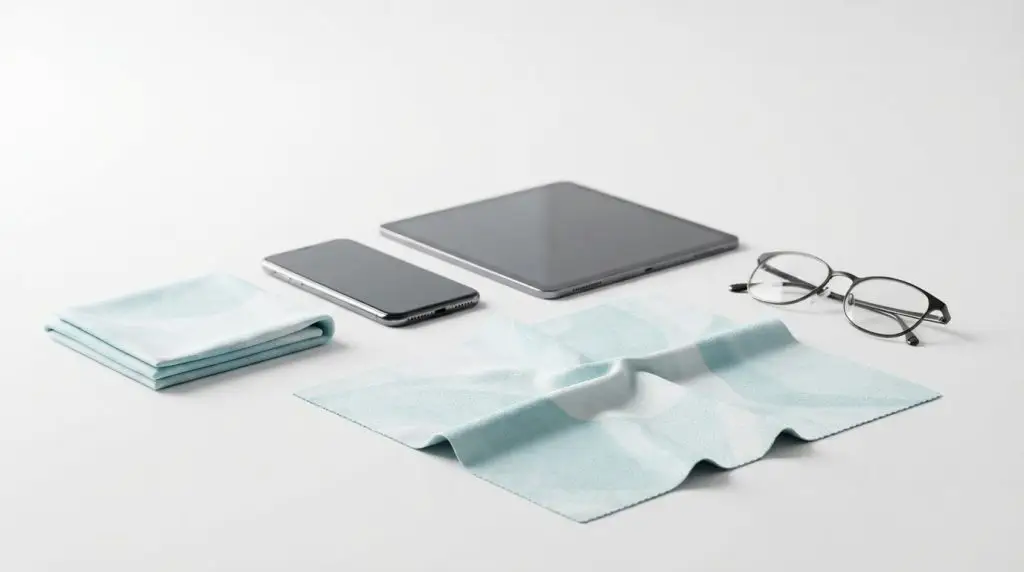
Custom microfiber cloths for electronics include compact lens cloths, screen-cleaning formats, and cloths packaged in pouches. Use a clean cloth for gentle wiping, and follow the device maker’s care instructions for phones, laptops, cameras, monitors, and glasses.
Choose an accessory format that suits how people will carry and use it. Q63872 Microfiber Cloths in Pouch measure 9 by 7 inches, pairing a cloth with a portable pouch. Q101304 Lens Cleaners with Lens Cloth measure 1 by 1.5 by 3.25 inches, with a maximum logo area of 0.75 by 1.25 inches. For a promotional cleaning kit, consider how the pouch, cloth, and screen cleaner work together.
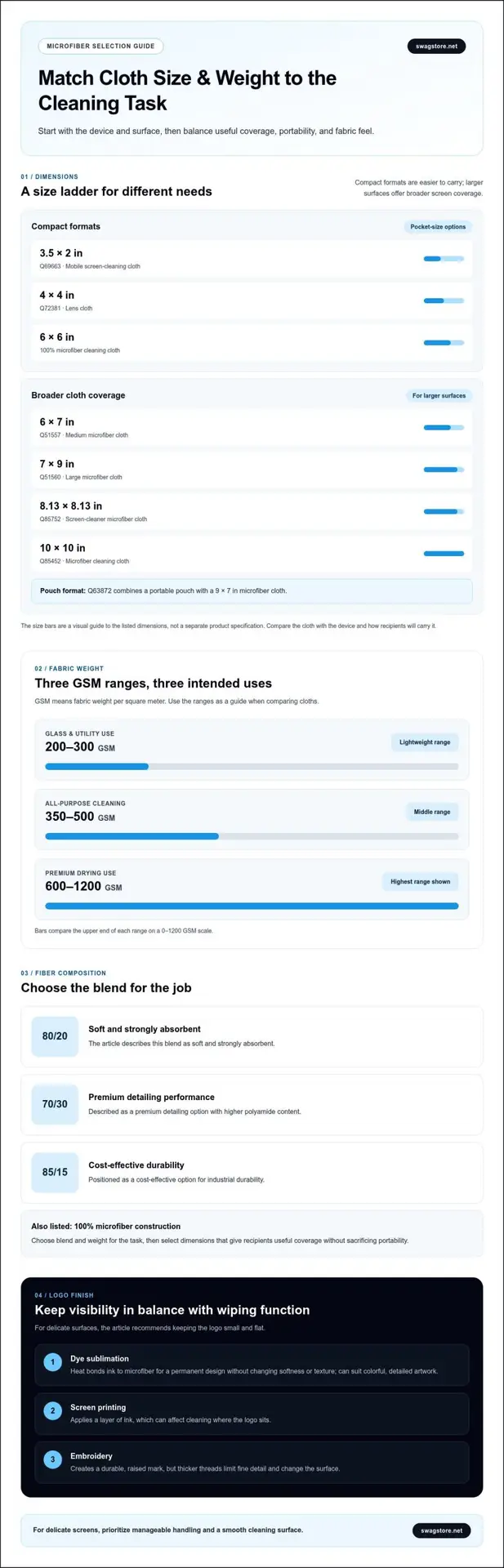
Cloth dimensions affect coverage and portability. Q85752 Screen Cleaner Microfiber Cloths measure 8.13 by 8.13 inches, while Q69663 Microfiber Mobile Screen Cleaning Cloths measure 3.5 by 2 inches. A 6-by-6-inch 100% Microfiber Cleaning Cloth offers another compact format. Compare these styles against the intended device and whether recipients need a pocket-size cloth or broader screen coverage.
For glasses and small phone surfaces, choose a compact cloth that’s easy to handle. A larger format can cover more of a tablet or monitor with each pass. Use a clean microfiber cloth, avoid dragging grit across the surface, and follow the device manufacturer’s cleaning guidance. The cloth is for wiping, not a substitute for product-specific care instructions. To keep displays protected between cleanings, My IPG offers helpful guides on shielding touchscreens from scratches and wear.
Promotional kits can make screen cleaning part of a coordinated tech giveaway. Pair a cloth with a pouch or screen-cleaning accessory, then keep the artwork visible without crowding the usable surface. For a wider campaign, explore promotional tech accessories as a complementary branded option.
Start with the device, then choose a cloth format that fits its surface. Q72381 Lens Cloths measure 4 by 4 inches, while Q51557 Medium Microfiber Cloths measure 6 by 7 inches. Q51560 Large Microfiber Cloths measure 7 by 9 inches. These dimensions give you a practical range, from a compact format for glasses to broader coverage for screens.
For larger cleaning areas, Q85452 Microfiber Cleaning Cloths measure 10 by 10 inches. A square shape offers consistent reach across a monitor, while a compact rectangle can be easier to fold and carry. Shield-shaped cloths provide a distinctive alternative. Choose dimensions around the intended use and storage method, rather than selecting by appearance alone.
Fabric weight adds another selection layer. The guidance recommends 200-300 GSM microfiber towels for glass and utility use, and 350-500 GSM for all-purpose cleaning. For premium drying use, it recommends 600-1200 GSM. GSM describes fabric weight per square meter, so these ranges help compare cloths by intended task. For delicate screens, prioritize manageable handling and a smooth cleaning surface.
Fiber composition also shapes the cloth’s feel and performance. An 80/20 blend is described as soft and strongly absorbent; a 70/30 blend offers premium detailing performance with higher polyamide content. An 85/15 blend is positioned as a cost-effective option for industrial durability. A 100% microfiber construction is another available format. Match blend and weight to the job, then choose a size that gives recipients useful coverage without sacrificing portability.
When planning custom logo microfiber cloths for tech, balance brand visibility with cleaning function. Keep the mark small and flat, especially if recipients will wipe tablets, glasses, or other delicate surfaces. Decide whether the logo should be a discreet signature or a prominent feature before choosing an imprint approach.
Dye sublimation bonds ink to microfiber with heat, creating a permanent design without changing the cloth’s softness or texture. It can suit colorful, detailed artwork. Screen printing applies a layer of ink, which can affect cleaning where the logo sits. Embroidery creates a durable, raised mark, but thicker threads limit fine detail and change the surface. Consider placement carefully, as dense or raised stitching can interfere with wiping delicate surfaces.
For custom logo microfiber cloths for tech, prepare an artwork brief that specifies logo position, imprint method, colors, and intended device. Keep key details clear at the selected size, and leave the main wiping area open when function matters most. A soft fabric tag stitched to the edge can carry blend information or care guidance without covering the cleaning surface.
Wash and care affect both performance and logo appearance. Harsh detergents, hot water, and harmful chemicals can damage a printed logo. A colder, shorter wash cycle can reduce microfiber shedding, according to the U.S. Environmental Protection Agency. Heat and pressure during printing can flatten the cloth temporarily; it fluffs up after laundering. Jacquard knitting offers another design route, incorporating artwork into the fabric during manufacturing without changing performance, softness, or texture.
Choose a method by comparing the artwork’s detail with the cloth’s purpose. A full-color design can prioritize visual impact; a small, flat mark can preserve more uninterrupted wiping area. To develop a coordinated branded technology campaign, plan your tech merchandise.
SwagStore.NET helps businesses build coordinated branded merchandise programs around their campaign goals. If microfiber cloths are one part of a broader tech giveaway, Custom Logo Power Banks and Tech Accessories can extend the theme with useful branded items. For events or employee programs that need more than tech merchandise, Custom Screen Printed T-Shirts, Embroidered Nike and Under Armour Polos, and Branded YETI and Stanley Tumblers offer additional ways to carry a consistent identity across apparel and gifts.
Bring your audience, campaign purpose, and preferred product categories together to plan a cohesive assortment. This is a natural next step when adding screen-cleaning essentials to a wider branded merchandise program. Contact SwagStore.NET to discuss your project.
A useful promotional item can do more than carry a logo. It can connect your brand with the everyday routines of customers, employees, or event attendees. As you plan custom logo microfiber cloths for tech, consider each item’s role in the campaign: a practical giveaway, part of an onboarding kit, or one element of a coordinated merchandise program.
This approach helps align your audience, visual identity, and product choices before production planning. SwagStore.NET offers branded merchandise such as Custom Screen Printed T-Shirts, Embroidered Nike and Under Armour Polos, and Branded YETI and Stanley Tumblers for businesses building a consistent campaign across different items.
Bring your project goals and preferred merchandise direction together, then contact SwagStore.NET about your branded merchandise plans. A clear concept is a strong place to begin.
For glasses and small lenses, choose a compact cloth that’s easy to control; for example, a 4-by-4-inch lens cloth. Glass and utility tasks suit 200-300 GSM, while 350-500 GSM is recommended for all-purpose cleaning. Treat these as selection guides, then consider whether the cloth must fit a pocket, kit pouch, or desk drawer.
Per-unit cost depends on cloth format, fabric, imprint method, quantity, and production details. Larger quantities may affect unit pricing, while complex artwork or special specifications can change a quote. For a useful comparison, use the same dimensions, logo treatment, and order quantity for each option. Pricing is based on the selected specifications, not a universal rate.
Minimum quantities and production timing depend on the selected cloth, customization method, order size, and artwork preparation. Ready-to-use artwork and a standard format follow a different production path from custom specifications. For an event or launch, set the required arrival date first, then plan backward for design approval, production, and shipping.
Common imprint methods include dye sublimation, screen printing, and embroidery. Sublimation bonds ink with the fabric to create a lasting design. Screen printing adds a printed layer, so placement matters on a cleaning surface. Embroidery creates a durable, textured mark but is less suited to fine detail. Match the method to the logo and the cloth’s intended use.
Compare the same specifications across options: fabric blend, dimensions, edge finish, imprint method, artwork placement, and order quantity. Weigh those details against the intended use, such as eyeglass giveaways or larger screen-cleaning kits. A lower unit price alone won’t tell you whether the cloth’s size, surface, or imprint suits your campaign. Evaluate the whole product, not just its logo.
Prepare a clean logo file and include the desired colors, imprint position, and approximate artwork size. Note whether the design includes fine details, gradients, or photographic imagery; experienced print services like Printwell Canada recommend using high-resolution source files to maintain clarity across complex digital graphics and full-color prints. Keep essential text and symbols legible at the intended size, and provide a layout showing how the mark should appear on the finished cloth.