

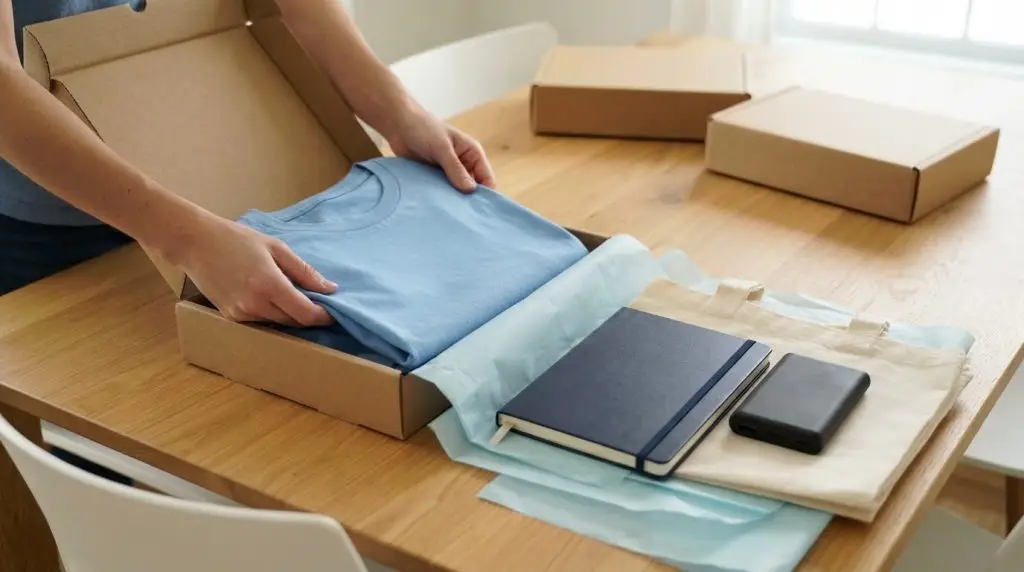
A welcome kit should do more than fill a box. Custom welcome kits for new employees pair practical branded gifts with onboarding resources and a personal message, helping new hires feel prepared and welcomed from day one. The right mix reflects the role, company culture, and how the employee will work.
Thoughtful details make a welcome feel personal. Branded items, a note from a manager or onboarding buddy, and useful gifts such as a notebook or tote can turn a collection of products into a warm first impression. For hybrid and remote teams, a well-planned kit brings that welcome beyond the office.
This guide covers what employee welcome kits can include, how branding and messaging bring them together, and how to tailor gift sets to different teams and work settings. You’ll also find practical ways to make each item useful, cohesive, and memorable.
Packaging sets the tone before a new hire opens the first gift. Use your brand colors, logo, and a consistent visual style across the box, tissue, and insert. A personalized note from the manager or onboarding buddy can make the welcome feel direct. Keep the message specific: name the employee, welcome them to the team, and point to one useful next step.
Build the contents around team identity and everyday use. A custom T-shirt gives new hires a visible way to feel part of the group. A branded notebook and pen can help employees capture names, tasks, and questions during the first week. A branded tumbler adds another practical item they can keep using.
Technology accessories can extend the kit’s usefulness beyond the desk. A branded power bank or other tech accessory can suit employees who move between locations. Match each item to its purpose and role instead of adding merchandise just to fill space. This keeps the welcome cohesive, with branding that connects the separate pieces.
For a memorable unboxing, coordinate the message, packaging, and gifts around one clear idea. A welcome note can explain why the items were selected, while a team roster helps a new hire connect names with faces. Keep the design readable and the contents easy to unpack. Each detail should help new employees feel included and ready to take part.
An employee welcome kit combines onboarding resources with useful, personalized items. A notebook, employee handbook, and link to a digital knowledge platform can give a new hire practical tools and clear next steps.
A new-hire kit should support the first days, not simply mark them with a gift. Include information about the company’s mission, values, expectations, and training materials, then connect each resource to an onboarding step. For example, a team directory can help a new employee identify who to ask about systems, projects, or workplace routines.
Digital onboarding platforms can extend that support beyond printed pages. Add a QR code or clear access instructions for training modules, shared documents, or an internal communication channel. The kit becomes a practical starting point for knowledge-sharing, while the platform keeps information accessible as responsibilities develop.
Generic onboarding kits often miss what makes them useful: role-specific guidance, relevant supplies, and clear links to workplace resources. A notebook can help, but it cannot replace instructions for the employee’s actual tools or team. Review each item against a first-week task, and remove duplicates or filler that distract from the welcome.
For custom new-hire kits in the United States, the best vendor is one that can align branded items and packaging with your onboarding goals. Look for a cohesive approach that accommodates role-relevant contents and clear personalization, rather than choosing gifts in isolation.
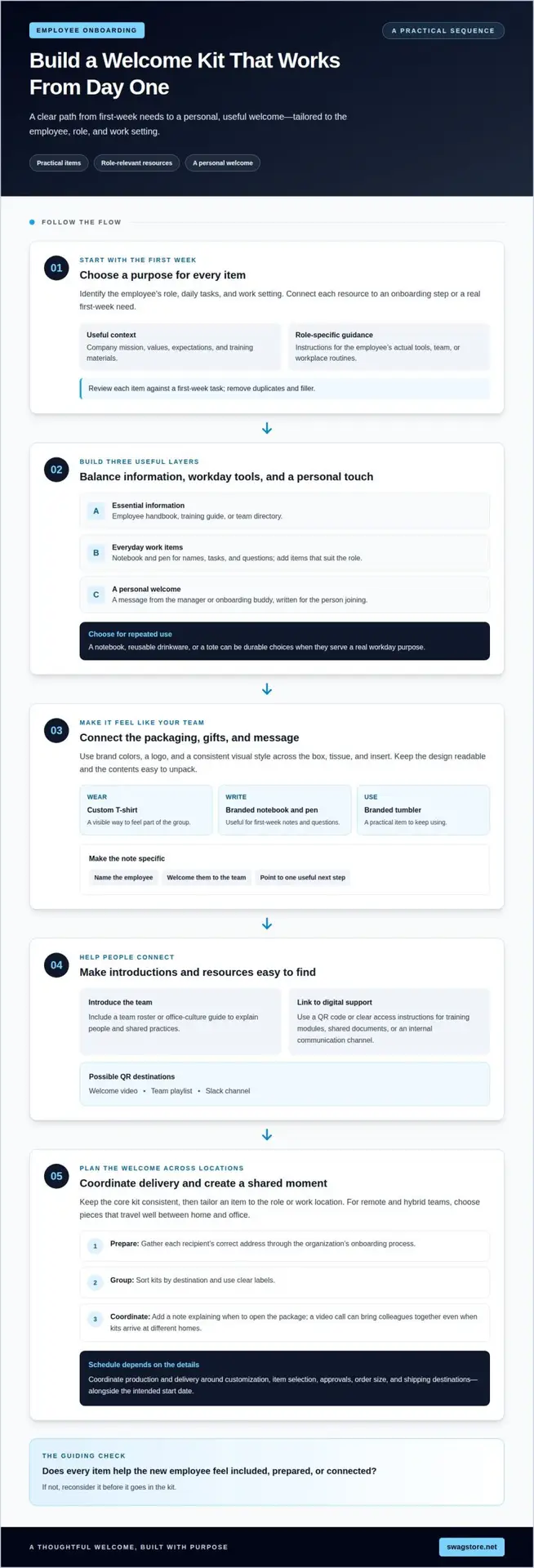
Build a custom kit with three useful layers: essential information, everyday work items, and a personal welcome. An employee handbook or training guide covers key context; a notebook and pen support note-taking; a manager’s message makes the welcome specific to the person joining. Match the contents to the role instead of sending every team the same set.
For practical, lower-waste choices, consider durable items designed for repeated use, such as a notebook, reusable drinkware, or a tote. Choose each item for a real workday purpose, then keep digital resources accessible through a QR code or onboarding platform. This balances useful gifts with less disposable filler.
Remote work can make a first-day welcome feel abstract. A delivered kit adds a physical touchpoint, while a coordinated video call gives the team a shared moment. For example, schedule a video unboxing alongside introductions, then connect each item to a team value or practical first-week task. This creates a consistent welcome across office and home settings.
U.S. tax and HR handling depends on gift type, value, and distribution method. Set a consistent policy, record who receives items, and route questions through HR or payroll. For example, record whether a gift goes to every new hire or only a particular group. Avoid presenting one tax treatment as applying to every organization.
Choose welcome kit items according to each employee’s work setting and daily tasks. A remote employee may use a notebook, branded drinkware, or a power bank; an in-office hire might appreciate the same items alongside desk supplies. For hybrid teams, select practical pieces that travel between home and office. Keep the core kit consistent, then tailor an item to the role or work location.
Shipping needs shape the delivery experience. Gather each recipient’s correct address through the organization’s onboarding process, and group kits by destination before fulfillment. For distributed hires, clear labels and a note explaining when to open the package can help coordinate a shared welcome. A video call can bring colleagues together even when kits arrive at different homes.
Technology items can support remote work while reinforcing workplace culture. A branded power bank or another useful tech accessory may suit employees who move between locations. Pair it with a short card explaining how the organization’s values show up in everyday work, such as collaboration across teams. Plan production and delivery around customization, item selection, approvals, order size, and shipping destinations. These factors shape the schedule, so coordinate them with the intended start date.
A strong gift set combines useful items into one coordinated first-day moment. Start with a practical anchor, such as a notebook, pen, or tote, then add a small detail that expresses appreciation. For example, a welcome note can explain how the notebook supports a new hire’s first-week planning. The goal is a thoughtful set, not a box filled to capacity.
Build around how employees will use each item. An office-based hire might value stationery for meetings, while a remote employee may appreciate a coffee delivery credit or digital experience. For a hybrid team, choose items that move easily between home and office. This approach helps hires feel considered without creating separate, disconnected gift programs.
Corporate gift sets work best when every item serves a clear purpose and fits the organization’s culture. Choose a consistent base for all new hires, then tailor one item to the employee’s role or location. A customer-facing employee might use a different accessory than someone setting up a home workspace. Keep the packaging and message cohesive so the set feels curated rather than assembled from unrelated products.
Think through the unboxing as part of the gift. Place the welcome note where it appears first, arrange the practical items together, and make any digital details easy to find. If remote hires receive kits at home, a coffee credit can pair with a scheduled team introduction. For a polished, coordinated employee welcome, create a thoughtful welcome gift set that connects useful items with your workplace identity.
SwagStore.NET creates employee onboarding gift kits with practical, custom-branded merchandise for organizations ordering in bulk. Choose this approach when you want a coordinated welcome for a group of new hires, with items that connect workplace identity to everyday use.
Build a useful mix with Custom Screen Printed T-Shirts, Embroidered Nike and Under Armour Polos, or Branded YETI and Stanley Tumblers. Apparel makes team identity visible, while drinkware adds a functional touch for office, home, or hybrid workdays. Choose pieces that suit your team’s culture and pair them with a message that welcomes employees by name.
Share the intended audience, the items that fit your onboarding goals, and the brand direction you want the kit to express. Those choices create a clear starting point for a cohesive gift set. To discuss employee welcome kits for your team, contact SwagStore.NET.
Turn your onboarding plan into a clear creative brief: decide what employees should feel, what they need for their first days, and which details express your workplace identity. Then shape custom welcome kits for new employees around that intention, rather than choosing items simply because they carry a logo. A cohesive set can make the first welcome feel like the beginning of a thoughtful employee experience.
SwagStore.NET offers Custom Screen Printed T-Shirts, Embroidered Nike and Under Armour Polos, and Branded YETI and Stanley Tumblers for bulk orders. Choose pieces that fit your team’s style and needs, then bring the direction together in a welcome kit. Share the kind of welcome you want new hires to remember and the branded items that support it.
Contact SwagStore.NET about welcome kits to start shaping a welcome that feels purposeful, personal, and ready for your team.
A custom onboarding kit is a coordinated set of work resources and welcome items selected for an organization or employee group. It is practical as well as symbolic: it can orient new hires while giving them useful tools for starting work. For example, a kit might pair a role-specific checklist with a notebook and a message from the hiring manager.
Include items that match the employee’s workday, role, and onboarding plan. A project notebook, pen, reusable tote, or tech accessory can be useful when each has a clear purpose. Consider whether equipment needs to be supplied separately, and avoid suggesting a gift replaces essential tools or training. A short contents card can explain what each item is for.
Companies can personalize a kit through its message, visual identity, and role-specific contents. Use the employee’s preferred name in a welcome note, add team or department details, and apply consistent brand colors or logos to selected items. Keep personal information limited to what is needed for the welcome, and review names and artwork carefully before production.
A practical workflow starts with the audience and purpose, then moves to item selection, artwork, approval, ordering, and assembly. Decide whether every hire receives the same core set or a role-based variation. Prepare the message and branding together, review a proof before production, and assign responsibility for final packing. A written checklist helps keep contents consistent across each batch.
Shipping arrangements vary by project. Kits may go to one workplace for distribution or be prepared for individual delivery to remote employees. Coordinate address collection through an appropriate internal process, limit access to that information, and organize recipient details in a clear fulfillment file. Confirm how kits are grouped, labeled, and handed off before setting the onboarding schedule.
Avoid ordering before finalizing item choices, artwork, quantities, and recipient details. An outdated logo, misspelled name, unsuitable apparel size, or irrelevant item can weaken an otherwise thoughtful welcome. Also consider whether packaging protects the contents during transit and whether digital instructions remain accessible. Assign one person to approve the final contents and recipient list before production begins.