
A welcome kit can make a remote hire feel seen, or leave them wondering why they received another branded item they’ll never use. The best onboarding kit ideas for remote hires start with a simple principle: every item should support a real first-week need or help the new employee feel part of the team.
That takes more thought than adding a logo to a box. Remote employees need a warm welcome, practical day-one support, and a package planned around their start date. A focused selection of useful essentials can do all three, while a pile of generic swag may miss the mark.
In this guide, you’ll learn how to choose a purposeful mix of branded apparel, drinkware, tech accessories, notebooks, and other welcome-kit staples. You’ll also find ways to coordinate the look, collect preferences, and plan a repeatable process. The result is a welcome that feels considered before the first video call and useful long after it.
A remote-hire onboarding kit is a curated welcome package of useful, brand-aligned items chosen to support a new employee’s first days and introduce them to the team’s culture. It’s more than a box of company merchandise. For someone who may not meet colleagues in person right away, it offers a tangible signal that they’re expected, valued, and included.
A kit works best as one part of a thoughtful employee onboarding process, alongside clear communication and role-specific guidance. Choose items that make sense in the employee’s daily routine, not products that simply increase the package’s contents. A strong remote-hire kit pairs practical usefulness with a sense of belonging and a clear fit for the person receiving it.
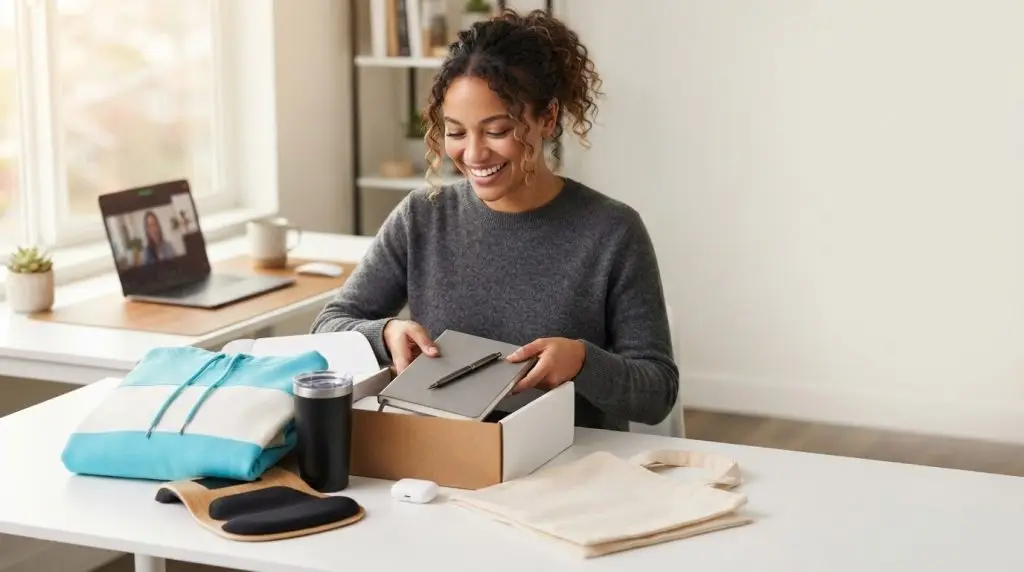
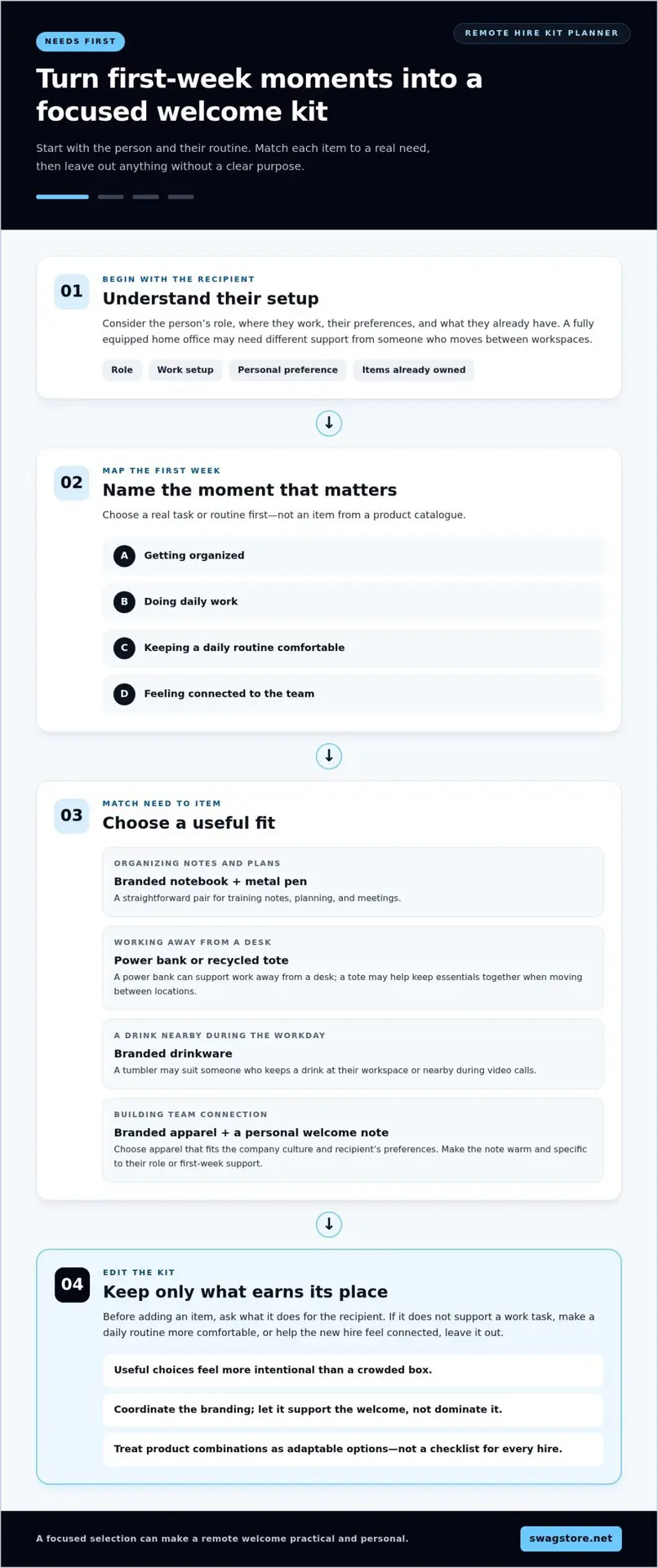
Start with the first week, not the product catalogue. Consider what the new hire will do, where they’ll work, and what would make their early routines easier. Someone taking notes during training may appreciate a branded notebook and metal pen. A tumbler could suit a person who keeps a drink nearby during video calls. Connect each choice to a plausible use instead of assuming every employee needs the same things.
Pair practical items with a personal touch, such as a welcome note that uses the employee’s name and acknowledges their role. Keep the branding coordinated, but let it support the welcome rather than dominate it. A consistent logo, color treatment, or visual style can make the pieces feel thoughtfully selected without turning the package into a walking advertisement.
For a deeper look at planning a branded welcome, explore this custom employee onboarding kits guide. Use it to shape the experience you want a new hire to have, then tailor the choices to their role and work setup.
A crowded box can create more decisions for the recipient, not more value. Novelty items may look lively during unboxing, but if they don’t suit the employee’s habits, they can end up unused. Before adding anything, name its purpose: does it support a work task, make a daily routine more comfortable, or help the new hire feel connected to the team? If there’s no clear answer, leave it out.
Fewer, coordinated choices often feel more intentional because every item has room to matter. A notebook, pen, and useful drinkware can form a coherent workday welcome. A tote may make sense if it fits how the person carries work essentials. These are options, not a checklist to copy for every hire. Review the recipient’s routine and remove anything that doesn’t belong. That simple edit keeps the experience focused and makes the welcome feel personal rather than assembled for volume.
A useful way to choose kit contents is to map them to first-week moments: getting organized, doing daily work, taking breaks, and connecting with the team. Start with the moment, identify the need, then select a product category that fits. A kit item earns its place by solving a real first-week need. These are adaptable combinations, not a checklist every employee must receive.
Someone starting with a fully equipped home office may not need the same setup support as a hire who moves between workspaces. Role, personal preference, and what the employee already has should guide the mix. This needs-first approach makes onboarding kit ideas for remote hires more focused while leaving room for a distinctive branded experience.
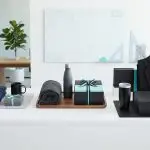
Think about the small tasks that help a new employee settle in: keeping notes together, organizing essentials, or having a power bank available when working away from a desk. A custom logo power bank can support that last need. A branded notebook and metal pen make a straightforward pair for planning and meeting notes. A recycled tote can help keep work essentials together when the employee moves between locations.
Choose only what suits the person’s actual setup. If they work in one dedicated space, the tote may add little. If their role involves moving around, it could be a practical fit. The same test applies to every item: connect it to a workday need before adding it to the kit.
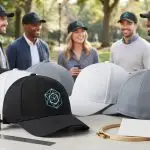
Daily routines offer natural opportunities for a quiet brand presence. Branded drinkware, including YETI or Stanley tumblers, may suit an employee who regularly keeps a drink at their workspace. Branded apparel can also create a shared team identity when it fits the company culture and the recipient’s preferences. A brief welcome message adds a personal note: mention the employee’s role or share who they can turn to during their first week.
Keep the message warm and specific. A few sincere lines can make a coordinated set of items feel chosen for a person, rather than distributed by default.
A tote or reusable drinkware can be a sensible choice if it matches the recipient’s work habits and is likely to be used. Focus on fit rather than making broad claims about environmental impact. Avoid adding products simply to make the package look fuller; prioritize durable-feeling, practical categories that align with real routines. The branded items people keep guide offers more inspiration for choosing merchandise with staying power.
As you shape a consistent mix across recipients, explore branded onboarding merchandise that can bring practical categories together under one visual identity. Then tailor the final selection to the person, not just the package.
A clear purpose makes choosing easier. Before selecting products, decide whether the kit should help someone organize work, build a connection to the team, or do a little of both. The comparison below offers starting points, not fixed bundles. Categories are options, and each recipient may have different preferences or already own similar items.
Work-ready kit
Use case: Support everyday planning and desk routines.
Product categories: Branded notebook, metal pen, and drinkware. Consider a power bank if a tech accessory suits the role.
Recipient fit: A new hire who takes notes, plans tasks, or wants useful desk essentials.
Connection-focused kit
Use case: Make team identity tangible and personal.
Product categories: Branded apparel or drinkware, paired with a brief welcome note.
Recipient fit: Someone whose preferences and company culture align with wearing or using branded items.
Balanced combination
Use case: Blend workday utility with a warm welcome.
Product categories: A notebook and pen, plus one suitable item such as a tumbler, tote, or apparel choice.
Recipient fit: A team seeking a versatile starting point that can be tailored to each hire.
Build around a familiar work routine. A notebook and metal pen support planning and note-taking, while drinkware can accompany the workday. Add a power bank when a useful tech accessory fits the kit’s purpose, rather than including it simply to add another item. To make distinct categories feel like one considered set, use a limited group of brand colors and a consistent visual style.
Apparel is an option, not a requirement. Some employees enjoy wearing company-branded clothing; others may prefer non-apparel items. If you include a shirt or polo, collect size preferences through the employer’s onboarding process so the selection reflects the recipient rather than an assumption. A short welcome note can connect the chosen items to team culture, explain their purpose, and give the new hire a friendly point of connection.
Choose one core purpose, then remove anything that distracts from it. If the kit is designed for work routines, a novelty item that serves no clear role may weaken the overall impression. Align logo placement and visual treatment across the selected products so the group feels coordinated, not crowded with competing graphics. For a broader framework on matching branded merchandise to business goals, use this promotional items strategy guide.
The strongest onboarding kit ideas for remote hires balance a practical anchor with a personal detail. Treat the combinations above as a starting point, then adapt the categories to the employee’s role, preferences, and daily routine.
A reliable kit process starts well before a new hire’s first day. Build the schedule backward from the start date, allowing time for decisions, recipient details, artwork review, production, and delivery coordination. The exact sequence can vary by project, but assigning an owner to each step helps prevent a finished kit from becoming a last-minute task.
Use the same framework for each hiring group, then adapt the contents to its roles and preferences. Decide who the kit is for, what it should support, and which product categories fit before moving into design. A consistent process keeps choices purposeful, gives reviewers a clear approval point, and makes future cohorts easier to plan.
Keep core branded items consistent across a cohort, then personalize the welcome message and relevant choices. A note can mention the employee’s team or role, while product categories can reflect the work they’ll be doing. This creates a shared visual identity without making every kit feel interchangeable. Use recipient details collected through onboarding to guide choices, and coordinate bulk packaging and delivery as part of the overall plan.
For a distributed team, timing means coordinating internal decisions with the employee’s start date and delivery details. Set milestones with enough room for review and coordination instead of relying on an assumed shipping window. A clear owner can track what’s approved, what details are outstanding, and which steps remain before the kit is ready.
These onboarding kit ideas for remote hires become easier to execute when planning, personalization, and visual approval follow one repeatable workflow. Explore branded kit options to bring your selected categories and coordinated artwork together for your next new-hire group.
A needs-first approach gives your welcome kit a clear purpose. SwagStore.NET provides bulk custom-branded merchandise and employee onboarding gift kits, with categories that can support different first-week routines. Build around what the recipient will use, then bring the selection together with a consistent visual identity.
Choose a focused combination from apparel, drinkware, tech accessories, notebooks, totes, and metal pens. A branded Moleskine notebook and laser-engraved metal pen can suit a role with regular planning or note-taking. A custom logo power bank may fit a kit designed around useful tech accessories, while branded YETI or Stanley drinkware can complement a daily work routine. A recycled tote can bring practical items together, and apparel can add a visible expression of team identity when it suits the recipient.
If you’re considering a Performance Polyester Tee, it’s lightweight, roomy, and highly breathable. It uses Performance Polyester technology to lock in color and help prevent logos from fading. Let the kit’s purpose guide the mix rather than adding every available category. A work-focused selection, for example, might center on a notebook, pen, and drinkware, with another item included only if it adds value for that audience.
SwagStore.NET offers free setup on most products, which can support planning a coordinated group of branded items. The goal is a coherent set, not identical contents for every employee regardless of role or preference.
Well-chosen merchandise still needs a thoughtful finish. SwagStore.NET’s in-house art department provides proofs before production, so your team can review how the branding appears across the selected items. Look at logo placement and visual consistency as a group. Proof review is a useful point to catch mismatched treatments and confirm the presentation aligns with your brand.
Professional printing, embroidery, and laser engraving bring a range of product categories together under a unified brand. SwagStore.NET supports bulk branded merchandise and employee onboarding gift kits, with bulk packaging and delivery as part of its offering. That combination helps teams organize a multi-item kit while keeping its identity consistent.
SwagStore.NET was named “Best in the US” by the Promotional Products International Association for five separate years and is a 5-time National Winner of that association. The company also has a 5-star Google rating. These credentials offer context as you plan branded onboarding kits with a partner focused on promotional merchandise.
Use your first-week goals to shape the selection, then bring the design and product categories together in a polished welcome. Build a branded welcome kit with merchandise chosen to make a remote hire feel prepared and included.
Your first kit doesn’t have to be the final version. Treat it as a starting point: notice which items become part of employees’ routines, invite brief feedback after their first week, and use what you learn to refine the experience for the next hire. That small learning loop can help your onboarding kit ideas for remote hires stay useful as roles, preferences, and team culture evolve.
Choose a clear purpose, create a welcome that feels like your organization, and make each item earn its place. A thoughtfully planned kit can become a tangible expression of how your team welcomes people, even when they’re starting miles away.
Include a small selection of items that helps the employee feel prepared for their actual workday. A notebook and metal pen can support training notes, while drinkware may suit someone who spends much of the day at a desk. Consider practical tech accessories or a tote when they fit the role. Add a welcome note with a named team contact, so the new hire knows where to turn with early questions.
Ideally, plan for the kit to arrive before the employee starts. That gives them a tangible welcome ahead of their first virtual meeting. Build in time to collect the correct delivery details, review the design, and coordinate the order. If the kit won’t arrive before day one, the welcome message can still set expectations and let the employee know it’s on its way.
Yes, branded apparel can be a welcome-kit option when it suits the employee and workplace culture. Make the choice easy to wear beyond a single company event by considering how the team normally dresses. Collect size preferences through your onboarding process rather than guessing, and avoid treating apparel as mandatory. If someone would prefer not to receive clothing, another useful branded item can provide the same sense of welcome.
There’s no universal item count. The right number depends on the kit’s purpose and whether each choice adds value. Start with the essential role of the package, then review every item against it. A few well-matched pieces may serve a new hire better than a larger assortment with duplicates or novelty products. If you can’t explain why an item belongs, remove it or replace it with something more relevant.
Set a budget based on your organization’s priorities, order quantity, selected product categories, branding, and packaging and delivery needs. First decide what the kit must accomplish, then compare combinations that meet that goal instead of beginning with a target item count. Consider whether the same core selection will serve upcoming hires while leaving room for role-specific choices. This makes the budget easier to plan and review as your program evolves.
Personalize the experience with a brief message that recognizes the employee by name and connects their role to the team. For example, welcome them to their department and mention the person they’ll meet during their first week. You can also use preferences gathered through onboarding to guide choices, such as apparel sizing or whether a workday item would be useful. Keep personal details professional and relevant to the welcome.
Not necessarily. A consistent core can help establish a shared company identity, while a few thoughtful adjustments make the kit more useful for different roles and preferences. A new hire who travels between work locations may value a tote, while someone who works mainly at a desk may prefer planning essentials. Use a simple standard assortment as a starting point, then adapt it where recipient details make a clear difference.
Create a bulk branded onboarding kit with SwagStore.NET, choosing useful merchandise and coordinated branding for your next remote hire.