
The lowest quote doesn’t always deliver the best value. The questions to ask your custom apparel provider should cover minimum orders, how garments perform after wear and washing, which inks and materials are used, and what quality checks happen before delivery. Compare those answers alongside the price, not after you’ve chosen a provider.
It’s reasonable to start with cost, but a useful comparison also shows what the quote includes and whether the apparel suits your design, audience, and intended use. A clear discussion of materials and production helps you avoid surprises and choose with confidence.
Here, we’ll walk through practical questions about order minimums, garment performance, decoration methods, eco-minded inks and materials, samples, quality control, timelines, and quote details. You’ll have a focused way to compare providers beyond price and identify the details that matter for your project.
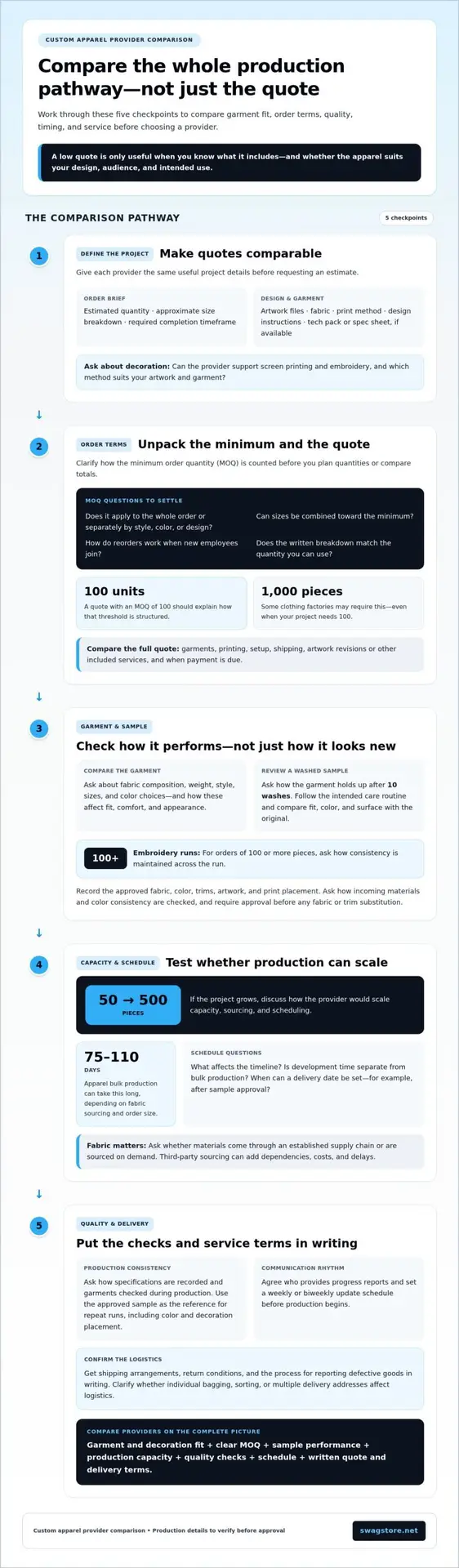
Compare the full production pathway, not only the quoted total. Questions to ask your custom apparel provider should cover clothing styles, decoration methods, and how each method suits your artwork. Ask whether manufacturers can support screen printing and embroidery, then discuss the garment and design you have in mind. For embroidery orders of 100 or more pieces, ask how consistency is maintained across the run. If a project grows from 50 pieces to 500, discuss how capacity, sourcing, and scheduling would scale.
Clarify minimum order quantities by style, color, and size. A quote stating an MOQ of 100 units needs to explain how that minimum is structured. Ask whether it applies to one design, one garment color, or the combined order. Some clothing factories may require 1,000 pieces, even when your project needs 100. That difference can shape whether a manufacturer fits your launch plan or future growth.
Give manufacturers useful details before requesting a quote. Share the estimated quantity, approximate size breakdown, available artwork files, and required completion timeframe. Include fabric, print method, design instructions, and a tech pack or spec sheet when available. These details help make the estimate more accurate. Other questions to ask your custom apparel provider include how long production typically takes, what may affect the schedule, and whether development time is separate from bulk production. Apparel bulk production can take 75-110 days, depending on fabric sourcing and order size. Ask when a delivery date can be set, such as after sample approval.
Agree on communication before production begins. Set a weekly or biweekly update schedule, and ask who will provide progress reports. What is the provider’s policy for shipping, returns, and defective orders? Get the shipping arrangements, return conditions, and process for reporting defective goods in writing. Also clarify whether individual bagging, sorting, or multiple delivery addresses affect logistics. These specifics help you compare service, timing, and production fit alongside price.
A minimum order quantity, or MOQ, is the smallest number of pieces a customer can order. Before approving production, compare that threshold with the number of recipients. Estimate how many employees, event attendees, or new hires need garments, then account for the size mix and any department-specific designs. Asking early helps you avoid ordering more than your organization can use.
If you’re coordinating a staff order, ask how the minimum applies. Does it cover the entire order, or does it apply separately to each garment style, color, or design? Clarify whether sizes can be combined toward the threshold and how reorders work when new employees join. A written quantity breakdown makes planning and comparison easier.
Connect the minimum to the full quote, not just the unit count. Ask which costs cover garments, printing, setup, and shipping, and whether artwork revisions or other services are included. Confirm when payment is due. A small order may suit a small team, while a larger run can leave unused garments. Compare the usable quantity and what the quote includes rather than assuming the lowest minimum offers the best value.
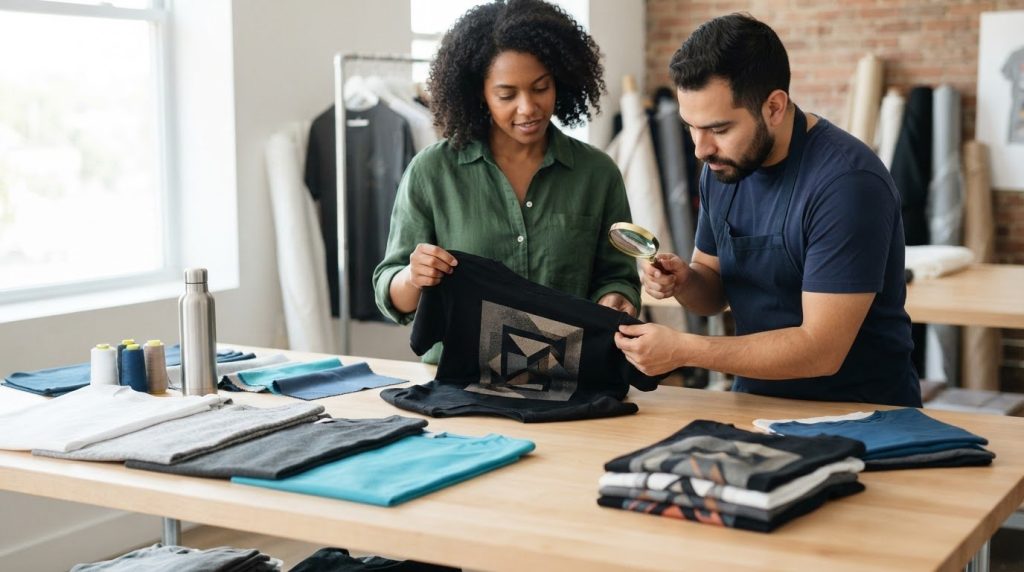
Consistency matters across the first run and any repeat orders. Keep the approved sample, artwork file, garment details, and print placement together as a reference. Ask how the manufacturer records those specifications and checks garments during production. For repeat runs, compare the finished items with the approved sample, including color and decoration placement. Test prints before a full run can reveal issues early.
Planning a branded apparel order? Explore custom screen-printed T-shirts as one option for coordinated organization merch, and consider how its quantity and artwork requirements fit your rollout.
Garment options vary by provider. Compare the available choices for the exact style and design, including fabric composition, weight, and color. Ask how those choices affect fit, comfort, and appearance. A heavier fabric looks and feels different from a lighter one, so choose with the garment’s intended use in mind.
Performance matters after delivery, too. Ask how the garment holds up after 10 washes, including whether its fit, color, or surface changes. Review care instructions and inspect a sample after washing it under the intended care routine. Compare the washed garment with the original before approving production. This step can reveal shrinkage or fading that a fresh sample won’t show.
Confirm fabric and trim details before production starts. Record the selected fabric, color, and any trims in the approved specifications. For a branded design, compare the garment color with the artwork and decoration colors under consistent lighting. Ask how the manufacturer checks incoming materials and maintains color consistency across the run. A clear reference helps quality control catch mismatches before finished garments are packed.
Fabric sourcing can affect both continuity and scheduling. Ask whether the manufacturer uses an established supply chain or sources materials on demand. If your design needs a rare fabric, establish how sourcing will work and whether the material can be secured for future orders. Third-party fabric sourcing can add dependencies, increase costs, and cause delays. Ask how fabric substitutions are handled, and require approval before a substitute or trim change moves into production. For brands with more than 100 SKUs per season, consistent fit, color, and construction become especially important to manage across styles.
Compare available garment styles, sizes, colors, and fabrics for your design. Check fabric composition and weight as well as the color choices, since these affect the finished garment.
Start by asking which ink methods suit your artwork and garment. Request the ink type in writing, including whether it is water-based or phthalate-free. Then ask how the actual ink affects color, hand feel, and print consistency. Dark fabric, fine details, and large artwork areas can call for different methods. Ask whether a test print is reviewed before the full run begins, and how approval is recorded before production.
For garment choices, distinguish recycled fibers from organic materials. Ask what the garment is made from and whether its material claims apply to the whole garment or specific components. OEKO-TEX Service GmbH identifies OEKO-TEX® STANDARD 100 as a textile safety certification. Ask which garment or material the certification covers, and request documentation that matches the actual item being ordered.
If organic certification matters to your project, ask whether the specific garment carries Global Organic Textile Standard (GOTS) certification and whether the documentation covers the material in your order. For broader sustainability claims, request precise wording and supporting records rather than relying on a general “eco-friendly” description. Ask how production waste is managed and whether that includes fabric offcuts, packaging, or both.
Turn those details into a consistent approval process. Record the garment, material, ink type, artwork colors, and any certification documents together. Ask how substitutions are approved, since a fabric or ink change can affect the finished look and timeline. Check whether the sample uses the same materials and methods planned for the production run. That makes the comparison more accurate and helps align environmental priorities with the actual product. If recycled materials fit your brief, explore eco-friendly recycled tote bags as a branded merchandise option.
SwagStore.NET provides bulk custom-branded merchandise and corporate gifts for organizations. Start by defining your garment, print method, quantity, and material priorities. These details give you a practical foundation for planning apparel that fits your team and brand.
For custom apparel, SwagStore.NET offers Custom Screen Printed T-Shirts and embroidered Nike and Under Armour polos. You can coordinate apparel with branded YETI and Stanley tumblers or custom logo power banks and tech accessories. Together, these products help create a consistent look across employee, event, and business merchandise.
Have your artwork, estimated quantity, and preferred styles ready. Visit swagstore.net to discuss your branded merchandise project with SwagStore.NET.
Strong branded apparel starts with a clear picture of who will wear it and what it should communicate. Write a short project brief covering the audience, intended use, visual direction, and material priorities. Include your artwork and estimated quantity, then identify what matters most to your team. This turns questions to ask your custom apparel provider into a focused conversation about the experience you want to create, not just the item itself.
With that direction in place, you can explore how SwagStore.NET can support your branded merchandise plans. Contact SwagStore.NET about custom apparel to discuss your project and take the next step toward merchandise that reflects your organization’s identity. Bring your ideas, and make them visible.
Compare how each provider can support your project from design through reorders. Ask how design changes are handled, who can answer technical questions, and how production updates are shared. If you expect the order to grow, discuss how the project can scale. You can also ask about experience with similar branded apparel and request references to understand how past projects were managed.
Ask how the order is checked, from materials through final review. If the provider uses AQL, or Acceptable Quality Limit, ask what inspection thresholds apply and how results are recorded. Request a documented check of garment construction and decoration before dispatch. If a certification matters to your project, clarify which products it covers and what documentation is available.
Use the meeting to turn the creative brief into a production-ready plan. Ask what information the manufacturer needs for a tech pack, how sample revisions are handled, and which decisions must be approved before bulk production. Bring reference images and explain the intended wearer and use. Clarify who will communicate design changes, how approvals are documented, and what triggers a revised sample rather than a production adjustment.
Define the design in measurable terms: placement, dimensions, artwork colors, garment measurements, fabric details, and intended functions. Ask whether the artwork file is suitable for the chosen decoration method and how the final proof will represent placement and scale. For example, specify whether a logo belongs on the chest, sleeve, or back. Keep approved visuals and written specifications together to reduce ambiguity during production.
Before approving an order, clarify the payment schedule, ownership transfer point, and how non-compliant products are handled. Ask which costs relate to development and which relate to the bulk order, then make sure each is clear in the written agreement. If your organization needs garments sorted by department or delivered to multiple addresses, describe that arrangement before approval so the order plan reflects its actual distribution needs.
Available methods depend on the provider and the design. SwagStore.NET offers professional printing and embroidery services, including Custom Screen Printed T-Shirts and Embroidered Nike and Under Armour Polos. Ask which method suits your artwork, garment, and intended finish. Embroidery uses thread rather than printed ink, so fine details and small lettering may need a simplified treatment to remain legible on the garment.