


A recycled label alone doesn’t make a promotional product sustainable. Recycled material promotional products use materials given a second life, which can reduce demand for virgin resources. A thoughtful choice also considers whether the item is useful, durable, and likely to stay in use.
That’s the key distinction: a product’s material matters, but so does what happens after it’s handed out. You’ll learn what makes a promotional product more sustainable and how recycled, organic and renewable materials differ. We’ll also explore recycled tech accessories, stationery and other branded items, with practical considerations for choosing products that fit your audience and your brand. From everyday usefulness to material claims, the details can help you make a more considered choice.
Sustainable promotional products consider materials, usefulness, and what happens after distribution. Recycled content can reduce demand for virgin materials, but the finished item’s construction and durability matter too.
Material labels point to different benefits. Recycled plastic gives post-consumer bottles another use, while organic cotton and reclaimed fabrics offer textile alternatives. Cork comes from oak bark that can regrow after harvesting. PLA bioplastics use renewable resources such as cornstarch or sugarcane, but they break down in industrial composting facilities, not backyard piles or landfills. Check material blends: cotton, jute, and hemp break down naturally only when they are not combined with synthetics.
A useful item supports a repeated behavior, such as carrying a reusable bottle instead of choosing a disposable one. Seed paper can invite planting, while a durable stainless steel product may become part of someone’s routine. Connect the giveaway to a clear action, such as refilling, reusing, or sorting materials. Minimum order quantities, customization options, and production lead times vary by product, order size, decoration method, and artwork approval.
Match credentials to the claim. The Global Recycled Standard verifies recycled content and production; GOTS is a certification to look for with organic textiles. FSC certification is relevant to paper products and sustainable wood sourcing. Examine the whole item, not just its main material. Bamboo fiber cups, for example, are usually bound with resin, so renewable sourcing does not make them biodegradable.
Durability affects whether a promotional item stays useful or becomes waste. Consider its material, construction, finish, and intended use together; a flimsy tote may be discarded despite its recycled content. Biodegradability also depends on every component, including coatings, glues, resins, and backings. Local recycling programs determine whether materials can be processed again, and mixed materials may complicate disposal.
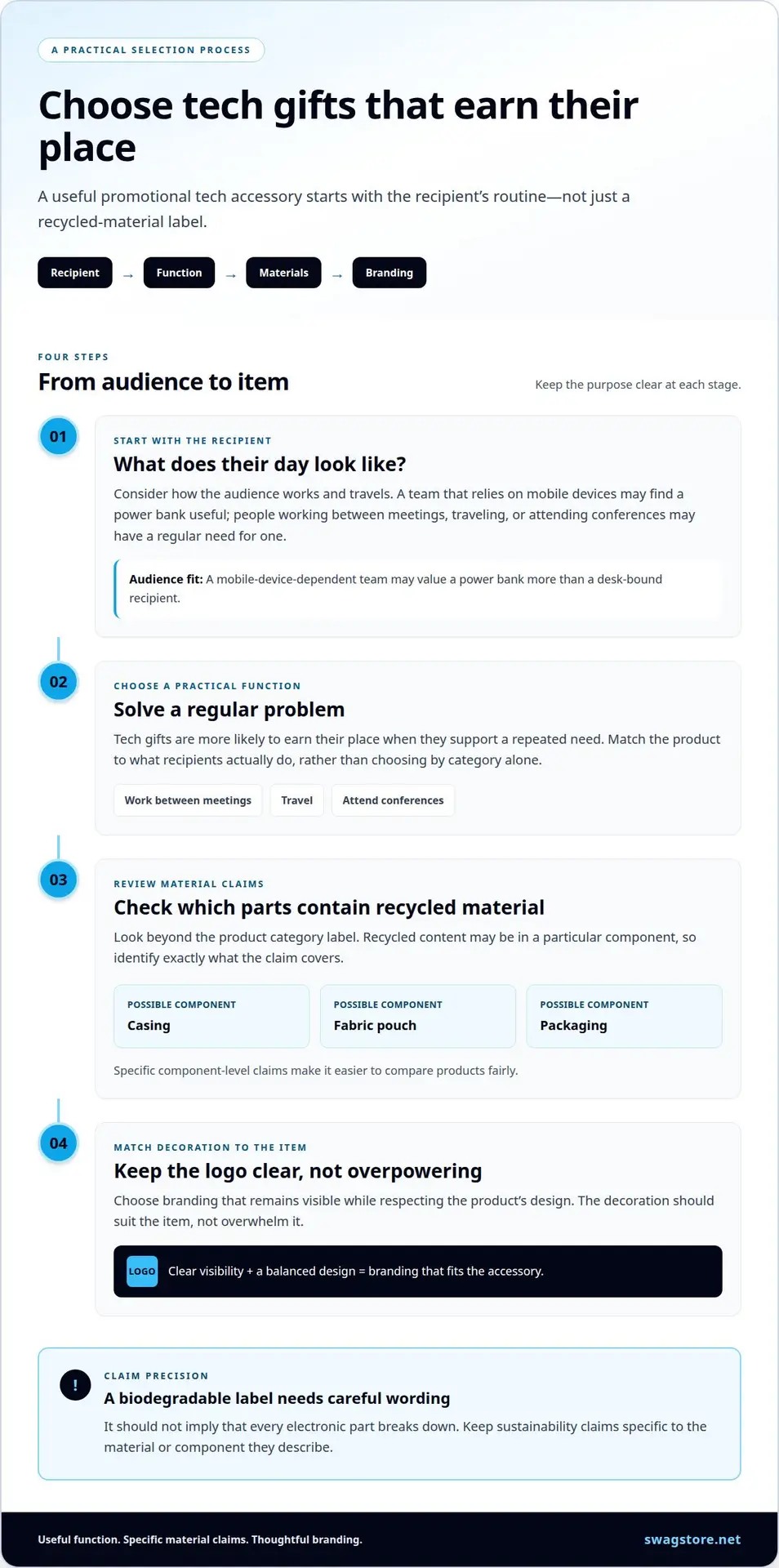
Tech gifts earn their place when they solve a regular problem. A power bank can support employees who work between meetings, travel, or attend conferences. For recycled material promotional products, look beyond the category label: identify which components contain recycled material, such as a casing, fabric pouch, or packaging. That distinction makes sustainability claims more precise and helps you compare products fairly.
Start with the recipient’s routine. A corporate team that relies on mobile devices may value custom logo power banks and tech accessories more than a desk-bound giveaway. Then consider decoration and branding: a clear logo should remain visible without overwhelming the item’s design. Recycled content can vary across components, so keep the material claim specific. A biodegradable label, for example, should not imply that every electronic part breaks down.
Clothing offers another option for promotional merchandise. Choose pieces employees can wear at work or in everyday settings, then consider fit, fabric feel, and print or embroidery placement. A comfortable shirt suited to its audience is more likely to stay in rotation. For a polished corporate look, branded apparel can support a consistent team presence at events and meetings.
Think in categories, not just materials. Tech accessories, apparel, reusable carry items, and paper goods each serve different moments in an employee or customer’s day. The right alternative depends on audience, use, and the product’s construction. Use one simple selection process: define the recipient, choose a practical function, review material claims, and match decoration to the item. If branded electronics fit your campaign, explore custom logo power banks and tech accessories as a useful starting point.
Recycled stationery can be useful in planning sessions, conferences, and employee welcome kits. For notebooks, consider the cover, paper, binding, and intended writing tasks separately. A journal for workshop notes may need a different layout from one used for daily planning. Matching these details to the recipient’s routine helps the item remain useful after the event.
Order requirements also influence product selection. A recycled soft-cover journal with FSC paper has a minimum order quantity of 25. That can suit a focused workshop or a smaller team distribution. For a larger event, plan how the journal will be handed out and whether its cover leaves enough room for clear, balanced branding. A restrained design keeps the notebook practical for future meetings.
Pairing a notebook with a pen creates a coordinated writing set. A recycled aluminum pen with a bamboo accent has a minimum order quantity of 50. Consider whether the set fits the event format, how recipients will carry it, and whether each item has a clear role. For instance, a notebook can support a training session, while a matching pen completes the materials attendees use to take notes.
Build the giveaway around its purpose instead of simply adding more items. A journal can anchor a welcome kit, while a tote bag can carry it alongside event materials. Keep the visual system consistent across the cover and accompanying branded pieces. This connects the stationery to your organization’s values while giving recipients a useful tool for capturing ideas, action points, and follow-up tasks.
Recycled-material promotional items give existing resources another use, but the material alone doesn’t define their impact. Recycled plastic, often called rPET, comes from post-consumer plastic bottles. Wheat straw and rice husks are grain-harvest leftovers that can be ground into fiber and blended with plastic. These materials offer different ways to incorporate recycled or repurposed content into branded merchandise.
For trade shows, corporate gifts, and events, popular choices include recycled totes, bottles, tumblers, pens, and other stationery. A recycled water-repellent tote measures 20 by 14 inches, while a lightweight recycled stainless steel bottle holds 26 ounces. A recycled adjustable-sip lid tumbler holds 20 ounces. Match the item to the setting: a tote can carry event materials, while drinkware serves recipients beyond the venue.
Material details make a choice more meaningful. Recycled content can reduce demand for virgin material, but products combine materials in different ways. A pen might pair recycled aluminum with a bamboo accent; a fabric item might use recycled cotton. Review which parts are recycled and how the item will be used. Don’t assume bamboo or a recycled component makes the complete product biodegradable.
In the United States, suppliers specializing in custom-branded promotional merchandise offer recycled options across categories such as bags, drinkware, and stationery. Compare products by intended use, material composition, decoration, and order requirements. A clear logo and practical design can help keep an item useful after an event, giving your campaign a longer life without relying on oversized branding.
Make your next event giveaway more purposeful by exploring recycled promotional options suited to your audience and campaign.
SwagStore.NET helps businesses turn branded merchandise into practical audience touchpoints, including Eco-Friendly Recycled Tote Bags. A tote can suit event materials, employee welcome gifts, or campaigns centered on reusable carry items. Choose one when recipients need something functional beyond the initial handout, then align its branding with your event or organization.
For a coordinated program, pair totes with Custom Screen Printed T-Shirts or Embroidered Nike and Under Armour Polos. Branded YETI and Stanley Tumblers add drinkware to a corporate gift. Choose items according to how recipients will use them, rather than adding products simply to make a gift set larger.
Ready to shape branded merchandise around your audience? Contact SwagStore.NET to discuss your project.
Choosing recycled material promotional products is an opportunity to shape how people experience your brand after an event ends. Start with one practical question: what would make a recipient want to keep using the item? Then align the product, audience, and design around a clear purpose. A focused choice can make your brand presence feel considered rather than routine.
Build the wider experience around your audience. Custom Screen Printed T-Shirts and Embroidered Nike and Under Armour Polos offer branded apparel, while Branded YETI and Stanley Tumblers add drinkware to a gift or event plan. Choose a combination that fits the occasion and the people receiving it.
Ready to develop a branded merchandise idea for your audience? Contact SwagStore.NET about sustainable products and take the next step with confidence.
Often, but reuse and recycling are different next steps. A tote can carry supplies again, while a notebook with unused pages can serve for internal notes. At the end of its life, separate components where practical and follow guidance from regional facilities like OC Recycling or local municipal programs. A product made from recyclable material may still be unsuitable for local collection because of its mixed materials or construction.
Renewable materials come from sources that replenish naturally, while recycled materials have been recovered and processed for another use. Bamboo and cork are examples of renewable resources; rPET comes from post-consumer plastic bottles. These terms describe different material pathways, not a complete assessment of a finished item. Connect the material claim to the specific product component it describes.
Eco-friendly products can help reduce reliance on virgin resources and connect a campaign to practical habits, such as carrying a reusable bag. They can also give recipients a tangible way to recognize an organization’s environmental priorities. The benefit depends on the item being useful and staying in use. An unused giveaway can miss both its practical purpose and its brand-building opportunity.
No single label answers that question. Consider where the material comes from, whether it contains recycled content, how it is combined with other materials, and what happens after use. A natural fiber blended with synthetics, for example, may have different end-of-life options than an unblended fiber. Assess the finished product and its intended use instead of relying on one appealing material claim.
Common categories include bags, drinkware, stationery, apparel, and selected tech accessories, alongside eco-friendly personal care items. For event bags and corporate wellness kits, brands like Beauty Made Easy illustrate how everyday essentials such as lip balms can be packaged in recyclable paper rather than plastic. The best match depends on the campaign: a tote can support an event, while a notebook may suit a training session. Consider how recipients will use, store, and eventually dispose of each product. That practical fit helps narrow the choices before branding and order planning begin.
rPET is recycled polyethylene terephthalate made from post-consumer plastic bottles. Recycled cotton uses recovered textile fibers, while reclaimed wood is salvaged for reuse rather than newly harvested for that item. These materials can appear in different product components. Look for a clear description of which component contains the material, especially when a finished product combines several materials.