

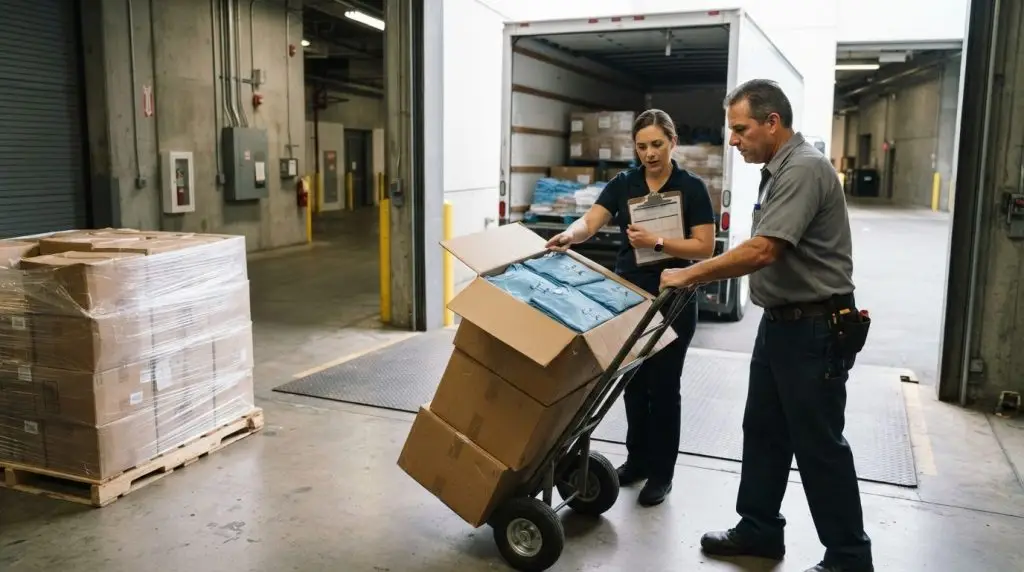
Shipping bulk merchandise to an event venue can work when the address, receiving arrangements, and delivery timing are coordinated in advance. For a direct venue delivery, schedule arrival at least 48 hours before the event starts and follow the venue’s shipping instructions. A hotel shipment also depends on the property accepting and holding packages for your event.
Choosing the right route matters: a direct delivery can simplify the journey, while an advance warehouse or a third-party logistics provider (3PL) may offer a better fit for event receiving requirements or extra handling. The best option depends on when shipments can be accepted, how the merchandise needs to be prepared, and where it must end up.
This guide explains how venue and hotel deliveries compare with advance-warehouse and 3PL shipping, what to plan for, and where delays can arise. You’ll come away with a clearer way to match the shipment route to your event schedule and merchandise needs.
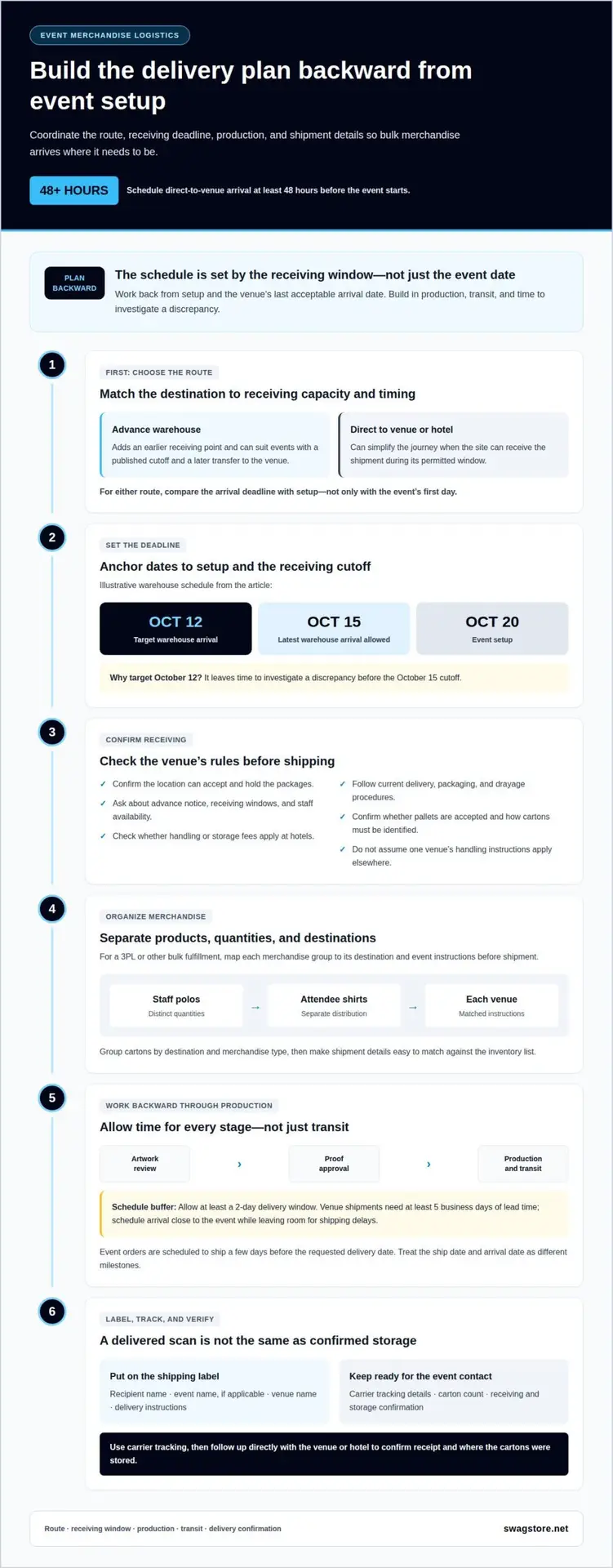
Choose a destination based on the venue’s receiving capacity and the time available before setup. An advance warehouse provides an extra receiving point; direct delivery sends the merchandise to the hotel or event venue.
An advance warehouse suits events with a published cutoff and a later transfer to the venue. For an illustrative schedule, setup is October 20, and the event documents allow warehouse arrivals through October 15. Target October 12 to leave time to investigate a discrepancy before that cutoff. Direct-to-venue delivery may fit when the site can receive the shipment during its permitted window. Compare each route’s arrival deadline with setup, not just the event’s first day.
Coordinate the carrier’s arrival with the venue’s package rules and staff availability. Hotels may require advance notice or charge handling or storage fees, so confirm the package acceptance policy before shipping. Give the carrier the venue’s receiving window and delivery instructions, including any event-specific procedures. For hotel shipments, use the required recipient name and dates, and arrange how staff will identify and hold the cartons.
Confirm delivery using carrier tracking and direct coordination with the person receiving and storing the cartons. Put the recipient’s name, event name if applicable, venue name, and delivery instructions on the shipping label. Keep the tracking details and carton count handy for the event contact. A carrier’s delivered scan confirms delivery, but not where staff stored the shipment. Follow up directly with the hotel or venue about receipt and storage.
A production and delivery timeline works backward from the venue’s receiving deadline and event setup. Allow at least a 2-day delivery window, and schedule arrival at least 48 hours before the event starts. Event orders are scheduled to ship a few days before the requested delivery date, so build production into the plan rather than treating ship date as arrival. For shipping bulk merchandise to an event venue, include artwork review, proof approval, production, transit, and time to address discrepancies.
Yes. A third-party logistics provider (3PL) can ship merchandise directly to an event venue. Planning garment types, destinations, and receiving requirements together helps keep each shipment aligned with event distribution.
Plan the shipment by merchandise type, quantity, and final destination. This is especially important when an order includes different products or must reach multiple venues. Separate each destination’s inventory and match it to the relevant event instructions. For example, if a camp or youth retreat is coordinating attendee shirts alongside portable activity equipment like 9 Square in the Air, distinct packaging and labeling keep hardware and apparel separate. A clear selection plan helps prevent cartons from being mixed up or sent to the wrong location.
Fulfillment planning determines how merchandise is prepared, grouped, and sent for each event. Start with confirmed attendee numbers, then account for staff, volunteers, expected extra demand, and a reasonable buffer. Include garment types, quantities, destination addresses, packaging instructions, and any changes before placing the order. Incorrect addresses, unclear instructions, insufficient inventory, or late changes can delay fulfillment. Decide whether leftover inventory will be used at future events, distributed to employees, stored, or used for customer follow-up. A return label alone does not arrange a pickup.
Packaging and pallet requirements explain how freight must be prepared for venue receiving and handling. Event sites may have specific delivery and drayage procedures, so the event team should confirm current requirements, including whether pallets are accepted and how cartons must be identified. Group packages by destination and merchandise type, and make shipment details easy to match against the inventory list. Do not assume one venue’s handling instructions apply elsewhere.
Allow at least 5 business days of lead time for venue shipments, and schedule arrival close to the event while leaving room for shipping delays. Inventory shortages can also affect timing, so consider demand spikes when planning quantities. Organize garment selection and destination details before finalizing an event merchandise order.
Yes. A bulk order can be shipped directly to an event venue or hotel if the address is accurate and the location can receive packages. Provide the recipient’s name, event name, venue name, and delivery instructions.
A fulfillment quote uses the order details to define production and delivery requirements. Include apparel types, quantities, artwork status, destination address, event date, and receiving instructions. For a conference order with staff polos and attendee shirts, separate the quantities and specify where each group’s cartons should go. Approve the final proof before production starts, and set the delivery deadline around the event’s receiving schedule. Complete details help match the order method to the event plan.
Direct shipping sends the completed bulk order to the venue or hotel. The venue must be able to receive packages, and the hotel must agree to accept and hold the shipment under the required name and dates. Include the event name and delivery instructions so staff can identify the branded cartons. Confirm the venue’s current receiving and drayage requirements, since site procedures determine how freight is accepted and handled.
Bulk ordering suits a planned inventory headed to one event location. On-demand merchandise serves individual requests over time, so it fits a different fulfillment pattern. Choose based on the event deadline, quantity, and distribution plan rather than treating the two approaches as interchangeable.
For a fixed event date, choose a fulfillment option with a delivery timeline that can be confirmed in advance. A fixed conference date calls for a schedule that allows time for artwork review, proof approval, production, and shipping. Changes to order details or the address after the order is created can also delay fulfillment, so finalize them early.
Apparel pricing depends on the order and is provided after a quote request. Quantity, garment selection, decoration, and shipping destination all shape the quote. A clear order brief helps align branded merchandise with the event timeline.
Bulk shipping brings event merchandise together in one coordinated freight movement. Air shipping can provide faster delivery, while freight, drayage, storage, and labor shape the logistics plan. Start with the event inventory list and divide quantities by item type and destination. Then match each group to its cartons, labels, and receiving instructions. This makes the shipment easier to reconcile at the venue.
Packaging affects both handling and transportation. UPS explains that package dimensions affect billable weight through dimensional weight. Choose practical carton sizes and record each carton’s contents and count. For example, list apparel separately from drinkware rather than packing different items together without a clear record. If you are also transporting live production or sound gear alongside promotional merchandise, durable cases from ProX can protect sensitive equipment during rough venue handling. A carton-by-carton count lets the receiving team compare delivered packages with the shipment plan and identify missing cartons.
Choose the carrier and service to fit the venue’s delivery window and the event deadline. Air shipping can help merchandise arrive faster, but the event team still needs to coordinate the destination’s receiving process. Include the correct venue address, event and recipient names, delivery instructions, and carton counts in the shipment details. Match packaging and labels to current venue requirements, since freight handling and drayage can affect how cartons reach the event space.
Before dispatch, create a record of item quantities, carton counts, destination, carrier, and tracking information. Use it to reconcile inventory on arrival. If the received count differs from the packing record, identify missing cartons or quantities before distributing merchandise. Make a separate plan for storage or leftover inventory, since handling after arrival can involve additional labor and storage needs.
For shipping bulk merchandise to an event venue, coordinate freight, receiving, and distribution as one plan. Plan branded merchandise for your event with quantities and destinations in view.
SwagStore.NET is a natural next step when your event calls for bulk branded merchandise suited to its audience and format. Options include custom screen-printed T-shirts, embroidered Nike and Under Armour polos, branded YETI and Stanley tumblers, and custom-logo power banks and tech accessories. Each can serve a different purpose, from staff apparel to useful attendee gifts.
Bring your event date, audience, quantity plan, and delivery destination to the merchandise discussion. These details help shape product selection around the event’s purpose and shipping timeline, rather than treating merchandise as a separate decision. SwagStore.NET can help you explore branded options for your program. Contact SwagStore.NET to discuss merchandise for your event.
Think beyond what arrives at the venue. Merchandise can create a consistent experience, from the first attendee interaction to the items people take home. Choose products that suit the audience and purpose, then plan shipping to support that experience. This makes shipping bulk merchandise to an event venue part of the event design, not a task left until the last minute.
As you develop the plan, bring together your event goals, merchandise selection, quantities, and delivery destination. A clear brief gives product decisions a practical foundation and helps keep the brand experience cohesive. It also provides a useful starting point for discussing what suits your program.
Ready to explore branded merchandise for your event? Contact SwagStore.NET about your event merchandise plans, and take the next step toward an experience that feels thoughtfully put together.
Fulfillment requirements determine how merchandise is grouped, prepared, and routed. If staff apparel and attendee gifts are going to separate locations, for example, organize quantities by item and destination before finalizing the order. Include the event date, packaging instructions, artwork approval, and distribution plan in the brief. These details help align production and shipment preparation; late address or order changes can disrupt fulfillment.
Receiving rules vary by venue and event, so follow the current instructions for the specific location. Requirements may cover accepted delivery dates, package labels, receiving windows, freight handling, and storage. Hotels may require advance notice or charge handling or storage fees. The event team should confirm venue and drayage requirements, then share the relevant instructions with whoever prepares and sends the shipment.
Allow at least 5 business days of lead time for shipments to venues, and schedule arrival close to the event while leaving a delay buffer. For direct delivery, plan for at least a 2-day delivery window and arrival at least 48 hours before the event starts. There’s no universal three-week ordering rule: production and transit schedules vary with decoration method, origin, and event requirements.
Shipping costs depend on shipment size, route, packaging dimensions, freight, drayage, storage, and labor. Larger cartons can affect billable weight through dimensional weight, as UPS explains. A venue’s receiving and handling process can add logistics expenses beyond transportation. Compare the full delivery plan, not just the carrier charge, and consider how shipment size and destination affect each part of the total.
Parcel carriers handle packages individually, while freight moves larger consolidated shipments. Event drayage covers handling and movement within the event logistics process. The right combination depends on shipment size, packaging, venue rules, and how merchandise must reach the event area. Include freight, drayage, storage, and labor in your comparison. Confirm the event’s handling requirements before choosing a route or preparing cartons.
Arrange access through the event’s designated receiving contact and follow the venue’s delivery instructions. Share the carrier, expected arrival window, shipment details, and carton counts with the onsite receiver. If the venue requires a delivery appointment or loading dock access, include that process in the shipment schedule and pass the instructions to the carrier. After delivery, coordinate directly with venue staff about receipt and storage.