

Good conference swag earns its place by being useful, easy to carry, and visually consistent with the event. Coordinating swag for a multi-day conference means matching branded items to badges and the attendee experience, then planning how each item will be stored and distributed throughout the schedule. The best choices feel like part of one thoughtful event, not a collection of unrelated giveaways.
It’s natural to focus first on the items: attendees appreciate things they can use during the conference and keep afterward. Branding matters, too. When badges, packaging, and swag share a clear visual identity, the event is easier to recognize and every interaction feels more considered.
This guide explains how to choose practical swag, create a cohesive look, and organize sourcing, storage, shipping, and distribution for a multi-day event. You’ll have a clearer plan for balancing usefulness with visibility, so your branded merchandise supports the conference from arrival through the final session.
In-person conferences give attendees a chance to experience a brand directly. 95% of consumers report stronger brand trust after attending an in-person event. Visual consistency can reinforce that experience: 55% of first impressions are based on visual cues, while 36% of people say a logo helps them remember a brand. Useful, durable merchandise can extend visibility beyond the venue.
Start with the audience and event goal. A technical expo booth may call for reusable tech accessories, while a wellness-focused program could offer practical items attendees can use between sessions. Choose premium pieces for speakers or meaningful partner conversations, and approachable options for broader distribution. At sustainability-focused events, recycled-material items can support the message when they remain useful in everyday life.
To coordinate themes across conference days, keep a shared visual thread, such as consistent colors and logo placement, while changing the featured item or message each day. For example, pair a practical first-day item with a wellness gift later, then reserve apparel for a closing or community moment. This adds variety without making the event feel visually fragmented.
Dietary, accessibility, and cultural preferences call for flexible choices. Avoid making food the only gift; offer a non-food alternative and let attendees opt in to selections. Pinnacle Promotions recommends opt-in swag selections to reduce waste. Clear labels and accessible pickup arrangements also help attendees make choices that fit their needs.
Plan distribution by day, not just by total quantity. Pinnacle Promotions recommends pickup windows, QR ticketing, or redemption counters. If 60% of a three-day supply goes on day one, adjust the remaining distribution plan. For recurring conferences, track which items and quantities work at each event, then use those records to refine the next order. Store daily allocations separately so staff can replenish the right station without mixing supplies.
Good swag fits the audience, event goal, and available budget. Separate items into broad tiers before choosing products: everyday giveaways for booth traffic, useful pieces for engaged attendees, and a premium reward for speakers or key partners. Pinnacle Promotions recommends allocating 60% of the swag budget to budget items, 30% to mid-range items, and 10% to premium items. Treat this as a planning framework, not a fixed rule.
Popular choices for multi-day conferences include reusable bottles, notebooks, charging accessories, and apparel. Choose items attendees can use during sessions or pack easily between venues. For a polished speaker gift, embroidered Nike and Under Armour polos offer a premium apparel option. Keep packaging practical, too: a compact, coordinated set is easier to distribute than bulky, individually wrapped pieces.
Sustainable and locally sourced options can include reusable goods made with recycled materials or items produced near the event. Prioritize usefulness and clear sourcing details over a sustainability message printed on disposable packaging. For example, a recycled-material tote can carry conference materials and remain useful after the event.
Build the budget around attendee groups and event goals. Broad distribution calls for simple, useful items; smaller quantities can support targeted meetings or speaker recognition. Consolidating designs and order planning can simplify production and packaging, while bulk orders can make a consistent set easier to coordinate. The final cost depends on item choice, decoration, quantity, and packaging.
Too little swag can leave later attendees without the items planned for their experience. Too much can tie up budget and create leftover stock, especially if attendance estimates or item appeal are off. Track distribution by day and reserve some inventory for later sessions. That makes adjustments easier as demand becomes clearer.
For a cohesive premium tier, consider custom embroidered conference polos as a wearable reward that can extend brand visibility beyond the event.
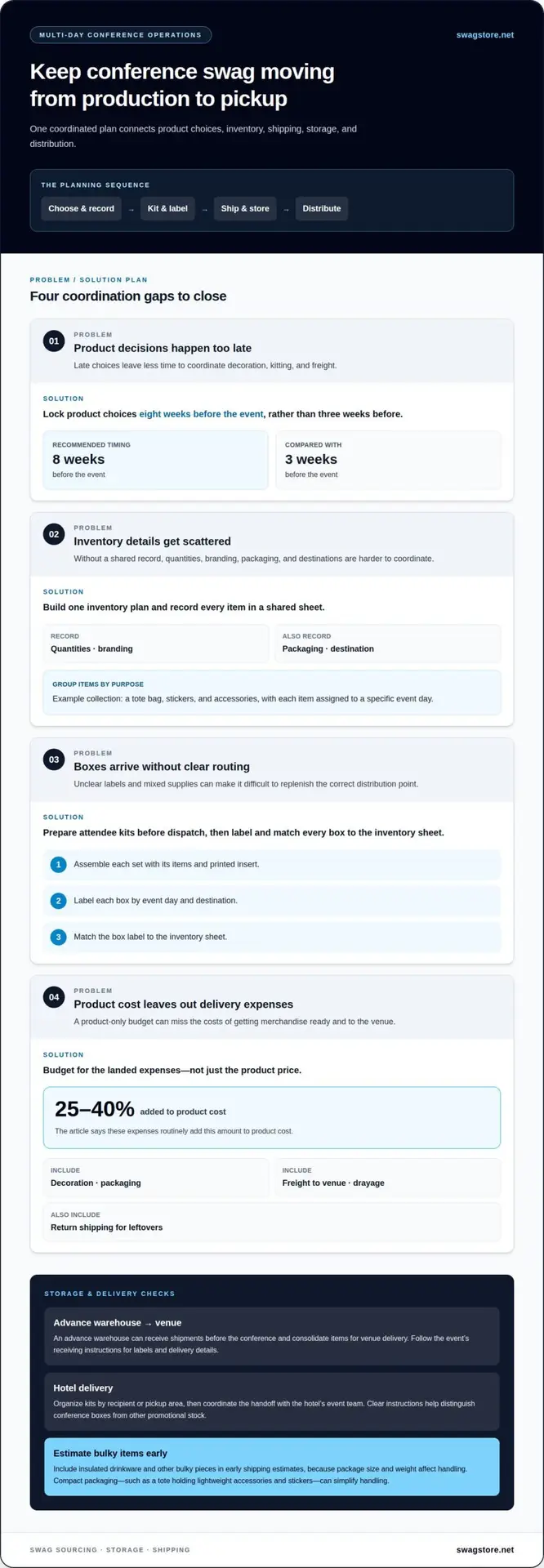
Coordinating swag for a multi-day conference starts with one inventory plan covering production, storage, and delivery. Group custom promotional items by purpose, then record quantities, branding, packaging, and destination in a shared sheet. For example, a collection might pair a tote bag, stickers, and accessories, with each item assigned to a specific event day.
Lock product choices eight weeks before the event rather than three weeks before. That gives the team time to coordinate decoration, kitting, and freight without relying on rushed production. Include insulated drinkware and other bulky pieces in early shipping estimates, since package size and weight affect handling.
For kitting, assemble each attendee set with its items and printed insert before dispatch. Label every box by event day and destination, then match it to the inventory sheet. Pinnacle Promotions recommends labeling swag boxes by day and maintaining inventory sheets. These steps help staff replenish the correct distribution point.
Advance warehouses can receive shipments before the conference and consolidate items for venue delivery. Follow the event’s receiving instructions when preparing labels and delivery details. For hotel delivery, organize kits by recipient or pickup area, then coordinate the handoff with the hotel’s event team. Clear instructions help distinguish conference boxes from other promotional stock.
Calculate landed expenses, not just product cost. Decoration, packaging, freight to the venue, drayage fees, and return shipping for leftovers routinely add 25 to 40 percent to product cost. Include each category in the event budget. Compact packaging, such as a tote bag holding lightweight accessories and stickers, can simplify handling.
For recurring events, coordinating swag for a multi-day conference also means keeping inventory records distinct by event, destination, and date. Record what ships and returns, then update available stock before allocating it elsewhere. This helps prevent teams from mixing branding or delivery schedules when reusing promotional items across conferences.
A badge and a giveaway work better together when they feel designed as a set. Choose one visual system for both, with matching colors, type styles, and logo treatment. For example, a clean badge paired with a cotton tote can use the same accent color and a smaller logo. The items remain distinct, but attendees recognize them as part of one conference experience.
Start with the badge, since attendees see it throughout sessions and networking. Use a clear event name and readable attendee details, then echo one supporting design element on the merchandise. A drinkware logo might be smaller than the badge mark, while a tote can carry a broader graphic. Keep each item’s main function visible rather than crowding its surface.
What customization and branding rules apply at conference venues? There isn’t one universal rule for every venue. Review the event’s exhibitor or venue guidelines for restrictions on logos, giveaway distribution, display placement, and delivery, then align the artwork and handout plan with those requirements. For broader event branding that coordinates promotional collateral with on-site visual displays, working with an experienced partner like Image Square Printing helps ensure graphics stay consistent and compliant with venue guidelines.
Make the system flexible across sessions. Use a consistent event mark, then vary a secondary color or message by day. For example, a morning welcome giveaway might use the core identity, while a later networking item highlights a session theme. This gives each item a clear role without making the merchandise look disconnected.
Consider the attendee journey, too. A badge should be easy to wear, and travel-friendly merchandise should be easy to carry between sessions. A reusable bottle or compact cotton tote can support that journey while keeping the event identity visible. Keep stickers and smaller giveaways visually related through the same color palette and logo hierarchy.
Before production, review badge artwork and merchandise designs side by side. Check that logos stay legible at different sizes and colors remain consistent across materials, an area where commercial print specialists like First Stop Signs Print often guide event teams. A simple mockup showing the badge, tote, and drinkware together can reveal mismatched styles early. This final visual check turns separate branded items into a coherent conference collection.
SwagStore.NET helps bring a conference merchandise plan together with custom-branded items suited to attendee use and event goals. When you’re coordinating swag across several days, a cohesive mix can keep branding consistent while giving each item a clear role.
For example, custom screen-printed T-shirts or embroidered Nike and Under Armour polos can create a wearable event identity. Branded YETI and Stanley tumblers offer reusable drinkware, while custom logo power banks and tech accessories can serve attendees during a busy schedule. The right combination depends on your audience, distribution plan, and preferred visual direction.
Share your event goals and merchandise needs with SwagStore.NET to discuss a coordinated approach. Contact SwagStore.NET to start the conversation.
Give your next event a clear creative starting point. Treat coordinating swag for a multi-day conference as a design decision as much as a purchasing task. Before choosing merchandise, define the attendee experience you want to create, the visual mood that supports it, and the role each item should play. A concise creative brief can keep those choices aligned across your team.
Then turn that direction into branded pieces suited to your audience and event identity. SwagStore.NET offers custom screen-printed T-shirts, embroidered Nike and Under Armour polos, and branded YETI and Stanley tumblers. Each can contribute a different feel to the overall experience while keeping the event’s branding present beyond the venue.
Bring your event goals and creative direction together, then take the next step with Contact SwagStore.NET about conference swag. A thoughtful concept gives your team a strong foundation for creating merchandise attendees will want to use.
Good conference swag remains useful beyond the event, is easy to carry, and suits attendees’ work or travel. Choose an item that solves an immediate need, such as a notebook for workshop notes, then consider whether its branding stays legible in everyday use. A fit-for-purpose item feels like a considered gift rather than an obligation to accept.
Power banks and reusable bottles are strong candidates because attendees can use them repeatedly after the conference. A notebook or practical bag can also become part of someone’s routine if it suits their needs. Think about the problem each item solves, not just how prominently it displays a logo. Items with a clear everyday purpose are more likely to be kept.
Set quantities according to who will receive each item, rather than dividing the full order evenly across days. Start with expected attendance for each day, then account separately for speakers, staff, and scheduled guests. For opt-in or limited-distribution items, estimate demand from the relevant audience segment. This creates a more useful order plan than assuming every attendee needs every item.
First separate the budget by purpose: broad attendee distribution, targeted conversations, and gifts for speakers or partners. Then estimate the full cost of each item, including decoration, packaging, freight, venue handling, and returns of leftover stock. Compare options by usefulness and role, not just unit cost. This makes trade-offs clear before the team commits to a particular mix.
Choose a single kit when attendees need the same essentials and carrying everything at once is practical. Different daily items make more sense when each day has a distinct theme, audience, or activity. A hybrid can work well: provide a small welcome set, then offer optional items tied to particular sessions. This gives attendees choice without requiring everyone to take everything.
Assign one person to own the inventory record and delivery plan. Match each shipment label to its destination, event date, and intended distribution point. Track received, distributed, and remaining quantities, and clarify venue receiving procedures before dispatch. For example, separate speaker gifts from general attendee stock so staff can find the right items without opening every box.