

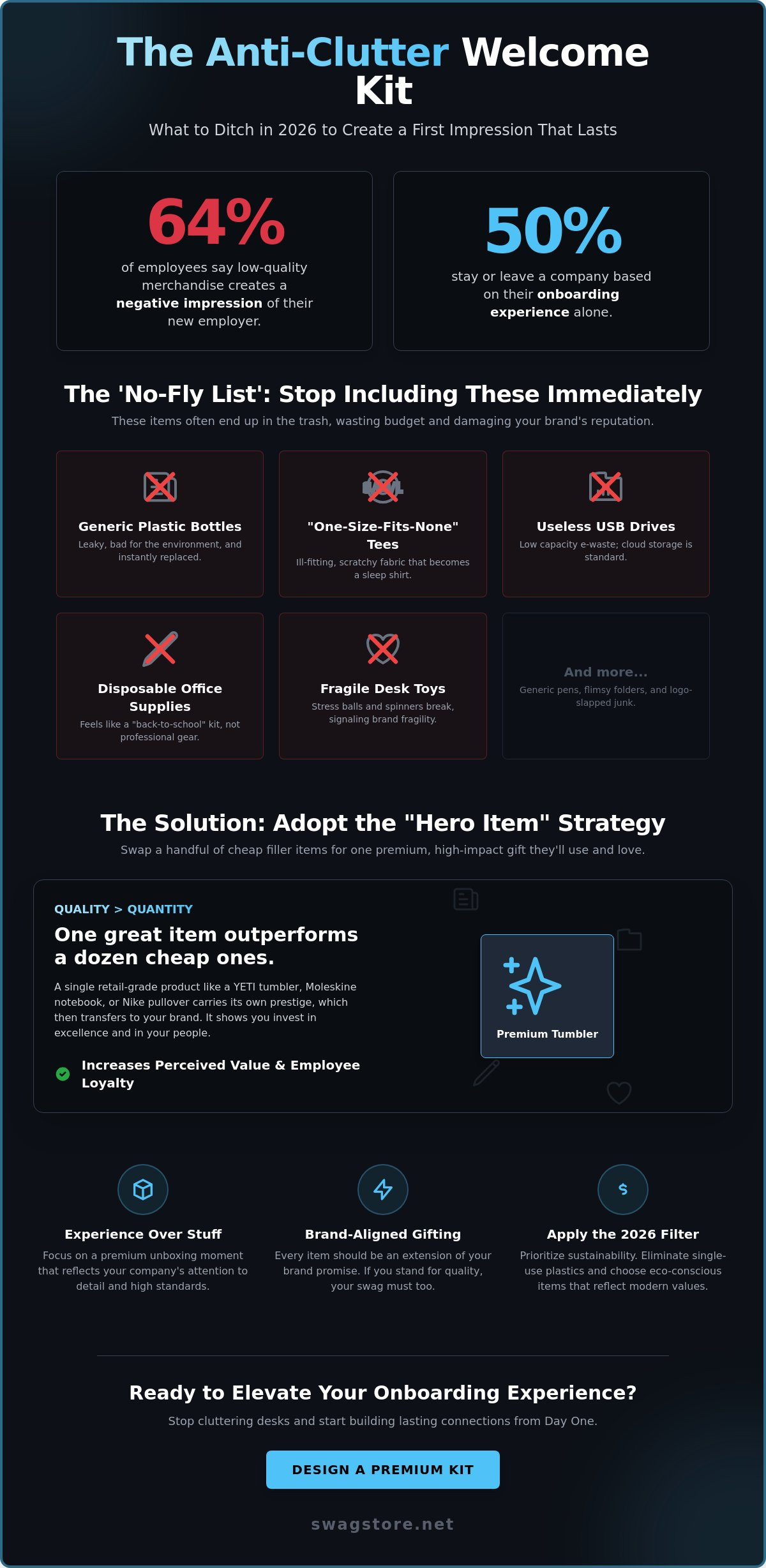
Did you know that 64% of employees report that low-quality branded merchandise creates a negative impression of their new employer? It’s a staggering figure that proves your first impression might be doing more harm than good. When we design these experiences, the most critical decision isn’t what to buy, but rather what not to put in a new hire welcome kit. In an era where 50% of employees stay or leave based on their onboarding experience, every piece of plastic clutter or ill-fitting shirt becomes a liability for your brand.
We understand the pressure to make day one feel special without wasting budget or contributing to environmental guilt. You want to see those Instagram-worthy unboxing moments, not gift bags that end up in the trash. This guide will show you how to swap generic filler for high-impact essentials like branded YETI tumblers or custom Moleskine notebooks. We’ll explore the strategic curation techniques that drive higher engagement scores and help you build a zero-waste onboarding strategy that reflects your organization’s premium standards. It’s time to stop cluttering desks and start building lasting connections.
First days are electric. They’re a high-stakes mix of nerves, ambition, and anticipation. When a new team member unboxes their first package from us, they aren’t just looking for office supplies. They’re searching for a tangible sign that they’ve joined a winning team. This is why understanding what not to put in a new hire welcome kit is just as vital as choosing the right items. A box filled with generic, low-effort junk creates a “Clutter Trap.” It sends a silent, damaging signal that we haven’t invested much thought into their arrival.
In 2026, we’re seeing a rise in “Welcome Kit Fatigue,” especially among remote and hybrid professionals. Their home offices don’t need more plastic trinkets or flimsy folders. They need tools that enhance their day and reflect the quality of their new workplace. This initial phase of Organizational socialization is a one-time opportunity to align a hire with our brand identity. If we miss the mark here, we risk a psychological “let down” that can be difficult to reverse. Thoughtful onboarding isn’t just a nice gesture; it’s a proven driver of long-term employee loyalty.
We need to move beyond functional onboarding and start creating experiential moments. Your unboxing experience is a physical manifestation of your company’s attention to detail. It’s the first real “test” of your culture. We’ll be honest because we want you to succeed: yes, they will judge you by the box. If the presentation is messy or the contents feel like an afterthought, they’ll assume your internal processes are the same. By curating a kit that feels premium and purposeful, we set a standard of high performance and mutual respect from the very first hour.
Every item in your onboarding box carries a silent price tag beyond its manufacturing cost. It’s the cost of your brand’s reputation. When we talk about what not to put in a new hire welcome kit, we’re really talking about the “clutter tax” that many companies unknowingly pay. Research shows that 64% of employees feel that low-quality branded merchandise creates a negative impression of the employer. To avoid this, we must identify the items that trigger an immediate trip to the donation bin.
Generic plastic water bottles are the primary offenders. Most professionals already own a high-quality vessel they love; a thin, BPA-heavy bottle that leaks in a laptop bag isn’t a gift. It’s a chore. Similarly, scratchy, unbranded cotton tees often suffer the “sleep shirt” fate. If the fabric is uncomfortable or the fit is boxy, it will never see the light of day outside of a bedroom. We should also retire outdated tech. In 2026, a 2GB USB drive is practically a relic. Most modern laptops don’t even have the ports to support them, making them instant electronic waste. Stop including these items to protect your budget:
Slapping a logo on a sub-par product doesn’t transform it into a gift. In fact, it often highlights the gap between what a company says it values and what it actually provides. We’re seeing a massive shift toward retail-grade brands like YETI, Stanley, and Nike. These “Hero Items” carry their own prestige, which then transfers to your organization. By removing three or four “filler” items, you can often afford one high-quality piece that your team will actually use and cherish. If you’re looking for inspiration, check out our guide on Cool Promotional Items for 2026 to see what’s actually trending.
Cheap tech is a liability. Unbranded power banks are notorious for slow charging speeds and, in worse cases, fire hazards. When you give a new hire a tech accessory that feels flimsy, you’re asking them to risk their expensive personal devices. It’s a gamble that rarely pays off. Instead of quantity, focus on certified custom logo power banks and tech accessories that meet modern safety standards. This ensures your first tech interaction is one of reliability, not frustration. High-quality tech accessories shouldn’t just look good; they must perform under the pressure of a modern workday.
We’ve audited the physical clutter, but the most significant onboarding blunders are often invisible. When you’re refining what not to put in a new hire welcome kit, you must consider the psychological burden of the contents. A kit should be a bridge to your culture, not an anchor that weighs down the first-day excitement. If the experience feels heavy or bureaucratic, the most expensive items in the world won’t save the impression.
The “Paperwork Firehose” is the most common mood-killer we see. Handing a new hire 50 pages of HR manuals is the fastest way to signal that their role is more about compliance than contribution. It’s a bureaucratic wall that blocks the view of your vibrant culture. Keep the physical box for inspiration and move the fine print to a digital space. A vague welcome letter is another missed opportunity. There’s a massive difference between a CEO’s scanned signature on a boilerplate template and a genuine, personalized message that welcomes the hire into the mission.
We also need to talk about “Mandatory Fun.” Avoid items that force social interaction before a hire feels comfortable. Whistles, “Newbie” sashes, or loud noisemakers might seem lighthearted, but they can be alienating for introverts or those still finding their footing. Similarly, avoid over-branding. If every square inch of the kit feels like a marketing brochure, it stops being a gift and starts being an advertisement. We want them to feel like a partner, not a walking billboard for a campaign they didn’t design.
Practicality meets modern design when we move policy lists to the cloud. Instead of printing manuals, we recommend using laser engraved metal pens or custom branded Moleskine notebooks with a discreet QR code on the inside cover. This links directly to the employee portal, keeping the physical experience clean and focused. The Information-to-Inspiration Ratio is defined as the strategic balance where every piece of data is outweighed by a piece of cultural inspiration to maintain the day’s momentum.
In 2026, your brand’s commitment to the planet and its people is under a microscope from day one. A kit that overlooks these values doesn’t just feel outdated; it feels disrespectful. Identifying what not to put in a new hire welcome kit is the first step toward building a truly inclusive corporate culture. Single-use plastics and non-recyclable packaging have become a PR nightmare for modern organizations. If your box is filled with individually wrapped plastic trinkets, you’re signaling a disregard for the environment before the first meeting even starts.
We also see frequent blunders regarding dietary choices and cultural sensitivity. Generic snack packs are a minefield of potential allergies and lifestyle conflicts. Including a bag of nuts or dairy-heavy treats without checking for restrictions can turn a welcoming gesture into a medical hazard. Similarly, we recommend avoiding alcohol or gifts with specific religious undertones. These items can inadvertently exclude team members and create an immediate barrier to belonging. Your goal is to make everyone feel seen, not just the majority.
We believe in the power of “Keepers.” These are high-quality items designed for a five-year lifecycle, not five minutes of novelty. This means vetting every supplier for ethical labor practices and sustainable material sourcing. Swapping disposable items for monogrammed gifts adds a layer of personal value that discourages waste. When an item feels personal and premium, it stays on the desk and out of the landfill. It’s about quality that reflects your brand’s longevity.
Nothing says “you don’t belong here” like a shirt that doesn’t fit. We must move away from the “unisex” trap, which almost always translates to a boxy men’s cut that ignores a large portion of the workforce. True inclusivity means offering a full range of sizes from XS to 5XL in various professional cuts. Many forward-thinking brands now use a “swag store” model. This allows new hires to select their own items, ensuring they receive something they genuinely love and will actually wear. Build your inclusive strategy with our Employee Onboarding Gift Kits today.
Designing a strategic kit is about curation, not accumulation. When we help our partners decide what not to put in a new hire welcome kit, we always start by focusing on quality over volume. The ‘Hero Item’ strategy is the cornerstone of a modern onboarding experience. It’s better to provide one premium gift that carries real-world value than ten cheap items that eventually clutter a desk. By leveraging retail giants like Stanley or Moleskine, we build instant trust with your new hires. They recognize the quality immediately, and that prestige transfers directly to your organization’s brand equity.
Bulk customization doesn’t have to mean compromising on style. We specialize in high-end office essentials, from laser engraved metal pens to custom logo power banks that actually work. Professional kitting and fulfillment beats DIY HR assembly every time. Your HR team should be focused on people, not packing tape. We take the logistical weight off your shoulders, ensuring that every kit is a perfectly presented masterpiece of brand visibility. This seamless process allows you to focus on the human side of the first day while we handle the technical execution.
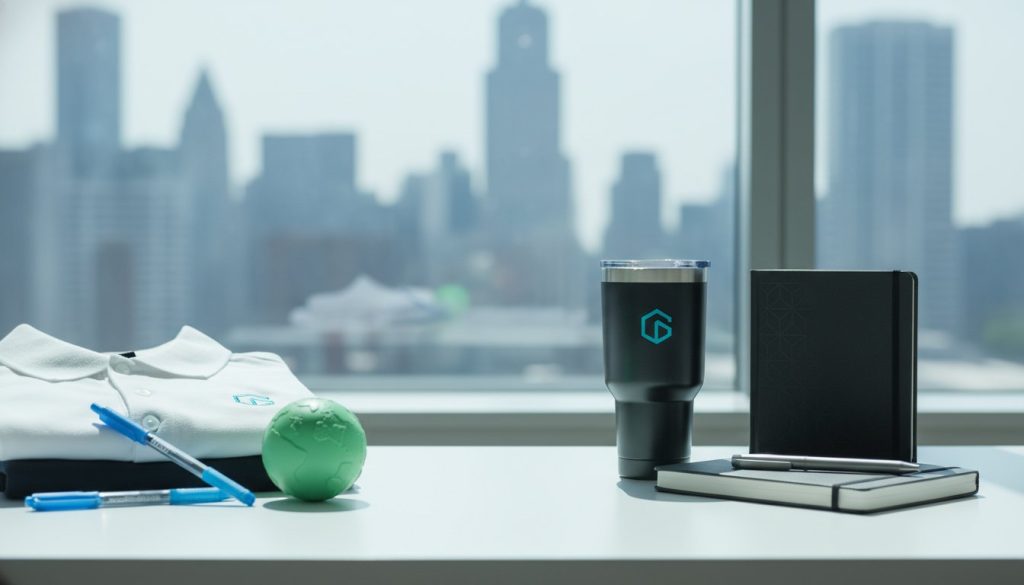
High-impact pairings create a narrative of excellence. Imagine a new hire opening a box to find a branded YETI tumbler paired with an embroidered Nike polo. It’s a cohesive, professional look that says “you belong here.” We manage the complex logistics, from sourcing to global shipping, so your brand remains consistent across every department. For a deeper dive into strategy, explore The Ultimate Guide to Custom Employee Onboarding Kits in 2026.
Start by auditing your current inventory. Apply the “Would I Keep This?” test to every single item. If you wouldn’t feel proud to display it on your own desk, it’s a prime candidate for what not to put in a new hire welcome kit. Set a budget that prioritizes durability and retail-grade quality. It’s time to move from a supply-closet mindset to a strategic branding mindset. Ready to elevate your first impression? Build your curated employee welcome kit today and let’s create something extraordinary together.
We’ve explored how strategic curation transforms the onboarding experience from a bureaucratic chore into a powerful branding tool. By identifying what not to put in a new hire welcome kit, you protect your budget and your brand’s reputation from the clutter trap. Focus on high-impact retail brands and inclusive sizing to ensure every new team member feels seen and valued from their very first hour. It’s about moving away from disposable novelties and toward functional, high-aesthetic essentials that reflect your company’s standard of excellence.
As an authorized reseller of premium brands like YETI, Nike, and Stanley, we provide the tools you need to build kits that employees actually keep. Our dedicated creative consultants are ready to guide you through brand-aligned curation, while our expert kitting and national fulfillment services handle the logistics from start to finish. Stop settling for generic swag and start building lasting connections. Design your premium, waste-free welcome kit at SwagStore.NET and set the stage for long-term success today.
Low-quality plastic water bottles and flimsy, unbranded pens top the list of discarded items in modern offices. These products often fail the “Would I Keep This?” test because they don’t offer long-term utility or aesthetic appeal. To avoid this, focus on what not to put in a new hire welcome kit by eliminating single-use plastics that create immediate waste and damage your brand’s reputation.
Industry benchmarks for 2026 suggest three distinct tiers based on the role and desired impact. Essential kits typically range from $35 to $65 per person, while mid-range kits with premium items like branded tumblers fall between $65 and $120. For executive hires, budgets often exceed $120 to $250 per person to include high-end tech accessories and retail-grade apparel that reflect their leadership level.
No, physical manuals are often viewed as part of a bureaucratic “paperwork firehose” that kills first-day momentum. We suggest digitizing these documents to keep the welcome experience focused on inspiration and culture. A smart alternative is using a custom branded Moleskine notebook with a QR code on the inside cover that links directly to your digital employee portal for easy access.
One premium “Hero Item” is significantly more effective than a collection of cheap trinkets. A single YETI tumbler or a high-quality Nike polo creates a sense of value and belonging that ten plastic accessories cannot match. This approach reduces clutter, supports your sustainability goals, and ensures your brand is associated with retail-grade quality from the very first day.
The most effective method is using a digital swag store where hires select their own sizes and cuts before their start date. This avoids the “unisex” trap and ensures everyone receives a garment that fits their body comfortably. Offering a range from XS to 5XL demonstrates a commitment to inclusivity and prevents the frustration of receiving ill-fitting apparel that ends up in a donation bin.
Focus on “Keepers” made from sustainable materials, such as eco-friendly recycled tote bags or durable stainless steel drinkware. These items are designed for a multi-year lifecycle rather than immediate disposal. By choosing high-quality, reusable products, you align your onboarding process with modern environmental standards and reduce the waste associated with traditional, plastic-heavy kits.
Yes, and for remote workers, the unboxing experience is even more critical as it’s their first tangible interaction with the company culture. We utilize national fulfillment services to ensure that every remote hire receives a perfectly curated kit on or before their first day. This creates a shared physical experience that bridges the gap between the digital workspace and your corporate office.
High-speed custom logo power banks and reliable tech accessories are the most valued items for modern professionals. Avoid low-capacity USB drives or unbranded chargers that could pose safety risks to personal devices. Focus on tech that solves daily problems, such as foldable wireless chargers or premium cable organizers, which help new hires set up a productive and organized workspace immediately.