

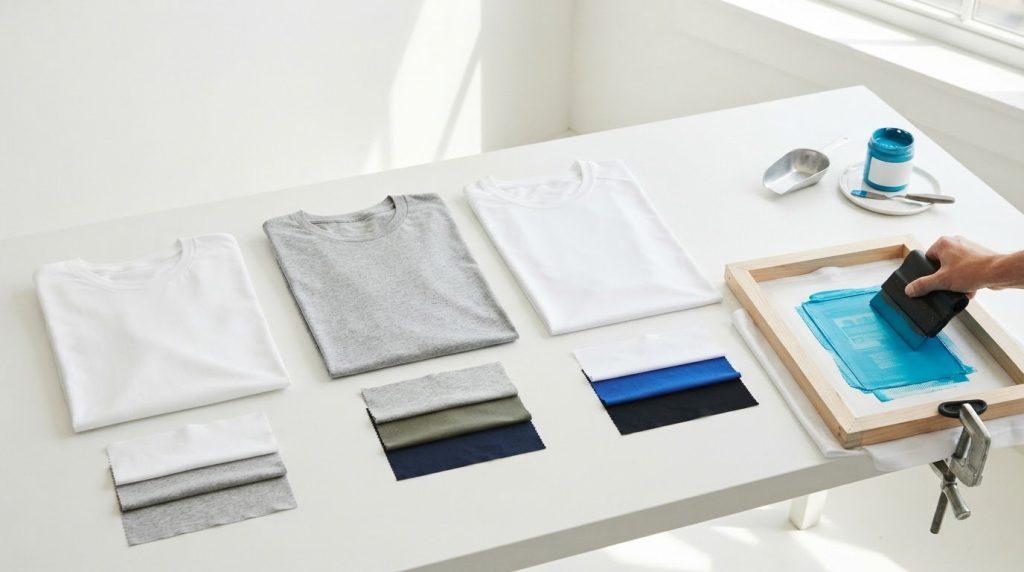
Cotton is the easiest starting point, but it isn’t the only fabric that can be screen printed. For the best fabrics for screen printing quality, choose smooth cotton for strong color absorption, a cotton-polyester blend for a balance of comfort and durability, or polyester when you can account for its printing challenges. For standard T-shirts, a fabric weight of 4.5 oz to 6 oz offers a practical balance of breathability, printability, and durability.
Choosing a shirt that feels right is only part of the decision. Fiber content, surface texture, and intended use all affect print clarity and wear. This guide compares cotton, cotton-polyester blends, and polyester, then covers specialty fabrics and apparel uses to help you match the material to your design and the experience you want.
Smooth cotton is a strong screen-printing choice because its fibers absorb ink well. Combed or ringspun cotton has a tighter weave and smoother surface than regular cotton, helping detailed designs appear more defined. For crisp prints, the best fabrics for screen printing quality have a smooth, tightly woven surface.
For standard T-shirts, choose fabric weighing 4.5 oz to 6 oz for a balance of breathability, printability, and durability. A smooth, tight weave supports crisp edges better than a slub or heavily textured surface. Lightweight 3.5-4 oz fabrics can stretch more easily and may hold ink less robustly.
Regular, combed, ringspun, and organic cotton can all work. Combed and ringspun cotton are useful when a smooth finish matters, while organic cotton prints much like conventional cotton. Cotton also resists heat and static, but garments may shrink or wrinkle, dry slowly, and manage moisture less effectively. Pre-washing helps remove chemical residues before printing. These qualities make smooth cotton a reliable choice among the best fabrics for screen printing quality.
Fabric color and texture shape the finished look. A smooth surface supports detailed designs, while coarse fibers and novelty textures such as faux fur can make prints uneven. Dark cotton can also be printed with discharge ink, which removes fabric dye and replaces it with pigment for a soft result. Fabric weight and composition affect costs through garment selection and ink needs. Heavier fabrics generally require more ink, while complex surfaces may need more careful handling.
To cure printed cotton, use a drying tunnel, heat press, flash-dry unit, tumble dryer, hand iron, or low-heat oven. Follow the ink’s curing requirements, then wash-test a printed sample to assess fading, cracking, peeling, comfort, and shrinkage. These steps help reveal how fabric quality and composition perform beyond the fresh print.
Cotton-polyester blends balance cotton’s ink absorption with polyester’s durability and resistance to shrinking. A 50/50 blend is a common choice for printed shirts, while 60/40 blends offer another composition to consider. As polyester content rises, ink absorption can fall, making colors appear less vibrant than on 100% cotton.
For sharper results, start with a smooth jersey knit rather than slub or textured fabric. Cotton yarn absorbs ink more readily than synthetic fibers, so a cotton-rich blend often supports stronger color. Water-based textile inks can create a softer result on jersey than plastisol. Polyester may need specialty inks and curing methods because heat can trigger dye migration, when fabric dye bleeds into the print.
Tri-blends need extra care. One example combines 50% polyester, 25% rayon, and 25% cotton. Ink adhesion can vary across these fibers, so make a test print on the actual garment before a larger run. Check color, sharpness, and distortion after curing. Rayon can scorch or distort under heat, so the curing approach matters.
Regenerated cellulose fibers such as rayon behave differently from cotton, even though both originate from plant-based materials. Acrylic is synthetic and can be heat-sensitive or prone to shrinking. A generic synthetic fixer won’t meet every blend’s needs. The fiber mix, ink system, and curing temperature determine the right approach. For polyester-rich garments, control heat and use low-bleed ink to reduce dye migration.
Match ink to the fabric, not just the artwork. Cotton-rich blends can suit water-based or plastisol prints, while polyester requires specialized handling. If you’re planning branded shirts, a fabric-matched printing approach can help align the garment and design.
Blends can work well for screen printing, offering color absorption, longevity, shrink resistance, and comfort. Less-porous synthetics may complicate ink adhesion, so test the fabric before a full run.
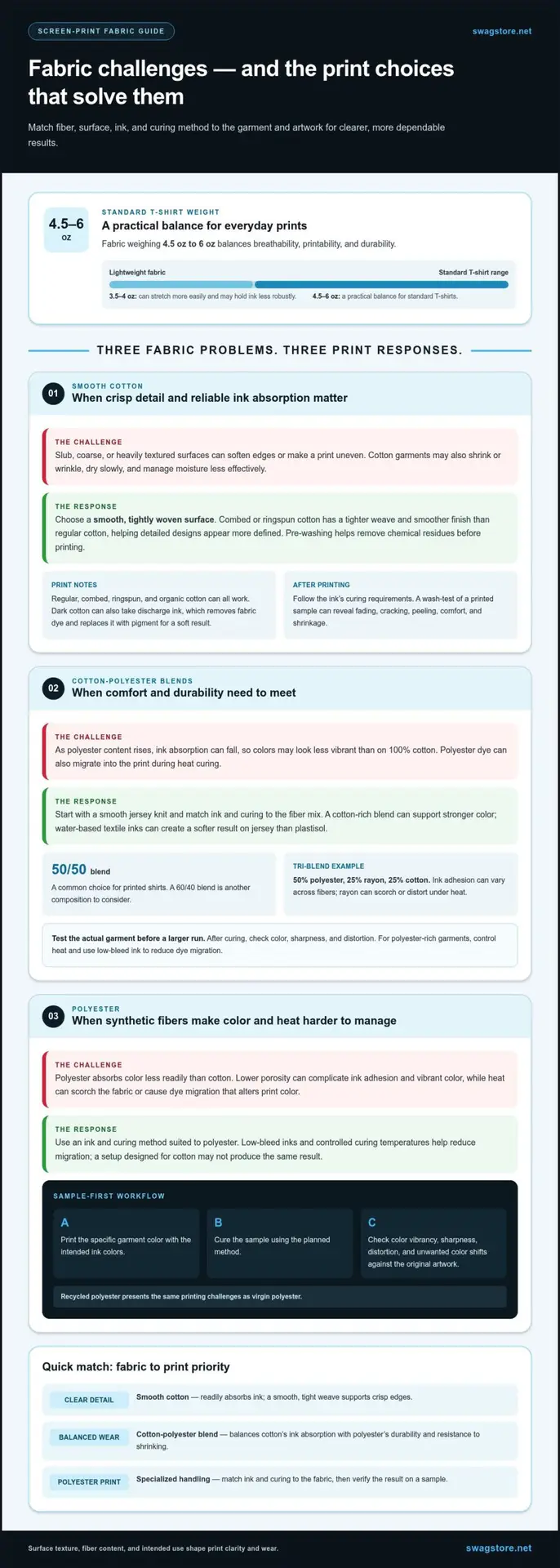
Polyester can be screen printed, but its synthetic fibers absorb color less readily than cotton. Lower porosity can make ink adhesion and vibrant colors more difficult, especially on smooth clothing. Heat creates another challenge: polyester can scorch during curing. The best fabrics for screen printing quality depend on the artwork and garment, but polyester needs an ink and curing method suited to its properties. A setup designed for cotton may not produce the same result.
Dye migration is a key concern. During heat curing, dye from polyester can move into the screen-print ink and alter its color. For example, a bright design on a dark polyester shirt can lose clarity if garment dye bleeds into the ink layer. Low-bleed inks and controlled curing temperatures help reduce this risk. Fabric color and ink shades also affect the finished appearance.
Use a sample-first workflow before a larger production run. Print the specific garment color with the intended ink colors, then cure it using the planned method. Check the sample for color vibrancy, sharpness, and distortion. This shows how that polyester responds to the actual ink-and-heat combination. Comparing the cured sample with the original artwork helps catch unwanted color shifts before production continues.
Recycled polyester presents the same printing challenges as virgin polyester, so recycled content doesn’t remove the need for careful process selection. When weighing the best fabrics for screen printing quality, consider whether polyester suits the garment’s use and design. Textured surfaces can make fine artwork harder to reproduce, so adapt the artwork to the fabric. Screen printing can create durable designs and work well for large garment orders when fabric, ink, and curing methods are matched.
For athletic clothing, nylon and spandex stretch and resist sweat, making them useful for close-fitting apparel. Both are heat-sensitive, so curing must suit the fabric. Use specialty inks designed for slick or stretchy surfaces, and choose a technique that accommodates the material’s stretch. Polyester athletic garments also need attention to dye migration during heat curing.
Work shirts need fabric and print suited to repeated wear and the design’s detail. A smooth surface helps small lettering and fine lines stay legible; coarse fibers are better suited to simple, bold artwork. Compare the fabric’s texture with the design before production. A large, uncomplicated mark works better on an uneven surface than intricate lettering.
Silk’s smooth weave can support an even print, but secure the fabric to the platen to prevent movement. A higher-mesh-count screen suits silk’s fine weave, especially for multicolor designs. Silk’s smooth surface can affect how color appears in a print, so check a sample before production. Wool can absorb color, but uneven ink uptake makes consistent printing harder. Moisture and heat can felt wool, so curing needs careful control. Linen and hemp are other natural fabric options, and their cost and texture may also shape the choice. For designers and manufacturers sourcing premium textiles for specialty production, Trade80Silks UK supplies high-quality silk and natural fabrics.
Match fabric, artwork, and technique before committing to production. For branded apparel, plan your custom screen-printing project around the garment’s intended use and surface.
SwagStore.NET offers Custom Screen Printed T-Shirts for businesses and organizations creating branded apparel. For a team, event, or company giveaway, consider how fabric, color, and artwork will work together before choosing a shirt. Smooth cotton is a strong option for clear color absorption, while blends may suit projects where fabric feel and durability also matter.
For a coordinated apparel program, Embroidered Nike and Under Armour Polos offer a different finish from printed tees. Choose the decoration style that suits the garment and the visual effect you want. SwagStore.NET provides screen printing and embroidery for custom apparel. Contact SwagStore.NET to discuss your project.
Before choosing a garment, decide what you want the finished piece to say about your organization. A staff uniform, event shirt, and welcome gift each create a different impression. Let the audience, intended setting, and visual identity guide your creative direction.
Bring those priorities together in a concise brief: who will wear the apparel, where they’ll use it, and which design elements matter most. Treat the best fabrics for screen printing quality as part of the creative plan, not an afterthought. A clear brief connects the garment, artwork, and brand experience from the start.
Ready to turn your concept into branded apparel? Contact SwagStore.NET about custom apparel and take the next step toward a design your team will be proud to wear.
Cotton, cotton-polyester blends, polyester, silk, linen, hemp, and some wool blends can be screen printed. The right option depends on the garment’s purpose and artwork: a staff tee with a simple logo has different needs from a silk scarf with fine lines. For an unfamiliar fabric, use a sample garment to assess print appearance and feel before planning a larger run.
For T-shirts, smooth cotton or a cotton-polyester blend works well. Hoodies also suit cotton and blends, though thicker material affects ink use. Athletic apparel often uses polyester, nylon, or spandex for stretch and performance, but these fabrics need specialized printing considerations. Choose based on how the clothing will be worn, then match the design’s detail and print method to the fabric.
Reduce dye migration on polyester-rich fabrics with low-bleed inks and controlled curing temperatures. Before production, print the exact garment color with the intended ink shades and curing process. Inspect the cured sample for color changes or distortion, which may not appear on a different colorway. Recycled polyester needs the same care as virgin polyester.
Pre-wash garments to remove chemical residues, then keep unused blanks clean, dry, and away from direct sunlight and excessive humidity. Cure the print using a method suited to the ink and fabric, such as a heat press or drying tunnel for cotton. Wash-test a finished sample to see how the print and garment respond to laundering.
Uneven texture can disrupt fine details, while soft jersey may shift during printing and misalign multicolor artwork. Polyester dye can bleed into ink during curing, and heat-sensitive fibers may scorch or distort. Choose simpler artwork for coarse surfaces, stabilize moving fabric during printing, and test the actual garment before production. A wash test can also reveal cracking, peeling, fading, or shrinkage.