

Bad swag can make a brand memorable for the wrong reason. A practical approach to avoiding brand damage from bad swag is to choose items that are useful, well made, aligned with your values, and suited to the people receiving them. Then pay attention to customer feedback: a thoughtful response to a genuine complaint can help protect trust.
A giveaway should reflect well on your business, not end up forgotten or leave recipients disappointed. Balance sustainability, everyday usefulness, audience preferences, and the quality people can see and feel.
This guide covers swag mistakes to avoid, how to make considered choices, and how customer reviews can shape brand trust before and after a campaign.
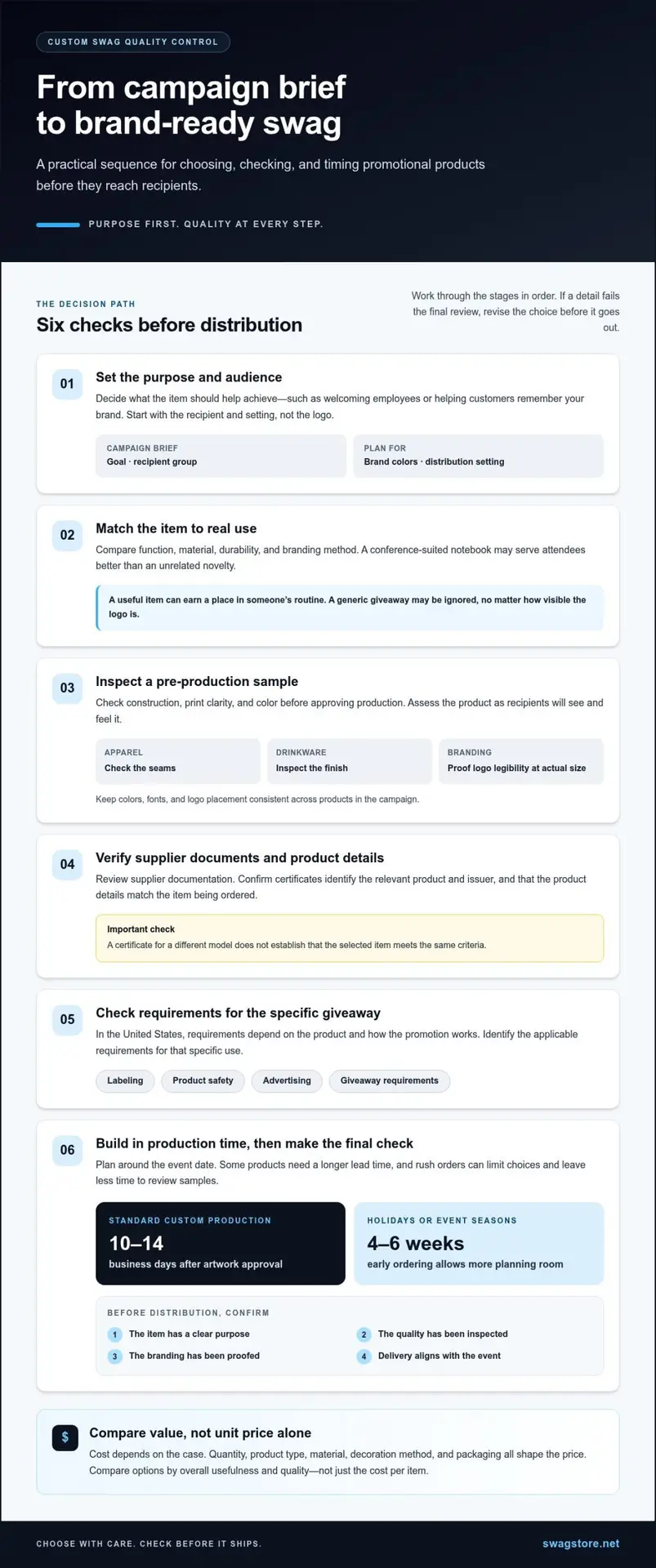
Promotional products shape impressions long after an event ends. Build a positive one by giving the item a clear purpose, such as welcoming employees or helping customers remember your brand. A useful item with a clear message can reflect your values; a generic giveaway may be ignored.
What makes promotional swag damage a brand’s reputation? Poor quality, unclear branding, or a mismatch with recipients can make a business seem careless. A tumbler with a peeling logo or a pen that stops working can overshadow a polished booth and raise doubts about the company’s attention to detail.
In the United States, requirements for branded merchandise, labeling, and giveaways depend on the product and how the promotion works. Before distributing an item, identify the applicable labeling, product-safety, advertising, and giveaway requirements for that specific use.
How can companies choose useful, high-quality branded merchandise? Start with the recipient and setting, then compare the item’s function, material, durability, and branding method. A notebook suited to a conference may serve attendees better than an unrelated novelty. Review a pre-production sample to assess construction, print clarity, and color.
Durability matters because recipients experience the item as an expression of your brand. Check apparel seams, inspect drinkware finishes, and confirm that the logo remains legible at its actual size. Keep colors, fonts, and logo placement consistent across products in the campaign.
How can businesses verify swag suppliers and product safety certifications? Review the supplier’s documentation, confirm certificates identify the relevant product and issuer, and check that product details match the item being ordered. A certificate for a different model does not establish that the selected item meets the same criteria.
Promotional product experts can help teams align the item, decoration, and audience. Bring a concise brief covering the campaign goal, recipient group, brand colors, and distribution setting. Review artwork and samples together so the logo’s placement and finish suit the product rather than simply filling available space.
How much should a company budget per item for quality promotional merchandise? The price depends on the case and is given after a quote request; quantity, product type, material, decoration method, and packaging shape the cost. Compare options by overall usefulness and quality, not by unit price alone.
Plan production around the event date. Standard custom swag production takes 10–14 business days after artwork approval, and ordering 4–6 weeks early during holidays or event seasons allows more planning room. Some items need a longer lead time, so rush orders can limit choices and leave less time to review samples.
To avoid brand damage from bad swag, use a simple final check: confirm the item’s purpose, inspect its quality, proof the branding, and align delivery with the event. If any detail fails that review, revise the choice before distribution.
A giveaway can express your values before recipients read a campaign message. Reusable products can signal care for sustainability, while items made with recycled, organic, or biodegradable materials offer another option. Choose an approach that fits your business’s actual commitments, then explain the material choice clearly in marketing copy.
Consider the item’s full life cycle. Ask what it’s made from, whether recipients can use it repeatedly, and what happens when it wears out. A recycled tote may suit an event where attendees need to carry materials; a disposable novelty may conflict with a message about reducing waste. The best choice connects material, purpose, and audience.
Ethical sourcing also calls for practical attention. Request clear information about material composition and sourcing, and align your claims with that documentation. Don’t describe an item as sustainable based on one feature alone. If it contains recycled material, state that specific attribute rather than implying the entire product has no environmental impact.
Use these steps to connect sustainability with brand consistency:
Design also carries a message. Apply a consistent brand palette, typography, and logo treatment across the product, packaging, and campaign materials. Colors can look different on fabric, paper, or drinkware, so define acceptable variations in your brand guide. This gives designers a clear reference without requiring every material to reproduce a shade identically.
Consistent branding doesn’t mean placing a large logo on every surface. Consider where the mark appears and how it works with the product’s design. A notebook with restrained branding can still feel connected to your brand through its color and message. A reusable tumbler can use a different visual treatment while maintaining the same recognizable palette.
Most importantly, let the item reflect promises your company can keep. If a campaign highlights waste reduction, avoid pairing it with excess packaging. If your message centers on long-term usefulness, choose something suited to repeated use. A gap between marketing and the recipient’s experience can weaken your reputation, even when the product looks polished.
For a reusable drinkware option, consider how branded YETI and Stanley tumblers fit your audience, campaign message, and sustainability priorities.
A useful promotional item earns a place in someone’s routine. Start your selection strategy with recipients’ daily tasks, not the size of your logo. Ask where they’ll use the item, what need it meets, and whether it suits the event. An item used regularly can keep your brand visible; one without a clear purpose may be forgotten or discarded.
Think about context. At a conference, attendees may appreciate something that helps organize notes or carry materials. For a hybrid workplace, an item that supports a desk routine may be more relevant. The same giveaway won’t suit every audience. Choose for the recipient’s real setting rather than assuming a popular item works for everyone.
Use a simple review before approving an idea:
Function goes beyond an item’s basic purpose. Poor design can frustrate recipients even when the concept sounds practical. A small writing surface may be awkward to use, while a bulky accessory may be inconvenient to carry. Consider handling, storage, portability, and the clarity of any instructions. These details affect whether the product becomes part of someone’s routine.
Test the experience from the recipient’s perspective. Pick up a sample, use it as intended, and note any obstacles. If it’s meant for an event, simulate that setting: can someone carry it while holding other materials? If it’s intended for a desk, does it fit without creating clutter? A short, realistic test can reveal friction that a product description won’t.
Useful swag should also feel worth keeping. Recipients are more likely to value an item that meets a need and suits their lifestyle. Prioritize the item’s benefit, then add branding in a way that feels integrated. A logo should identify the source without dominating the experience or reducing the product’s appeal.
Quantity alone doesn’t make a campaign effective. Distributing more items can amplify waste if the products don’t connect with recipients. A smaller selection of practical pieces may create a more lasting impression than a large assortment of forgettable giveaways. Set a clear purpose for each item, and measure success through use, feedback, and continued brand recognition.
Useful choices can still be creative. Match the product to a specific audience or moment, then make the design distinctive through color, message, and thoughtful placement. That balance helps promotional items feel personal rather than automatic. Before ordering, ask: would the intended recipient choose to keep and use this item without the logo?
A giveaway feels relevant when it fits the recipient’s interests, setting, and habits. Define the audience before choosing an item. A conference for designers, for example, may call for a different kind of giveaway than an employee welcome event. The item should connect naturally to the people receiving it and the reason you’re meeting them.
Use information you already have to guide your choice. Review customer relationship management records for common interests, or ask employees what new team members would use. An internal survey can reveal whether staff prefer desk items, drinkware, or products they can carry. Look for recurring preferences, then match them to the campaign’s purpose and brand values.
Separate audiences when their routines differ. A trade-show attendee may value an item that’s easy to carry between sessions, while a remote employee may prefer something for a home workspace. For a sports audience, a giveaway related to the sport may feel more personal than a generic office item. The setting helps determine what will be useful.
Before approving a product, ask:
Personalization starts with relevance, not necessarily a recipient’s name. A design can speak to an audience through its colors, message, or connection to a shared interest. A conference giveaway might reference the event theme, while an employee gift could reflect the team’s work. Keep the logo visible, but let the recipient’s experience guide the design.
Protect brand fit as you tailor the item. A playful design may suit a creative event but conflict with a formal client meeting. Likewise, a practical product can still feel disconnected if its style or message clashes with your identity. Review the product, decoration, and distribution context together so each choice tells the same story.
Test the idea with people who resemble the intended recipients. Show them the item and ask what they’d use it for, where it would fit, and what feels off. Their answers can reveal a mismatch before production. If they can’t identify a useful role for the giveaway, revisit the product or design instead of relying on a larger logo.
A well-matched giveaway respects audience preferences while reinforcing your brand identity. Use available feedback to refine future choices, and note whether recipients keep, use, or comment on the item. Their response can help make your next campaign more considered, personal, and connected to the people it aims to reach.
A branded item can create a connection, but a disappointing experience can travel further than the giveaway. A recipient who receives a damaged product may post a review describing both the item and the company behind it. That reaction can challenge the brand’s identity and values, especially when the product’s quality conflicts with its public promises.
Monitor major review websites and the channels where customers commonly share feedback. Look for recurring problems, such as unclear decoration, items that fail during use, or products that don’t match campaign descriptions. A repeated complaint points to a process issue worth investigating, not a one-off comment to dismiss.
Respond thoughtfully. First investigate what happened, then acknowledge the specific concern. If the complaint is legitimate, apologize and explain the action you’re taking to make things right. If event attendees report that a printed design quickly peeled, for example, review the production and approval process before promising a fix. A direct response shows accountability better than a generic reply.
How can organizations test swag before ordering in bulk and measure its impact? Review a pre-production sample for appearance and function, then gather feedback from people who represent the intended recipients. After distribution, use a QR code, custom URL, or unique contact number to track engagement, and compare those responses with customer comments and reviews.
Keep the test focused. Ask reviewers whether the item feels relevant, works as intended, and reflects the campaign message. Record specific feedback about usability, design, and perceived quality. For a pilot event, note which items recipients choose to keep or discuss, then use those observations to refine the bulk order. Don’t treat one positive reaction as proof that every audience will respond the same way.
Measure more than visibility. A giveaway can be widely seen yet fail to build trust if it feels poorly made or disconnected from your brand’s values. Track the response you intended to encourage, such as visits through a campaign QR code or inquiries using a unique contact number. Review those signals alongside complaints, compliments, and recurring concerns to understand the full experience.
Keep brand promises consistent after feedback arrives. If your marketing emphasizes durability, respond promptly when recipients report a product failure and review whether the item meets that promise. If comments reveal a mismatch between the giveaway and your company identity, adjust the product or message in future campaigns. Taking action to close that gap helps protect your reputation.
Use each review as a practical input: investigate the issue, respond clearly, and apply the lesson to your next campaign. To build a giveaway around your brand standards, explore custom branded merchandise options.
SwagStore.NET helps businesses choose branded merchandise for events, employee gifts, and customer campaigns. Turn to the company when your team needs promotional items that connect a clear purpose with practical use. Custom Screen Printed T-Shirts can support event visibility, while embroidered Nike and Under Armour polos suit a more polished team look. Branded YETI and Stanley Tumblers, along with custom logo power banks and tech accessories, offer options for different recipient needs.
Use the audience, campaign message, and intended setting to guide your selection. A focused choice keeps merchandise aligned with your brand identity and the experience you want recipients to remember.
Visit swagstore.net to explore options for your next branded merchandise project.
Start your next swag decision with a brief, not a catalog. Write down the audience, the moment you want to create, and the feeling you want recipients to associate with your brand. This gives your team a creative filter for avoiding brand damage from bad swag while leaving room for a distinctive idea.
Choose an item that expresses that intent. Custom Screen Printed T-Shirts can bring a campaign identity to a shared event; embroidered Nike and Under Armour polos can give a team a coordinated look; branded YETI and Stanley Tumblers can put your brand in a recipient’s daily routine. The strongest choice feels right for your people and your message.
SwagStore.NET can help turn that brief into branded merchandise for your organization. Share your campaign goal and audience, then shape an item that feels considered from design to delivery.
Contact SwagStore.NET about your swag and take the next step toward a more intentional campaign.
Don’t treat swag as a last-minute add-on without a defined role in the campaign. Decide who will distribute it, how recipients will receive it, and what message should accompany it. A giveaway handed out at a booth, for example, needs a clear connection to the event conversation. Assign one person to approve the final artwork and distribution plan so execution stays consistent.
Avoid materials or construction that conflict with your stated values or make an item unsuitable for its intended use. Use sustainability claims supported by product information, and don’t imply a product is fully sustainable based on one material attribute. Look for unclear product details, inconsistent decoration, or finishes likely to fail during ordinary handling.
Low-quality or disposable giveaways can leave recipients with a poor impression and may be discarded instead of used. Misleading branding creates another problem: if the item’s message or appearance doesn’t match the company’s identity, recipients may question the brand’s consistency. A product presented as durable but showing visible wear quickly can undermine confidence in the company’s claims.
Choose an item that makes sense for both the recipient and the moment. A welcome gift for a new employee can serve a different purpose than a giveaway for a crowded trade-show floor. Write a short brief describing the audience, setting, brand values, and intended experience. Use it to compare ideas, and remove options that satisfy the logo requirement but don’t fit the occasion.
Respond promptly, establish what happened, and address the recipient’s concern directly. Keep order details, artwork approvals, and a sample of the affected item together so your team can identify whether the issue involves the product, decoration, or handling. If the complaint is valid, apologize and explain the practical steps you’re taking. Then document the lesson and update your approval or quality review process.