


Personalized gifts can mean more than generic ones when they recognize a real contribution or reflect what an employee values. The best gifts to improve team morale pair individual recognition with practical, inclusive choices that support the whole team.
A useful gift doesn’t need to be elaborate. A clear connection to a milestone, a thank-you, or a shared achievement can make recognition feel more genuine than a one-size-fits-all gesture.
This guide explains how to choose gifts that encourage collaboration, celebrate individual contributions, and fit your budget without compromising quality. It also covers affordable branded apparel and desk accessories, ways to reflect company values, and gift ideas for remote and hybrid teams.
Choose gifts that connect appreciation to a shared goal, not just a calendar date. A practical item can support workplace routines, while a team experience creates space for collaboration. More than 80% of respondents said receiving a prepaid or gift card would increase their productivity and loyalty. Make the gesture more meaningful by pairing it with a clear explanation of what the team accomplished.
Recognize results where colleagues can see them. After a demanding project, managers might host a team lunch or gathering and name the contributions that brought the work together. The average person spends 90,000 hours at work over a lifetime, so everyday moments of appreciation matter. Keep public recognition specific, respectful, and focused on the team’s actions.
Combine shared recognition with individual goals. Employees with individual goals are twice as likely to be engaged at work. Set a clear target, explain how each role contributes, then celebrate progress with a group reward. This approach can encourage teamwork without overlooking the ability and effort each employee brings to the result.
For alternatives to physical gifts, offer a shared experience, such as a team lunch, or meaningful extra time off. A group activity can strengthen relationships, while time away gives employees a chance to recharge and support wellness.
For U.S. tax planning, consider the gift type, its value, how often it’s given, and its business purpose. Cash, cash-equivalent awards, and tangible gifts may require different tax reviews, so account for those factors in your organization’s payroll process.
Make gifts more inclusive by offering a small set of practical options and letting employees choose what suits them. Consider dietary needs, accessibility, religious observances, and different work routines before selecting food, activities, or personal items. A flexible gift card can give employees more control.
Avoid gifts that assume everyone shares the same hobbies, beliefs, or tastes. An item with no connection to a real contribution can feel impersonal, while jokes about an employee’s identity or appearance may feel inappropriate. Ask managers to explain the reason for each gift and apply consistent criteria across comparable teams.
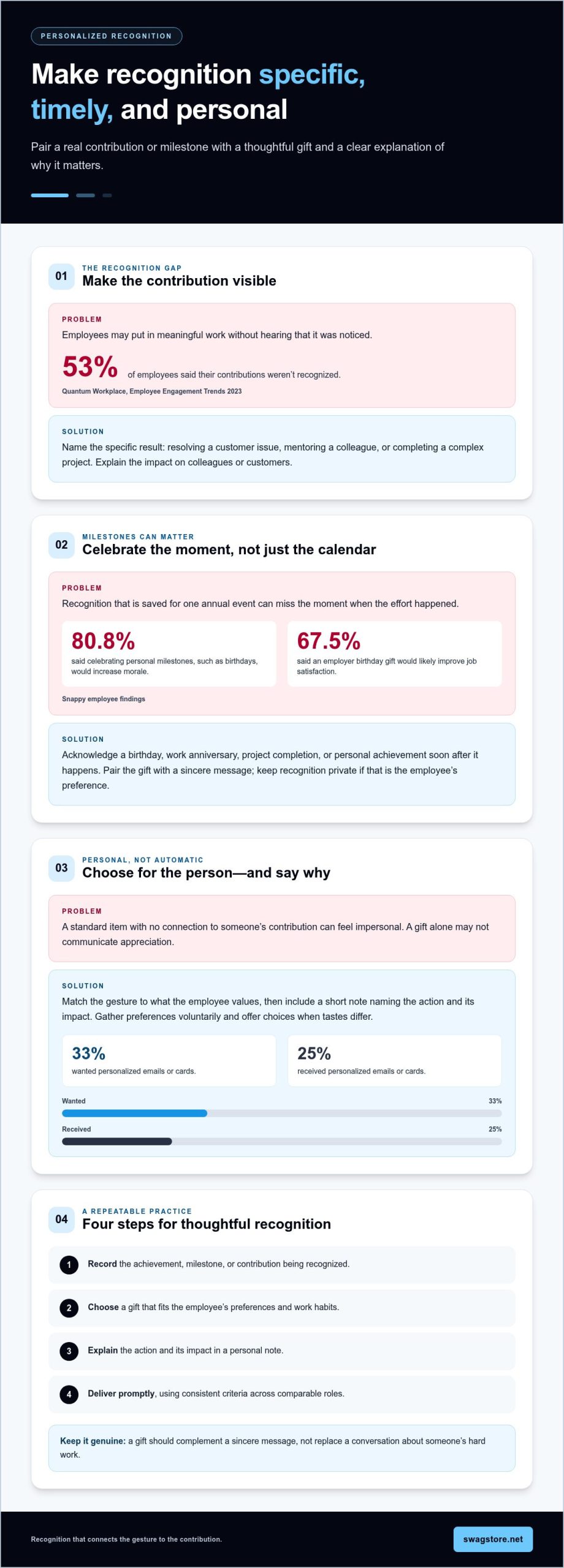
Make the recognition timely. Snappy found that 74.5% of employees said celebrating personal milestones would improve retention. Mark a completed project or a team achievement soon after it happens, then explain the impact. These deliberate gifts to improve team morale make appreciation part of how work gets done, not just an annual event.
A personal gift works best when it names the effort behind it. In Quantum Workplace’s Employee Engagement Trends 2023 report, 53% of employees said their contributions weren’t recognized. Close that gap by connecting each gesture to a specific result, such as resolving a customer issue, mentoring a colleague, or completing a complex project. Recognition feels credible when the employee can see exactly what prompted it.
Choose the occasion with care. A birthday, work anniversary, project completion, or personal achievement can each create a natural moment for appreciation. Snappy found that 80.8% of employees said celebrating personal milestones such as birthdays would increase morale. Instead of relying on one annual event, build recognition into the organization’s routine and acknowledge meaningful contributions as they happen.
Personalization doesn’t require an elaborate gift. Match the gesture to something the employee values, then include a short note explaining the choice. For example, recognize a colleague who shares expertise with a useful notebook, or thank a project lead with a practical item for their daily routine. A message from leadership can make a modest gift feel personal and memorable.
Use a simple process to keep recognition consistent:
Snappy reported that 67.5% of employees said an employer birthday gift would likely improve job satisfaction. That finding supports thoughtful celebration, not automatic gifting. A gift should complement a sincere message, rather than stand in for a conversation about someone’s hard work. Avoid public attention if the employee prefers private recognition.
Written appreciation can also be personal. In employee gift preference figures, 33% wanted personalized emails or cards, while 25% received them. A manager can use a concise message to cite a specific contribution, such as the extra care taken to onboard a teammate. For lasting recognition, save these notes in a shared appreciation practice, while respecting employee privacy.
For an individual milestone, a gift that reflects personal taste can feel more meaningful than a standard item given to everyone. Gather preferences through voluntary feedback, and offer choices when tastes differ. A useful starting point for planning a tangible gesture is exploring personalized recognition gifts.
A modest budget can still support meaningful employee appreciation. Choose an item people can use, then connect it to a specific moment or purpose. A handwritten note can explain why the gift matters, whether it marks a project milestone or welcomes a new colleague.
Branded apparel can build a shared visual identity when employees genuinely want to wear it. Choose versatile designs and colors that suit different preferences and workplace settings. Before ordering, gather input on fit, style, and practical use. A well-considered shirt for a volunteer day, for example, can help employees feel part of one team without making the logo the whole message.
Desk accessories offer another practical option. A notebook can support planning, while a pen or reusable drinkware can become part of an employee’s routine. Choose items for usefulness first, then add polished, understated branding. An accessory that stays on a desk or travels to meetings can keep the appreciation visible beyond the gifting moment.
Use these steps to make a limited budget work harder:
Quality and relevance matter more than quantity. A practical item with a clear purpose can feel more thoughtful than a collection of unrelated accessories. Ask employees which everyday tools they would use, then apply their feedback to future selections. This helps gifts reflect real preferences instead of assumptions.
Gifting can also support a broader appreciation practice. About 66% of organizations surveyed in a 2022 Coresight Research study gave gifts to show appreciation and acknowledge employee milestones. Use that idea as a prompt to recognize contributions throughout the year, rather than reserving every gesture for a holiday. For example, a team might pair a useful desk item with a note after a demanding launch.
Keep the presentation simple and inclusive. Offer a choice between a few practical items when tastes or roles differ, and make sure remote employees can participate. A useful, well-presented gift paired with specific recognition can strengthen morale without relying on extravagance.
A gift feels thoughtful when its purpose reflects the values employees see in everyday decisions. If sustainability guides your organization, choose a durable item with less packaging, or give employees time to join a cleanup. If inclusion matters, offer choices that account for different preferences, access needs, and cultural practices. The action should make the value visible, not just print it on a card.
Start with a clear value and connect it to real workplace behavior. For example, celebrate collaboration with a shared team experience after colleagues support a cross-functional launch. Recognize community service by giving employees time to volunteer for a cause they choose. These ideas link appreciation to something people can observe, making the message more credible than a slogan alone.
Use a simple alignment check before selecting a gift:
For a sustainability focus, prioritize usefulness and durability over novelty. A reusable everyday item can reinforce the message if employees find it practical. Avoid excessive packaging, and explain how the choice reflects your organization’s environmental priorities. The gesture works best when procurement decisions and workplace habits support the same commitment.
For inclusion, don’t assume that one activity or item suits every employee. A meal-centered celebration may not work for colleagues with different dietary needs, and a public ceremony may not suit someone who prefers private recognition. Offer equivalent options, such as a shared activity or an individual experience. That flexibility supports positive engagement without requiring anyone to explain personal circumstances.
Philanthropy offers another option. Let employees nominate a community cause, then make a group contribution or organize a volunteer activity around the selected cause. Explain how nominations are considered and share the final choice with the team. A transparent process helps employees see how their input informs the organization’s action.
Check that recognition is consistent, too. If your company celebrates innovation, recognize ideas that improve a process, not just high-profile launches. If wellbeing is a stated value, don’t pair a wellness-themed gift with expectations that undermine rest. Employees notice whether gestures align with everyday decisions. Use feedback from each recognition moment to refine future choices and support motivation.
Finally, make the message specific. A note might say, “Your careful handoff helped the support and product teams solve this issue together.” That example names a behavior and its impact. Gifts to improve team morale can reinforce company values when the reason for giving is clear, the choice respects employees, and the organization’s actions match its words.
A good remote-team gift works across locations, schedules, and home setups. Around 33% of at-home workers feel isolated or lonely at least sometimes. A thoughtful gesture can make recognition visible beyond the office, especially when it arrives with a personal note. Choose something useful, flexible, and easy to enjoy without joining a live event.
Start with an option employees can use in their own way. A digital gift card lets each person choose what suits them, while a mailed care package can create a shared moment across time zones. Keep the value and presentation consistent for comparable contributions. Add a message that explains the reason, such as thanking a teammate for supporting a product launch.
Consider home delivery before choosing a physical gift. Confirm that each employee can receive packages at a suitable address, and don’t require anyone to share a personal address publicly. For a distributed team, communicate delivery details privately and provide a clear way to opt for an alternative. A little planning can prevent a well-meant gesture from becoming an inconvenience.
Remote and hybrid employees can share experiences without being in one room. Offer an optional virtual activity, such as a hosted cooking session, or give employees time to join a local activity independently. Don’t treat attendance as a test of engagement. A recording, alternative choice, or asynchronous celebration can include colleagues with different schedules.
For new hires, an onboarding gift kit can create a welcoming first impression from afar. Pair useful workday items with a brief note from the manager, and explain where to find key team resources. Keep the contents practical for home and office use. Thoughtful onboarding gifts can help a new employee feel included before meeting colleagues in person.
Use this checklist before sending a remote team gift:
Gather employee feedback after each gifting moment. If colleagues say a mailed item was useful but delivery was difficult, offer a digital choice next time. If a virtual celebration excluded a time zone, use an asynchronous message or local option. These adjustments help gifts to improve team morale feel inclusive, not merely convenient.
Welcome distributed hires with a practical, coordinated gesture. Explore remote employee onboarding gift kits as one way to make that first team connection tangible.
SwagStore.NET helps organizations turn team recognition into practical, branded gifts. For an onboarding moment, a shared milestone, or useful gifts for a team, choose from Custom Screen Printed T-Shirts, Embroidered Nike and Under Armour Polos, Branded YETI and Stanley Tumblers, and Custom Logo Power Banks and Tech Accessories.
Match the item to how employees work and what the occasion represents. Apparel can create a shared look for a team event, while tumblers or tech accessories can serve a practical everyday purpose. A clear design and thoughtful message connect the gift to your culture without overshadowing the recognition itself.
For branded gifts that bring your appreciation plan to life, visit swagstore.net.
Give appreciation a clear next step: build recognition into moments your team already shares, from project launches to welcoming new colleagues. A simple planning rhythm helps managers act intentionally instead of scrambling for a last-minute gesture. Keep the focus on the person or team, and let the gift support that message.
For a coordinated recognition program, SwagStore.NET offers Custom Screen Printed T-Shirts, Embroidered Nike and Under Armour Polos, and Branded YETI and Stanley Tumblers. These options give gifts to improve team morale a tangible place in your team culture, whether you’re marking a shared achievement or welcoming employees.
Contact SwagStore.NET to find team gifts and take the next step toward recognition that feels considered and true to your organization.
Personalized gifts can feel more relevant, while generic gifts can be easier to distribute fairly. Choose based on the occasion and how well you know employees’ preferences. For a new project team, a shared item with a project-specific note may suit everyone. For an individual achievement, a message naming the person’s contribution adds context. The gift matters most when its connection to the recipient or occasion is clear.
Set spending based on the occasion, gifting schedule, team size, and type of recognition. A one-time milestone may call for a different approach than regular appreciation across the organization. Set a consistent budget policy and account for the full expense, including customization, packaging, and delivery. Keep recognition criteria clear so employees in comparable situations receive comparable consideration.
The best appreciation gifts are useful, appropriate for the recipient, and connected to a genuine thank-you. Consider a choice-based reward, a team experience, or a practical item that fits the employee’s routine. A manager might pair a development opportunity with recognition of a newly acquired skill. Ask employees about preferences through a short, optional survey, then use their responses to guide future choices instead of guessing.
Choose gifts that suit the team’s purpose and working environment. A shared creative activity can help a newly formed group connect, while a practical desk item may be more useful for a team that spends much of its day planning. Pair the gift with specific recognition of how colleagues helped one another. Gifts to improve team morale should feel relevant to the way the team works, not like another workplace giveaway.
Within your per-person limit, prioritize items with a clear use, such as quality stationery, a small desk accessory, or a snack option that accommodates varied preferences. A personal note can add meaning without requiring a more elaborate gift. Compare the complete delivered cost with your cap, including customization and packaging. If an item won’t suit every employee, offer an alternative so the budget remains inclusive and practical.
Thoughtful personalized gifts reflect a real interest, contribution, or team memory. For example, recognize a colleague who helped train new hires with a book connected to a skill they want to develop. For a group, use a note recalling a shared challenge and the cooperation that resolved it. Keep personal details respectful, and don’t use information employees haven’t chosen to share at work.
Practical gifts support routines employees already have instead of adding clutter. Consider a well-made notebook for someone who plans on paper, a desk organizer for a shared workspace, or a charging accessory for frequent travel between meetings. A gift card also lets the recipient choose what they need. If you’re unsure, offer a small selection and let employees choose what fits their daily work.
There isn’t one useful average for every organization: budgets depend on the occasion, frequency, team size, and gift type. A recurring thank-you program may use a different allocation from a major company milestone. Set a policy that fits your resources, then apply it consistently. Review employee feedback and participation after each gifting cycle to see whether the allocation supports meaningful recognition and remains sustainable. Thoughtful gifts to improve team morale can fit a budget your organization can sustain.