
Your brand’s first impression shouldn’t end up in a landfill after just two wash cycles. You’ve likely felt the frustration of seeing a carefully designed logo lose its luster or start to pucker on a cheap polo shirt. It’s a common pain point, as 68% of corporate procurement officers report that low-quality custom embroidery directly hurts their team’s professional image. We agree that your identity deserves better than disposable swag that fails to represent your excellence and commitment to quality.
The “quiet luxury” movement dominates 2026 corporate fashion. This trend favors subtle, tonal custom embroidery over loud, oversized prints. As global sustainability regulations tightened in late 2025, the industry shifted toward durable decoration methods that outlast the garment’s initial trend cycle. Brands are moving away from “disposable swag” in favor of curated, high-end pieces. For those interested in how this technique translates to wellness-focused apparel, you can explore Embroidered ‘Grateful’ Sweatshirts options to see premium stitching in action. We’re helping partners select sustainable fabrics that pair perfectly with high-density stitching, ensuring that corporate gifts aren’t just kept, but are worn with genuine enthusiasm in high-value social settings.
This 2026 strategic guide will show you how to leverage premium stitching to build a durable wardrobe that outlasts traditional printing by a factor of five. You’ll learn how to achieve perfect brand color alignment across different thread types and ensure your apparel remains pristine through 50 or more industrial laundry cycles. We’re diving into the technical precision of modern stitching, the psychology of high-perceived-value gifts, and a streamlined approach to managing bulk orders for national teams without the usual logistics headache.
Custom embroidery isn’t just a decoration method; it’s the physical manifestation of brand authority. By 2026, the technical art of precision embroidery has evolved through high-speed computerized machinery to offer detail that was impossible a decade ago. It remains the gold standard for corporate identity because it transforms a generic garment into a piece of professional equipment. Unlike digital prints that sit on the surface, custom embroidery becomes part of the fabric’s DNA, creating a permanent bond between the garment and the brand.
We’re seeing a massive pivot toward “Strategic Swag.” This concept replaces the 2022 era of disposable, single-use items with apparel designed for a three-to-five-year lifecycle. The tactile, 3D nature of a stitched logo creates a psychological anchor. When an employee feels the weight and texture of quality thread, it reinforces a sense of belonging and pride. For clients, seeing a crisp, textured logo signals stability and an obsession with quality that flat graphics simply can’t replicate.
The difference in perceived value is measurable. A 2025 consumer study revealed that 72% of professionals associate embroidered logos with established, trustworthy companies; meanwhile, heat-pressed graphics are often linked to temporary events or budget-constrained startups. Embroidery elevates mid-tier garments, such as standard pique polos or soft-shell jackets, into premium corporate wear. It adds structural integrity to the branding area, ensuring the logo stays sharp even after 100 wash cycles. You can see how this fits into a holistic identity strategy in our Ultimate Guide to Corporate Branded Apparel.
The “quiet luxury” movement dominates 2026 corporate fashion. This trend favors subtle, tonal custom embroidery over loud, oversized prints. As global sustainability regulations tightened in late 2025, the industry shifted toward durable decoration methods that outlast the garment’s initial trend cycle. Brands are moving away from “disposable swag” in favor of curated, high-end pieces. We’re helping partners select sustainable fabrics that pair perfectly with high-density stitching, ensuring that corporate gifts aren’t just kept, but are worn with genuine enthusiasm in high-value social settings.
Transforming a digital logo into a tactile masterpiece requires more than just a sewing machine. By 2026, the custom embroidery industry has shifted toward AI-driven calibration and multi-head synchronization. We utilize systems that maintain 99.8% stitch consistency across production runs of 5,000 units or more. This level of precision ensures that your brand identity remains uncompromised, whether it’s on a breathable performance polo or a heavy canvas tote.
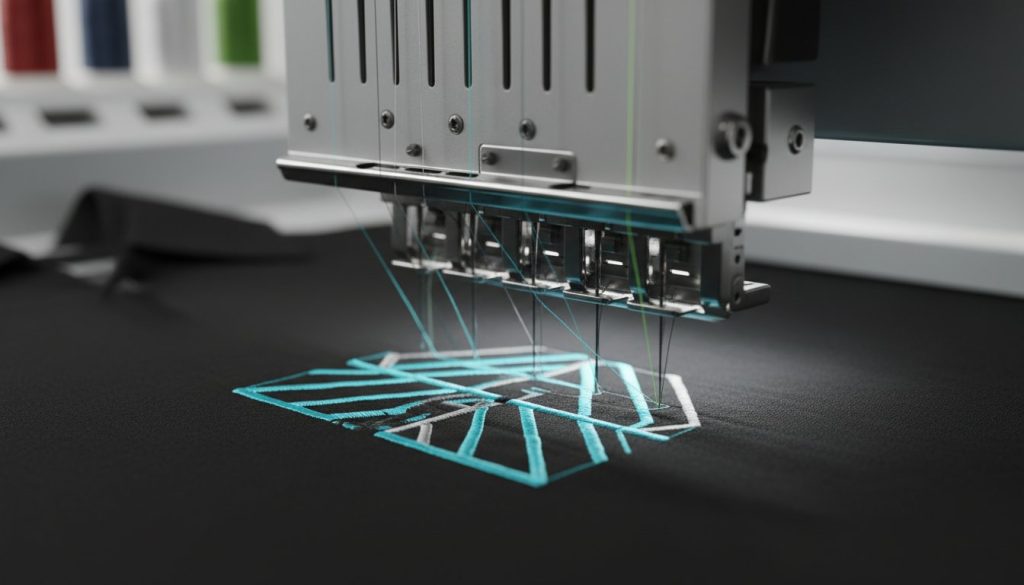
Modern high-volume production relies on 12-needle or 15-needle arrays that swap colors in milliseconds. These machines use laser-guided positioning to eliminate human error during the hooping process. Research published in The Enduring Value of Custom Embroidery proves that technical excellence in textile application is the primary driver of garment durability. When we scale your production, we aren’t just duplicating a design; we’re executing a high-speed engineering plan that accounts for thread tension and needle heat.
Digitizing is the crucial bridge between graphic design and textile engineering. It’s the process of translating a static .AI or .EPS file into a proprietary stitch map that tells the machine exactly where to place every needle drop. Poorly digitized files are the leading cause of “puckering” or visible gaps in the thread. We analyze the push-and-pull compensation of specific fabrics to ensure the logo doesn’t distort the garment. A 2026-standard digitizing file accounts for the density of the knit, preventing the fabric from bunching under the weight of the thread.
Thread choice defines both the look and the lifespan of your swag. We primarily utilize two types of industrial-grade threads. Polyester is the 2026 gold standard for durability; it’s bleach-resistant and withstands high-temperature industrial laundering without fading. Rayon offers a higher natural sheen for luxury corporate gifts, though it requires more delicate care. To ensure brand integrity, we cross-reference your Pantone (PMS) codes against our library of over 400 thread shades. This guarantees a 95% or higher visual match to your official brand guidelines.
The secret to a crisp finish lies beneath the surface. We use specialized stabilizers, known as backings, to provide a rigid foundation for the custom embroidery during the stitching process. Cut-away backings remain with the garment to provide permanent support for stretchy knits; tear-away versions are used for stable woven fabrics to ensure a clean interior. If you’re ready to see how these technical details can elevate your next project, you can explore our premium apparel options to find the perfect canvas for your logo.
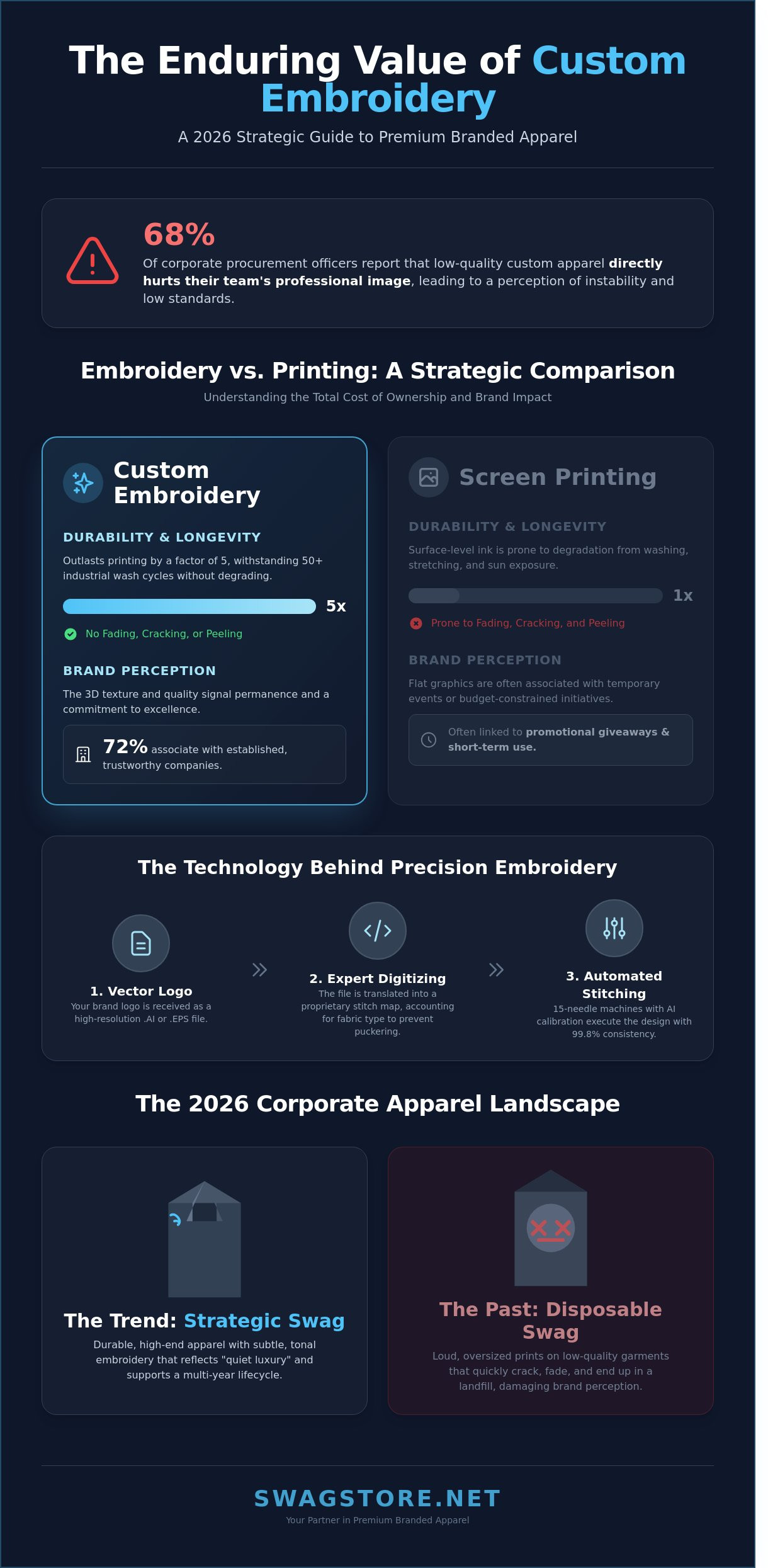
Choosing between these two methods isn’t just a matter of price. It’s a strategic decision that affects your brand’s perception for years. While screen printing dominates for high-volume promotional events, custom embroidery stands as the gold standard for long-term corporate identity. We always encourage our partners to look at the Total Cost of Ownership (TCO). A $25 embroidered polo that maintains its integrity for three years is significantly more cost-effective than a $15 printed shirt that cracks after six months. For high-end uniforms and executive apparel, embroidery is the only choice that communicates true professional authority.
Embroidery is built for the daily grind of the modern workplace. While screen printing utilizes layers of plastisol or water-based ink that can eventually crack, peel, or flake, embroidery uses high-tensile polyester threads stitched directly into the fabric. These threads are specifically engineered to withstand 50+ industrial wash cycles without losing their luster. When we compare “fading” versus “unraveling,” the data favors the needle. High-quality threads retain their vibrant Pantone match far longer than ink, which inevitably loses saturation due to UV exposure and friction. Crucially, embroidery thrives in high-heat drying environments. Industrial dryers often reach temperatures of 160°F (71°C), a common failure point where many prints begin to degrade. Your embroidered logo remains structurally sound, ensuring your team looks sharp even after years of heavy use.
The 3D effect of custom embroidery creates a tactile experience that flat prints simply can’t replicate. It adds a physical dimension to your logo, suggesting stability, tradition, and craftsmanship. This technique has deep roots in the history of needlework samplers, where intricate stitching was a mark of quality and status. Today, that same perception of value carries over to your corporate outerwear and headwear. However, we have to recognize technical limits. If your project involves massive back graphics or complex 12-color gradients, you should explore custom screen printed t-shirts for a more flexible and lightweight solution.
The Strategic Selection Checklist:
By focusing on the long-term lifecycle of the garment rather than the initial unit cost, you ensure your brand’s “swag” remains an asset rather than a disposable expense. We help you match the technique to the garment to maximize both your budget and your brand’s visual impact.
Choosing the right fabric isn’t just a matter of style; it’s a technical decision that determines the longevity of your brand’s image. At SwagStore.NET, we treat every garment as a high-performance canvas. The most critical metric we track is GSM, or grams per square meter. If a fabric’s weight is too low, typically under 150 GSM, you’ll experience “embroidery sag,” where the weight of the thread causes the fabric to pucker and droop. For a crisp, professional finish, we recommend a minimum of 180 to 210 GSM for corporate apparel. This density ensures the custom embroidery remains flat and legible through hundreds of wash cycles.
Our partnership with premium brands like Nike and Under Armour gives our clients access to fabrics engineered specifically for high-density stitching. These aren’t standard retail blanks. They’re technical garments designed to maintain structural integrity even when supporting complex, multi-colored logos. If you’re looking for the gold standard in office wear, explore our Guide to Premium Embroidered Polo T-Shirts to see how weight and weave impact your final design.
Moisture-wicking fabrics are a staple of the modern 2026 workspace, but they present unique challenges. These synthetic blends are prone to snagging if the digitizing process isn’t handled with surgical precision. We use specialized “ballpoint” needles and water-soluble toppings to ensure the thread glides through Nike Dri-FIT or Under Armour tech fabrics without tearing the fibers. While 82% of brands stick to the traditional left chest placement, we’re seeing a 35% increase in sleeve and locker patch placements for a more contemporary, retail-inspired look. These positions offer high visibility during video calls and face-to-face networking.
When the temperature drops, custom embroidery becomes the only viable branding method. Screen printing or heat transfers simply won’t bond effectively to the deep piles of fleece or the textured surfaces of softshell jackets. Outerwear requires a different approach to stabilization to prevent the logo from “sinking” into the fabric. For headwear, the choice between structured and unstructured hats is vital. Structured hats feature a stiffened buckram backing that supports heavy, 3D puff embroidery, whereas unstructured hats require a lighter stitch count to prevent the crown from collapsing.
Embroidered outerwear serves as a mobile billboard, providing an average of 6,000 impressions over its lifetime. It’s a high-yield investment that turns every employee into a brand ambassador. Whether it’s a rugged North Face shell or a sleek corporate vest, the fabric must be heavy enough to anchor the brand’s identity securely.
Ready to elevate your team’s look with gear that lasts? Start your premium branding project with our expert design team today.
Growth demands systems that don’t break under pressure. When your team expands from 50 to 5,000 employees, your apparel strategy must evolve. SwagStore.NET simplifies this transition by managing the complex logistics of national and international distribution. We handle the warehousing, individual kitting, and multi-point shipping so your marketing team doesn’t have to spend weekends packing boxes. Our production floor utilizes high-speed multi-head embroidery machines that ensure every single stitch on the 1,000th jacket matches the precision of the first prototype. Quality control isn’t a random check here; it’s a 100% inspection protocol where we verify thread tension and color accuracy against your brand’s specific Pantone standards.
The “economy of stitches” is a massive advantage for your 2026 fiscal budget. While small runs involve significant digitizing and setup labor, these fees effectively vanish at scale. Ordering 500 units instead of 50 typically reduces your per-unit cost by 22% to 30%. This happens because machine calibration and thread staging time are spread across a larger volume. This makes custom embroidery the most cost-effective premium branding method for large organizations looking for durability. We also offer smart inventory management. Your brand can pre-order bulk quantities to lock in lower prices, and we provide on-demand embroidery as your regional teams grow. This single-source approach ensures a level of visual consistency that fragmented local vendors can’t replicate.
First impressions are permanent. A premium embroidered quarter-zip serves as the tactical centerpiece of a high-impact welcome box. When a new hire unboxes a garment featuring a dense, 12,000-stitch logo, they feel an immediate sense of belonging. This isn’t just a piece of clothing; it’s a signal of employee value. 2025 industry data shows that 89% of employees feel more connected to company culture when they receive high-quality apparel during their first week. The tactile nature of custom embroidery conveys a level of permanence and craft that standard printing lacks. It tells your new hires that your brand is built to last and that they are now part of that legacy.
Ready to elevate your corporate identity? Contact SwagStore.NET to start your bulk embroidery project today and let’s build a brand experience that resonates.
The 2026 market rewards brands that prioritize tactile quality over disposable trends. Professional custom embroidery offers a 3 to 1 return on brand recall compared to standard printed merch. We’ve mastered the technical art of digitizing, ensuring even the most intricate corporate logos remain sharp across thousands of units. Our team specializes in high-volume, national-scale branding projects where consistency is non-negotiable. As an official partner for Nike and Under Armour corporate wear, we provide the elite canvas your identity requires. We don’t just stitch fabric; we engineer a professional image that lasts for years. Whether you’re outfitting a regional team of 500 or a global workforce of 10,000, precision remains our standard. It’s time to move beyond basic giveaways and invest in gear that your partners actually want to wear. Let’s turn your corporate identity into a premium brand experience that stands the test of time.
Elevate your brand with premium bulk embroidery from SwagStore.NET
Embroidery is superior for corporate uniforms due to its 50% higher durability and premium texture compared to screen printing. While screen printing works for high-volume promotional t-shirts, embroidery withstands 100+ industrial wash cycles without fading or cracking. It creates a 3D effect that elevates your brand’s perceived value immediately. This professional finish ensures your team looks sharp in every client meeting or trade show.
In 2026, custom embroidery for bulk orders typically ranges from $6.50 to $12.00 per garment for a standard 5,000-stitch logo. Prices depend on the total stitch count and your specific order volume. Ordering 500 units or more often secures a 15% discount compared to small-batch pricing. We provide transparent quotes that include digitizing fees to ensure your marketing budget stays on track.
Almost any logo can be converted, but designs with complex gradients or lines thinner than 0.5mm require simplification for the best results. Our team uses advanced digitizing software to translate your vector files into precise needle paths. We’ve successfully converted 98% of client logos into high-quality custom embroidery patterns while maintaining brand integrity. If a detail is too small, we’ll suggest a clean 2D alternative.
Our minimum order for bulk projects starts at 24 units per design. This threshold allows us to maintain the high-precision calibration required for industrial machines. Smaller batches are possible but usually incur a $35 setup fee for the digitizing process. For the best ROI, we recommend starting with at least 50 pieces to distribute fixed costs effectively and lower your price per unit.
A standard bulk order ships within 10 to 14 business days after you approve the final digital mockup. This timeline includes the 48-hour digitizing phase and strict quality control checks on every piece. We offer expedited shipping options that can reduce delivery time to 7 days for urgent corporate events. You’ll receive a tracking number the moment your swag leaves our warehouse for delivery.
The top-performing brands for embroidery in 2026 are Patagonia, Nike, and Stanley/Stella due to their high fabric density. Fabrics with a weight of 180 GSM or higher provide the necessary stability to prevent puckering around the stitches. We recommend The North Face for outerwear and Bella+Canvas for premium corporate polos. These brands ensure your logo looks sharp and stays centered for years of use.