

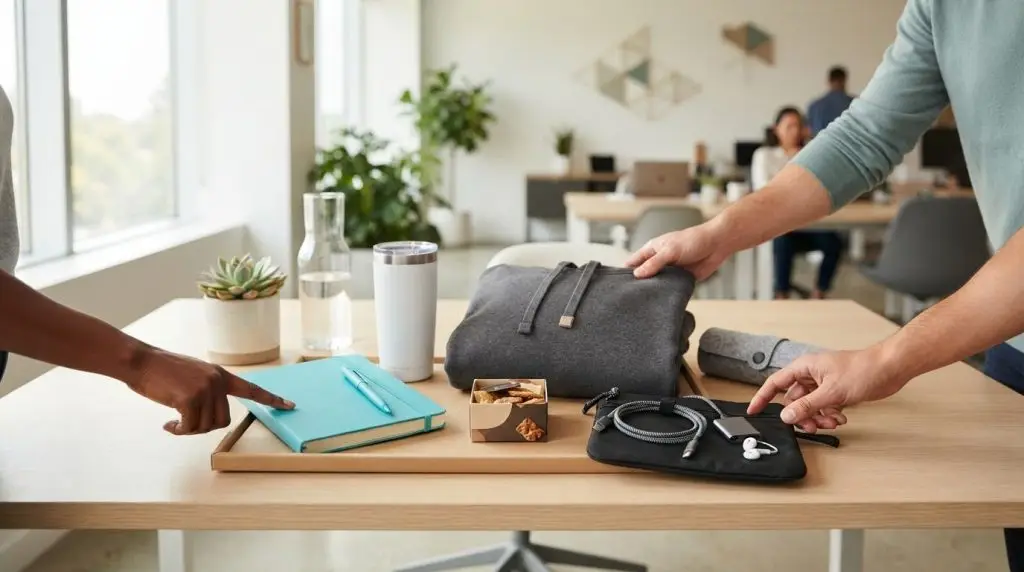
In Snappy’s 2026 Workforce Study, 80% of employees said an onboarding gift would immediately make them feel part of the culture. The strongest onboarding swag that helps with training pairs useful workday essentials, such as a notebook or tech accessory, with a welcoming touch that helps new hires feel included. Think practical, thoughtfully selected items, not a box of forgettable extras.
A welcome gift can help a new hire feel seen, but it works best alongside a prepared manager, working equipment, and a clear first-week plan. Swag should support onboarding, not stand in for it.
What makes a premium onboarding kit worth choosing? Practical usefulness, quality, and a clear connection to how your team works. This guide covers training-friendly ideas, ways to tailor a kit to your company, and how thoughtful choices can help new employees feel valued and ready to contribute.
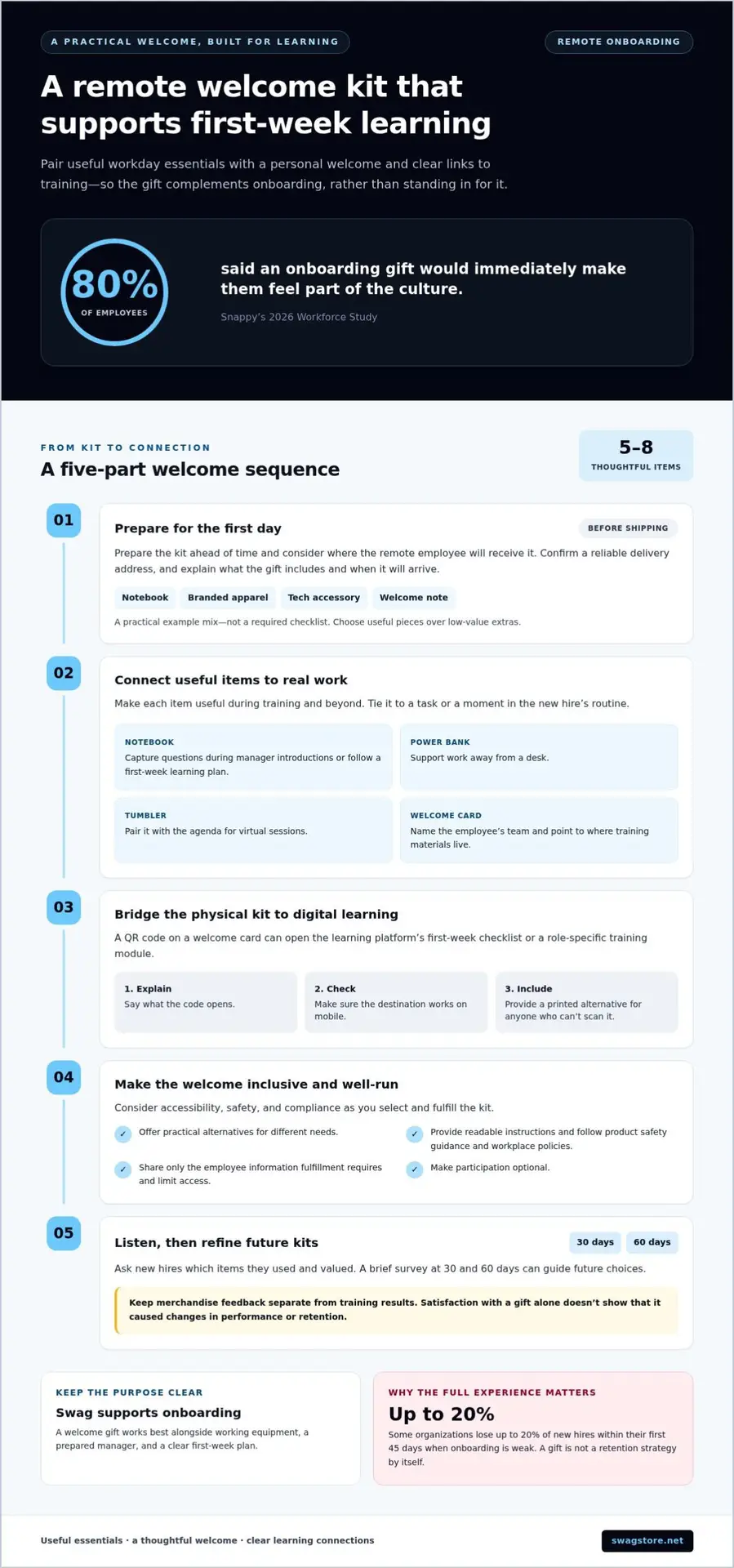
For remote hires, choose useful items that connect directly to first-week tasks. A notebook can hold questions during manager introductions, while a power bank supports work away from a desk. Add a short welcome card that names the employee’s team and explains where training materials live. In Snappy’s 2026 Workforce Study, 80% of employees said an onboarding gift would immediately make them feel part of the culture. A thoughtful kit gives that welcome a practical, work-ready form.
Choose onboarding swag that helps with training by linking each item to a learning moment. Pair a notebook with a first-week learning plan, or place a tumbler beside the agenda for virtual sessions. A QR code can link to the company’s onboarding portal, while a sticker can mark a laptop or notebook as part of the team. Choose items that remain useful beyond day one and become part of an employee’s routine.
For day-one readiness, prepare the kit before shipping and consider where the remote employee will receive it. A practical mix might include a notebook, branded apparel, a tech accessory, and a welcome note. Around 5–8 carefully selected items can feel more intentional than a box filled with low-value trinkets. Make sure the gift complements working equipment, a prepared manager, and a clear first-week plan.
Quality matters more than quantity. Choose items employees can use during training and beyond, rather than novelty pieces with no clear purpose. Then ask new hires which items they used and valued. A brief survey at 30 and 60 days can guide future kit choices. Track that feedback separately from training results, since merchandise satisfaction alone doesn’t show that it caused changes in performance or retention.
Consider accessibility, safety, and compliance when selecting and fulfilling the kit. Offer practical alternatives for different needs, provide readable instructions, and follow product safety guidance and applicable workplace policies. Protect employee information by sharing only what fulfillment requires and limiting access. Make participation optional, and explain what the gift includes and when it will arrive.
Use QR codes to connect physical items with digital learning. For example, a code on a welcome card can open the learning platform’s first-week checklist or a role-specific training module. Make sure the destination works on mobile, explain what the code opens, and provide a printed alternative for employees who can’t scan it. This makes onboarding swag that helps with training a practical bridge between a physical welcome and digital instruction.
A welcome gift can support connection, but it isn’t a retention strategy by itself. Some organizations lose up to 20% of new hires within their first 45 days when onboarding is weak. A clear learning plan, regular manager contact, and useful swag work together to create a stronger welcome. Remote employees can also share a kit item, such as a company sticker, in a team introduction, making culture more visible across locations.
Yes. Build a standard welcome box around your company culture, then personalize selected details for each employee. Start with a shared visual identity, such as consistent colors, a logo, and a welcome message. Choose practical merchandise that fits real work routines rather than appearance alone. A notebook, bottle, and branded apparel offer a clear starting point. Together, they can feel cohesive without making every kit identical.
Make each item useful. A notebook can support training notes, while a bottle suits a long day of meetings. Branded apparel can help new employees feel connected to colleagues, especially on remote teams. A welcome card adds a personal touch with the manager’s name and a useful first-week detail, such as where to find the team calendar or learning platform.
Recipient-choice programs add flexibility while maintaining a consistent company identity. Offer a curated selection of approved items, then let each new hire choose what fits their needs. One employee might prefer a notebook, while another would use a tech accessory more often. Keep the core message and visual design consistent across options. Giving employees a choice can also reduce the amount of unused merchandise.
Plan fulfillment alongside customization. Standard boxes are straightforward to prepare in advance, while recipient choice calls for a clear selection process and delivery plan. Decide what information the program needs, who can access it, and when employees make their selections. For a remote hire, confirm a reliable delivery address; for an office-based hire, have the kit ready at their workspace. A simple process connects the welcome to the first day.
Set budget priorities rather than filling a box for its own sake. A lean kit might include an everyday work essential and a personal welcome note. A more considered version could add branded apparel, a reusable bottle, and a quality notebook. A premium kit can combine several useful pieces chosen for durability and relevance. At every budget level, thoughtful presentation and usefulness matter more than low-value extras.
Customization should reflect the employee experience, not just display a logo. Choose merchandise that fits your company’s values and working style. A team that relies on written planning, for example, could include a notebook and pen. A distributed team might prioritize practical items that travel easily. Ask new hires for feedback after they’ve used their kits, then use it to refine future choices.
For a coordinated starting point, explore custom employee onboarding gift kits and shape the contents around your team’s welcome experience.
A strong package offers employees more than one way to feel included. Pair branded apparel with practical non-apparel choices, such as a notebook or tumbler. A shirt can show team identity at a group event, while a notebook supports planning and training notes. This mix respects different preferences and routines and makes the welcome feel considered, rather than built around one kind of gift.
Treat fit as a practical detail, not an afterthought. Before day one, collect each employee’s preferred size through a simple, private process. Provide garment measurements, fit notes, fabric information, and care instructions so employees can choose with confidence. These details are more useful than a size label alone. Keep apparel optional, and offer a non-apparel alternative for anyone who prefers not to receive clothing.
For distributed teams, collect sizes and arrange delivery in a clear sequence. Ask for apparel preferences before preparing the package, then match each selection to the right recipient. Limit access to employee details to those handling fulfillment. If hiring plans change, avoid building inventory around unrequested sizes. Letting recipients choose reduces guesswork and helps the welcome feel personal, especially when colleagues can’t share an in-person first day.
Branded apparel can build team spirit when employees choose to wear it. A shirt or other team garment can create a shared visual cue at a virtual event or in a group photo. But belonging also comes from the welcome behind the logo. Include a note about the team’s values, or invite new hires to wear the item at an upcoming gathering. That context connects branded merchandise to people, not just promotion.
Non-apparel choices add flexibility to the same package. A branded YETI or Stanley tumbler can suit someone who prefers useful drinkware, while a custom branded Moleskine notebook gives them a place for meeting notes and new questions. Pair either with a short guide to team routines. The goal is not to add more objects, but to offer alternatives employees can use during their workday.
Review the mix after employees have had time to use it. Ask whether the apparel fit comfortably, whether the notebook supported their work, and which item felt most connected to company values. Use the feedback to refine future choices and reduce unused inventory. A simple form can distinguish fit issues from personal preferences, helping you improve the next package without assuming every new hire wants the same things.
Start with one core kit, then customize only where work needs differ. A remote analyst might use a notebook and portable tech accessory, while an office-based teammate may value desk items. A role-specific welcome note can point each employee to relevant tools or training. This keeps the first impression consistent while connecting the contents to actual responsibilities.
Choose core items employees can use across teams. A tumbler supports a daily routine, while a notebook can capture meeting notes and questions. Add a desk item when employees regularly work at a designated workspace. For remote hires, prioritize compact pieces that fit easily into a home setup. Branded merchandise should reinforce company identity without crowding out practical essentials.
Next, match additions to the role. A customer-facing employee could receive a branded item for team events, while a technical hire might benefit from an accessory used during setup. Keep the shared package recognizable through consistent colors, packaging, and welcome messaging. Document which custom items belong to each role. Clear kit versions make inventory easier to plan as hiring needs change.
Hiring can fluctuate sharply. One month, a team may onboard 3 people; the next, it may onboard 30. Use a stable core kit and avoid stocking large quantities of role-specific extras before hiring plans are clear. Snacks, stickers, or a small desk plant can add personality, but should remain optional additions rather than defining the package.
Timing shapes the welcome experience. A pre-arrival kit needs a reliable delivery address and confirmed start date. For an office-based new hire, prepare the package before their first morning so it’s ready at their desk. For a remote employee, plan delivery around the start date and include a welcome note with clear first-day instructions. Merchandise should never replace working equipment or a clear onboarding plan.
Keep day-one essentials easy to recognize. A branded notebook, pen, and tumbler can support orientation sessions, while a welcome note names the manager and explains the day’s schedule. Add stickers or snacks if they suit your culture. A Moleskine pen listed for a first-day essentials kit is available in 2 colors, showing how a small choice can add variety without changing the core experience.
Review kit versions after each hiring wave. Ask managers which role-specific items supported onboarding, and ask employees what they used. Separate feedback by role and work location, so a useful desk item for the office isn’t assumed to suit remote hires. This review helps refine branded merchandise, reduce unused inventory, and keep each new employee’s welcome relevant.
A thoughtful welcome signals that someone prepared for the new employee’s arrival. According to Snappy’s 2026 Workforce Study, 87% of employees said wearing swag makes them proud of their company and its mission. That feeling can start with a simple choice: select an item employees will actually use, then connect it to a team value. The gesture matters most when it feels personal, not like a standard promotional handout.
Build inclusion into the choices. A distributed team may include employees with different work settings, preferences, and routines. Offer an alternative to apparel, and include a welcome note that names the employee’s team. One person might prefer a notebook, while another would rather have a useful desk accessory. Choice respects individual needs while keeping the shared onboarding experience connected to company culture.
Make the message specific. A welcome card can explain why the team chose an item or how it supports a shared value. If collaboration matters, invite the new hire to bring their notebook to a team planning session. If sustainability is part of the company’s identity, explain how a reusable item fits that commitment. These details make merchandise express a real principle rather than relying on a logo alone.
Swag can also open the door to connection. Invite new hires to introduce one item during a virtual team meeting and share why they chose it. A company sticker on a laptop or a branded tumbler can become an easy conversation starter. For distributed colleagues, this small ritual creates a shared moment without requiring everyone to work in one office.
Retention depends on the wider onboarding experience, not a gift alone. A welcome kit should complement a prepared manager, clear expectations, and regular check-ins. Pair it with an introduction to the team, a first-week plan, and role-specific training. This makes the gift part of a consistent welcome rather than an isolated gesture.
Gather feedback to understand whether the gesture resonates. At 30 and 60 days, ask which item employees used, what felt meaningful, and what they would change. Compare answers across teams or work locations to spot different demand. Keep satisfaction feedback separate from retention or performance measures. Liking a gift shows appreciation, but doesn’t establish that the gift caused a workplace outcome.
Use those responses to refine future kits and make each welcome more intentional. Explore employee onboarding gift kit ideas as you shape a thoughtful experience around belonging and your team’s values.
SwagStore.NET helps teams add practical, branded merchandise to employee welcome kits. Choose Custom Screen Printed T-Shirts or Embroidered Nike and Under Armour Polos to make team identity visible. Branded YETI and Stanley Tumblers, Custom Logo Power Banks, and Tech Accessories can complement training materials and first-week routines.
Build the mix around how new hires work. A tumbler can accompany virtual sessions, while a power bank can support work away from a desk. Branded apparel can create a shared look for team gatherings. Choose items that fit your onboarding goals and company culture, then make them part of a thoughtful welcome.
Discuss your onboarding merchandise needs with SwagStore.NET, or visit swagstore.net.
Start by deciding what you want a new hire to feel, understand, and do after opening their welcome kit. Let that intention guide each choice, from the message to the item’s role in everyday work. When onboarding swag that helps with training reflects how your team learns and collaborates, the welcome feels purposeful rather than routine.
Keep the experience cohesive. Custom Screen Printed T-Shirts, Embroidered Nike and Under Armour Polos, and Branded YETI and Stanley Tumblers each express team identity differently. Choose what best suits your onboarding goals, then connect the gift to the people, tools, and learning moments that help a new employee get started.
Ready to shape a welcome kit for your team? Contact SwagStore.NET to plan your onboarding kit. A thoughtful first impression can set a positive tone for everything that follows.
A premium kit earns its place through lasting usefulness, thoughtful presentation, and a clear connection to the employee experience. Consider whether each item will still serve the new hire after orientation and whether its quality suits regular use. Try removing anything without a practical purpose or personal meaning. Premium should describe the care behind the selection, not simply the number of items in the package.
A curated high-end kit can combine a personal welcome, a durable everyday item, and a detail that expresses your organization’s character. For example, pair a concise note from a senior leader with a well-designed desk accessory and a small item tied to a team ritual. Keep the presentation cohesive with consistent packaging and messaging. Each element should have a clear reason to be there.
Choose remote-friendly gifts that suit varied home workspaces and don’t require a specific office setup. A compact desk accessory, a reusable tote for work essentials, or a digital gift paired with a personal message can fit different routines. Invite the employee to share a favorite work ritual during a virtual introduction. This gives the gift a social purpose without assuming everyone works the same way.
Yes. Tailor the pack’s message, visual identity, and item selection to your organization’s values and roles. For example, a customer-support team might receive a quick-reference guide to team terminology, while a creative group might get a prompt for sharing ideas. Keep a consistent core experience, then tailor inserts or approved choices where they add relevance. This makes the kit recognizably yours without relying on a logo alone.
Set a repeatable fulfillment process before inviting employees to participate. Decide how recipients select items, where delivery details are stored, and who tracks each shipment. Keep selection records separate from delivery confirmations, since an order choice doesn’t prove a package arrived. For changing hiring patterns, inventory-light fulfillment, recipient choice, or vendor-managed storage can reduce the need to hold large quantities of every item.
Use items to prompt specific actions rather than expecting merchandise to teach processes by itself. A role-specific field guide, glossary card, or labeled folder can direct a new hire to the right procedure when they need it. For example, pair a project-planning template with an invitation to review it alongside a teammate. Clear ownership and timely coaching turn those prompts into useful learning moments.
Include concise, easy-to-use references that answer common first-week questions. A printed team directory, first-week schedule, role-specific checklist, process glossary, or map of internal tools can help employees find their next step. Keep sensitive access details out of printed materials, and direct new hires to the organization’s secure systems instead. Name a contact for questions so each guide connects to someone who can explain the context.
Branded items can make training resources easier to recognize and associate with the team. For example, use a consistent visual style on a training folder, workshop workbook, or welcome card, then connect it to the relevant session. The item acts as a cue; the manager, materials, and practice provide the instruction. Keep branding aligned with internal culture so it feels like a useful part of the employee experience.