
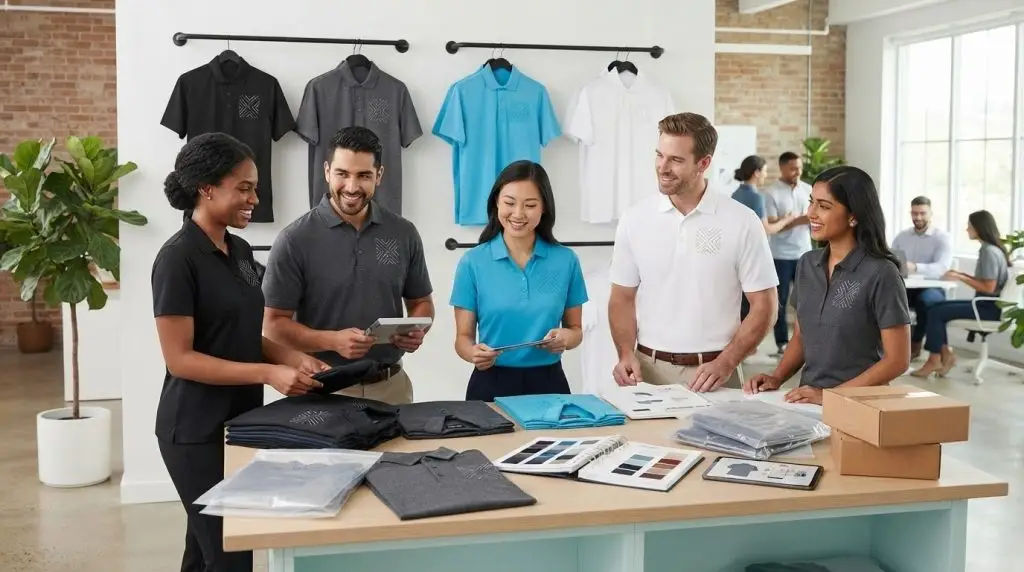
A polished team polo starts with a clear logo, fabric and fit suited to the work, and embroidery placed where it stays visible without crowding the shirt. When ordering custom embroidered polo shirts in bulk, keep the design simple enough to read at a glance, and use consistent colors and placement across the team.
That balance matters: a polo should feel comfortable as a uniform and look intentional as part of your brand. This guide covers design decisions, bulk-order factors and decoration options to help you choose polos for your team. Fabric, fit, logo detail and intended use all shape the result, so decide what matters before production.
Custom embroidered polo shirts in bulk give teams a consistent, polished look across different settings. A chest logo can identify staff at a front desk, while a sleeve detail adds brand recognition at an event. Choose the garment and decoration together so the finished shirt suits both your visual identity and its daily use.
Start with the people who will wear the polos. Men’s and women’s cuts can have different proportions, while kids’ sizes suit youth programs, family events and team activities. Check each style’s size range and fit notes before choosing a design. Some polo styles are available in XX-Small, which can help when a group needs a smaller size.
Choose women’s polos for their fit, rather than treating them as smaller versions of men’s shirts. Compare the neckline, sleeve shape, body length and size range. A fitted silhouette may suit a customer-facing team, while a roomier cut can work better for active duties. Keep the logo position consistent across cuts, adjusting its scale when garment proportions require it.
Performance polos can suit outdoor events, sports, and active uniforms. Some performance polo styles offer UPF 50 sun protection, while others offer UPF 50+ protection. Treat those as style-specific features, not assumptions about every performance shirt. For indoor teams, a more structured polo may better support a formal brand presentation. Match fabric and finish to the setting.
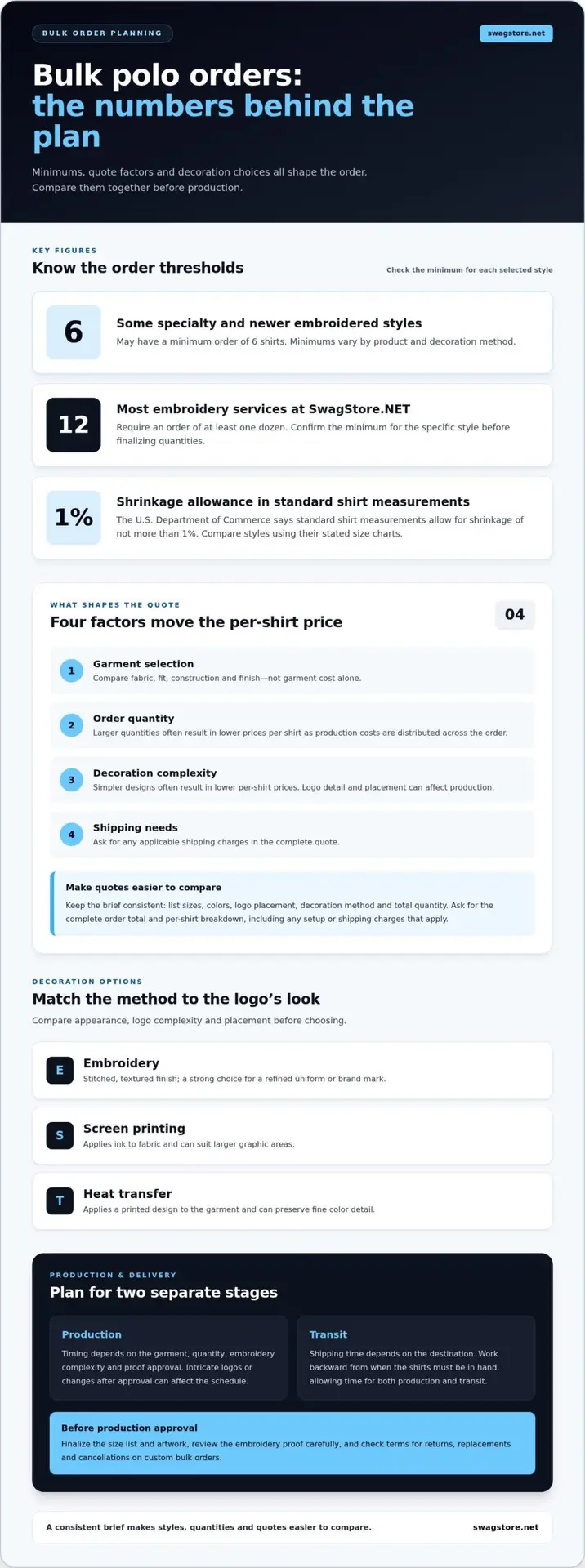
Fit also depends on how the garment measures after laundering. The U.S. Department of Commerce says standard shirt measurements allow for shrinkage of not more than 1 percent. Use the stated size chart when comparing styles, and assess fit across the full group. Consistency matters: a team looks coordinated when similar garments sit and drape similarly.
For U.S. bulk orders, the best online choice is a vendor that shows garment options, size details, and decoration choices clearly. A local embroidery shop can be useful when you want to review a physical sample or coordinate fittings in person. In either case, compare the design proof, garment range, and ordering process before choosing.
Embroidery gives a logo a stitched, textured finish, making it a strong choice for a refined uniform or brand mark. Screen printing applies ink to fabric and can suit larger graphic areas. Heat transfer applies a printed design to the garment and can preserve fine color detail. Consider the logo’s complexity, placement and desired look before choosing a method.
Before ordering, bring the audience, setting, fit and decoration together in one brief. It makes styles easier to compare and helps you choose polos that represent your brand well.
Plan your budget around the garment, decoration, order quantity and delivery. These factors shape the per-shirt price and the terms of a custom order.
Bulk pricing usually reflects how the order’s total production cost is distributed across its shirts. Larger quantities and simpler designs often result in lower prices per shirt. Some specialty and newer embroidered polo styles have a minimum order of 6 shirts, so compare the minimum for each selected style before finalizing quantities.
Budget jersey polos can be a practical option for casual events or light-duty apparel. Their simpler construction may suit a relaxed look, but fabric, fit and finish still determine whether a style meets your needs. Consider how the shirts will be used, then compare jersey options with more structured polos rather than choosing on garment cost alone.
For a useful comparison, prepare a consistent order brief: list the sizes, colors, logo placement, decoration method, and total quantity. Changing several variables between quotes makes it harder to identify what drives the difference. Ask for the complete order total and per-shirt breakdown in the quote, including any setup or shipping charges that apply.
Minimums vary by product and decoration method. For most embroidery services, SwagStore.NET requires an order of at least one dozen. Check the minimum for the style you are considering, and include the full size breakdown when planning the order. If you expect to need extra shirts for new team members, include them in the original quantity discussion.
Production and shipping time depend on the garment, order quantity, embroidery complexity, proof approval and destination. Production and transit are separate stages, so plan for both. An intricate logo or a change after proof approval can affect the production schedule.
For an event or uniform rollout, work backward from the date the shirts must be in hand. Finalize the size list and artwork early, review the embroidery proof carefully, and allow time for production and transit. A clear approval process helps prevent avoidable delays from missing sizes or late design changes.
Before approving production, review the terms for returns, replacements and cancellations on custom bulk orders. Pay particular attention to the process for reporting defects, resolving order issues or changing quantities. Keep the approved design, size breakdown and order confirmation together so you can refer to the same details throughout fulfillment.
Price is case-dependent and is provided after a quote request; garment selection, quantity, decoration complexity, and shipping needs shape the quote. To plan a coordinated apparel order, explore embroidered polo options alongside the design and quantity decisions above.
Embroidery turns a logo into a stitched feature on a polo, with thread color and placement shaping its visibility. Prepare clean artwork and a clear design brief before approving production.
For custom logo embroidery, begin with clear artwork and identify the essential details. A digitized stitch file guides the embroidery machine, so intricate lines or tiny lettering may need simplifying. A compact chest mark, for example, may read more clearly without a small tagline. Review the proof for letter spacing, shape and thread colors before production.
Thread selection affects how the design looks against the polo fabric. Contrast makes a logo stand out, while tonal thread creates a subtler finish. Check the proof against the garment color, not just a screen preview. If the logo includes several shades, confirm that each remains distinct at the planned size.
Logo complexity affects how well embroidery reproduces fine details. Thin outlines, gradients and very small text may not translate cleanly into stitches. Simplify those elements while preserving recognizable parts of the mark, such as a symbol or initials. A one-color version can work well for compact logos and keep the visual hierarchy clear.
Choose placement based on how people will see and wear the polo. A left-chest logo is a familiar choice for staff uniforms, while a sleeve mark adds a secondary brand detail. A larger back design may suit event teams, but can compete with the shirt’s overall look. Approve placement on a garment mockup before production.
Before submitting artwork, confirm that your organization has permission to reproduce every logo, slogan or partner mark. A company logo may be approved for uniforms, while a sponsor’s artwork could require separate authorization. Keep the approved artwork and usage instructions with the order files so each mark has a clear reference.
Use this checklist to prepare an embroidery-ready logo:
Keep alternatives in view when the design calls for a broad, graphic treatment. Screen printing supports designs with up to 8 ink colors on many custom polo styles. Embroidery instead builds the mark with thread, creating a raised, stitched appearance. Match the method to the logo’s detail, desired finish, and chosen garment.
Choose a uniform polo by weighing fabric, fit, work conditions and logo visibility. Before ordering in bulk, inspect a sample for fit, fabric feel, seam finish, embroidery quality and logo placement, then compare it with the approved design proof.
Fabric weight and knit affect how a polo feels and how it presents embroidery. The Harriton M315 Men’s Polytech Polo is a lightweight 4-ounce polyester option. A piqué knit may be worth considering when choosing a polo for embroidery. Piqué generally provides a more stable embroidery surface than jersey, making the knit worth considering for logo-heavy uniforms.
For a cotton-blend option, the Gildan G880 Adult Jersey Polo uses a 50/50 cotton-poly blend. Compare the garment’s cut and size chart with the team’s needs, then assess sleeve length, body shape, and room for movement. For example, front-desk staff may prefer a structured fit, while active crews may value ease of movement.
A left-chest logo creates a familiar uniform look and stays visible during face-to-face service. A sleeve placement can complement the main mark, while a back design is more visible from behind. Choose placement based on how staff interact with customers, and keep the design clear of seams, plackets and other details that could disrupt it.
Check how the placement works across the polo’s available cuts. The same chest position may sit differently on women’s and men’s styles, so compare each garment mockup before approval. Keep the mark consistent across the team, adjusting its scale only when garment proportions require it.
Assess the garment and decoration together when reviewing a physical sample. Check that the embroidered logo sits flat, thread colors contrast clearly with the fabric, and small lettering remains legible. Try the sample on, move in it, and compare the fit with the intended uniform role.
Handle the fabric and inspect the collar, placket and sleeve seams. These details affect the polo’s appearance throughout the workday. If the sample differs in color or cut from the planned order, compare the relevant swatches and mockups before approval.
Once the sample, fabric and mockup align, use the approved details as the reference for the bulk order. This gives the team a consistent uniform standard across garment styles and sizes.
A corporate polo can serve as a uniform, an event garment or a visible brand touchpoint. Start by defining who will wear it and where: a reception team, a field crew and a conference team have different practical needs. Let the use case guide the garment color, logo scale and design brief.
For daily uniforms, consistency matters across departments and locations. Set a shared standard for polo color, logo position and name or role details before collecting sizes. For example, customer-facing staff might wear the same base color, while a subtle department identifier distinguishes service teams. Record these choices in an apparel guide so future orders follow the same visual system.
Event polos have a different purpose. A clear chest logo helps attendees identify staff, while a larger back mark can stand out in a busy venue. Choose one focal point instead of layering competing messages. If the design includes sponsors or an event name, organize them by importance and approve the full layout together.
Build the design around your brand’s existing identity. Use approved logo artwork and brand colors, then check how they look against the garment color. A dark logo on a dark polo can lose definition, while strong contrast makes the mark easier to recognize. For a multi-department order, create a simple color and placement map before production.
Before rollout, compare the approved design across every chosen garment cut and color. A logo can look different as the fabric tone or garment shape changes. Review each mockup, check that department details remain legible, and record the final decisions in one reference file. This gives the next order a clear starting point and helps maintain a unified appearance.
Use these criteria to shape your corporate apparel plan and organize your branded uniform order around the needs of each team.
SwagStore.NET offers embroidered Nike and Under Armour polos for teams building a coordinated corporate look. Choose embroidered polos when a stitched logo suits your uniform, or custom screen-printed T-shirts for more casual events and team apparel.
Extend the same branded experience beyond clothing with YETI and Stanley tumblers or custom logo power banks and tech accessories. These items can complement a staff welcome kit, event giveaway or company gathering, while keeping your visual identity consistent.
Bring your approved logo, preferred garment style and intended use together when planning your order. This gives you a clear starting point for selecting branded apparel and coordinating items. Visit swagstore.net to explore options for your organization.
Let your approved logo contribute to a cohesive brand experience. A clear visual system can connect team apparel with event materials and employee gifts, making each item feel intentional rather than isolated. As you plan custom embroidered polo shirts in bulk, consider how the same identity can carry across the occasions when employees represent your organization.
SwagStore.NET offers embroidered Nike and Under Armour polos, custom screen-printed T-shirts, and branded YETI and Stanley tumblers. These options support a coordinated approach to uniforms, casual team apparel and branded drinkware. Choose pieces that fit your organization’s needs, then bring your approved branding into the conversation.
Ready to shape your next branded merchandise order? Contact SwagStore.NET about bulk polos and take the next step toward a look your team can wear with confidence.
Begin with the logo and the polo’s purpose. Choose a garment color, then decide where the mark should appear and how prominent it should be. Simplify details that may disappear as stitches, such as a tiny tagline or narrow outline. Provide approved artwork and review the digital proof against your brand colors before authorizing production.
A piqué polo can provide a stable surface for stitching. Thicker fabrics can also support embroidery well, while thin or stretchy fabrics may need backing to help prevent distortion. Consider the shirt’s intended use, fit and fabric together. For a uniform worn during active work, comfort and freedom of movement matter alongside the finished logo.
Digitization converts logo artwork into stitch instructions an embroidery machine can follow. The file defines elements such as stitch direction and density, so it isn’t simply a saved image. Whether digitization has a separate charge depends on the order and artwork; the price is determined after a quote request. Clear, finalized artwork helps avoid revisions to the stitch file.
For SwagStore.NET, the minimum for most embroidery services is 1 dozen. The minimum can vary across the broader market by garment style and order terms, so don’t assume one seller’s threshold applies everywhere. For team planning, prepare a size breakdown before ordering and ensure it accounts for each wearer. This makes the quantity easier to align with the minimum.
The per-shirt price depends on the selected garment, order quantity, embroidery design, and placement requirements. Larger quantities and simpler designs can affect the unit cost, while a complex logo may require more stitch work. The price for a specific order is provided after a quote request. Compare quotes using the same garment, size mix, artwork, and delivery needs.
SwagStore.NET offers embroidered Nike and Under Armour polos. When comparing polo fabrics, consider cotton, polyester and blends, as well as piqué and jersey constructions. Choose based on the work setting, desired fit and how the fabric supports the logo. A customer-facing office team may prefer a different feel from event staff working outdoors or moving throughout a venue.
Vector artwork, such as AI, EPS or SVG, can be resized without losing edge clarity. A high-resolution PNG can also provide a clear reference. Keep small lettering bold and legible: SwagStore.NET recommends text at least ¼ inch tall. Gradients do not stitch as exact blends; embroidery can approximate shading with different thread colors and stitch directions.
For U.S. bulk orders, choose an online vendor that clearly shows garment options, size details, and decoration choices. A local embroidery shop can be useful for reviewing a physical sample or coordinating fittings in person.