


What if the lowest unit quote becomes the most expensive choice once the full order is underway? The risk of ordering promotional products from overseas goes beyond price: bulk items may differ from the approved sample, arrive after your event, or raise compliance and branding concerns you didn’t anticipate.
Those concerns matter because promotional products put your logo in the hands of customers, employees, and event attendees. A mismatch in print, materials, or finish can undermine a coordinated campaign, while delays can leave your team without the items it planned to distribute.
This guide explains how to assess the main risks before committing to an overseas order. Use consistent criteria to review product quality, shipping schedules, customs and compliance, intellectual property, and total cost, then compare sourcing approaches. A clear approval and review process can help protect your brand presentation and project timeline.
The risk of ordering promotional products from overseas isn’t simply the distance a shipment travels. It’s the uncertainty across the full order: whether the product and decoration match the brief, production stays on schedule, transit meets your deadline, applicable requirements are addressed, and there’s a clear way to resolve problems. International sourcing can be a sound business strategy. The outcome depends on the controls in place and the complexity of the order.
Global sourcing strategy describes sourcing goods internationally as part of a broader purchasing approach. For a branded bulk order, focus on how each decision affects the finished item, delivery date, and your ability to respond if something goes wrong.
Four areas deserve attention. Quality variation can mean inconsistent materials, colors, sizing, or decoration. Production or freight disruption can push merchandise past a campaign or event date. Customs issues can affect clearance, documentation, or the schedule. Intellectual property exposure can arise when logos or artwork are used without appropriate authorization, or when goods are counterfeit. Any of these issues can create extra work, delay distribution, or make your brand presentation less consistent.
Landed cost is the full cost of getting an order to its intended destination, including the product and any applicable customization, freight, insurance, duties, taxes, and handling charges. A low unit quote may not include these costs, so compare the complete order rather than the item price alone.
Promotional merchandise is a physical expression of your organization. Poor print quality, a logo that differs from the approved artwork, or a product that doesn’t perform as expected can shape how recipients perceive your brand. A damaged item is a product defect; incorrect color or placement is an artwork execution issue. Identifying which problem occurred helps your team assess the impact and respond clearly.
Consider a company ordering branded apparel in bulk for employee onboarding. The garments might arrive on schedule, but inconsistent embroidery could still disrupt the welcome experience and make the order look poorly coordinated. If the garments themselves are defective, the issue is product quality. In either case, recipients connect what they see and use with the organization. Clear specifications, review steps, and a plan for addressing discrepancies help keep merchandise aligned with the experience you intend to create.
A finished order can differ from its approved concept in small but visible ways. Fabric may feel lighter, a tumbler’s finish may look different, or a printed logo may shift in color or placement. These changes aren’t inevitable, but they can make a bulk order look inconsistent. Reduce the risk of ordering promotional products from overseas by making the approval record specific enough to guide production and review.
A sample shows what was made for review; it doesn’t guarantee that every production item will match. Differences can result from material substitutions, sizing variation, color reproduction, or inconsistent screen printing, embroidery, or engraving. Before production, document the approved sample, artwork files, product specifications, and acceptable tolerances in writing. That gives everyone a shared reference if questions arise.
Choose inspection checkpoints that fit the product and order. A pre-production sample can confirm the intended materials and decoration. During-production checks can help catch a recurring issue before the full run is complete, while a pre-shipment review can identify visible inconsistencies. After delivery, inspect a representative selection promptly and record discrepancies with clear photos and order details.
Plan for each stage separately: production, freight, customs processing, and final delivery. A delay in one stage can affect the next, so set milestones and allow contingency time rather than treating the estimated arrival date as certain. The right buffer depends on the order, route, product, and timing.
Compliance involves several distinct questions. Product safety and labeling requirements depend on the item and its intended use. Tariff treatment depends on the goods and applicable rules. Intellectual property concerns include whether a logo or design is authorized. These issues don’t mean overseas goods are inherently suspect. Counterfeit or unauthorized-logo products are risks to assess, not assumptions to make about every supplier or shipment. Check current import and tariff guidance from U.S. Customs and Border Protection, and consult the relevant regulator for product-specific safety or labeling requirements. Rules can change, so verify them for the actual product and shipment.
For branded bulk orders, keep artwork, approvals, specifications, shipping milestones, and compliance records together. A clear review process helps your team catch differences early and respond with useful documentation. SwagStore.NET helps organizations plan cohesive custom-branded bulk merchandise for gifting, onboarding, and events.
There’s no universal winner. Domestic and overseas options can vary by product, supplier, production method, and order requirements. Compare the process behind the quote, not just the sourcing location. The risk of ordering promotional products from overseas is one part of the assessment, alongside your deadline flexibility, tolerance for uncertainty, and need for a consistent brand presentation.
A low unit quote may not include every expense required to deliver a finished, branded order. Compare freight, applicable duties, handling, inspection, customization, and potential rework. Ask for project-specific figures by cost component so you can see what the estimate includes and what could change.
Use the same criteria for both approaches:
| Factor | Domestic sourcing | Overseas sourcing |
|---|---|---|
| Quality control | Review how samples, specifications, and production checks are handled. | Document approvals and plan inspection steps suited to the product and order. |
| Communication | Clarify response times, approval steps, and who resolves production questions. | Account for coordination across time zones, languages, and handoffs where relevant. |
| Delivery visibility | Map production, shipping, and final delivery milestones. | Track production, international freight, customs processing, and final delivery separately. |
| Compliance | Check product-specific requirements and responsibilities for the transaction. | Verify applicable import documentation, product requirements, and tariff treatment. |
| Recourse | Understand how issues are documented and resolved under the agreed terms. | Clarify responsibility for discrepancies, shipping issues, and any corrective action. |
Domestic sourcing may suit a project where simpler communication or transit coordination is a priority, but it doesn’t automatically mean faster delivery, higher quality, or lower total cost. Overseas sourcing may fit when the team can manage additional coordination, documentation, and shipping stages. Neither approach guarantees a particular environmental impact; assess the actual product and supply route.
Choose according to the project’s needs. A fixed event date and highly visible logo treatment may call for more schedule flexibility and closer review, regardless of origin. A less time-sensitive order may leave more room to coordinate a complex sourcing process. Compare the full landed-cost components and operational demands before deciding.
For cohesive bulk merchandise and corporate gifts, custom-branded merchandise planning can help align product choices and branding with the purpose of your order.
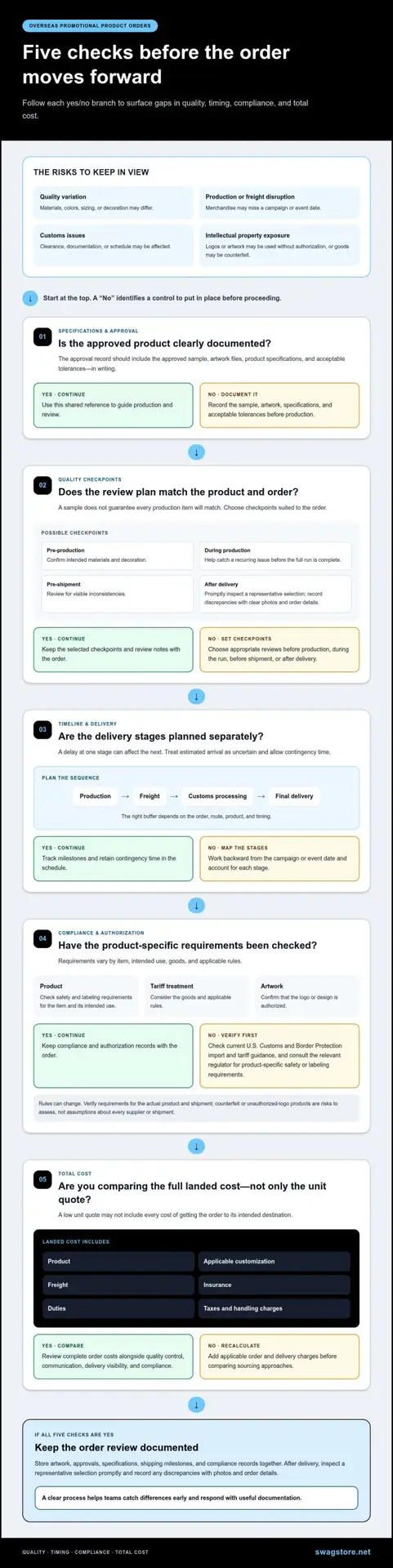
Good controls turn uncertainty into decisions you can document and act on. Before committing to a bulk order, follow a consistent approval process. The goal isn’t to remove every variable. It’s to catch avoidable mismatches early and know what to do if the order changes course.
Keep the brief, artwork permissions, approved sample details, product specifications, packaging requirements, inspection criteria, invoices, written approvals, change records, and shipping documents in one project file. This gives your team a reliable reference if the delivered order differs from what was authorized. The risk of ordering promotional products from overseas is easier to manage when expectations and decisions are traceable.
Set internal sign-off dates before production needs to begin, not on the day artwork is due. Make one person responsible for consolidating approvals and confirming that only authorized final files are released. Verify current requirements using official sources, such as U.S. Customs and Border Protection and the relevant product regulator, because import and product rules may change.
Planning a coordinated order of branded merchandise, apparel, or employee gifts? Plan your branded bulk merchandise around your audience, artwork, and project timeline.
A confident sourcing decision starts with the purpose of the order, not a product catalog. Merchandise for employee onboarding should feel useful and welcoming. Recognition gifts should suit the people receiving them, while event items need to fit the audience and occasion. Once you know what the order needs to achieve, choose a sourcing approach and review process that fit its deadlines, brand visibility, and risk tolerance.
Use this checklist to shape the brief:
Consistency turns separate items into a considered brand experience. For example, screen-printed shirts, embroidered polos, and branded drinkware can share a coordinated visual identity while meeting different needs across employee or event groups. Keep artwork, colors, and presentation aligned, and choose each item for its recipient and purpose rather than treating the order as a collection of unrelated giveaways. Thoughtful apparel planning helps bring these details together.
That coordination matters whether you’re assembling onboarding gifts, recognizing employees, or preparing for an event. A clear brief and review plan help your team make thoughtful product choices while keeping the intended brand impression in view. For broader ideas on matching merchandise to brand goals, read the strategic promotional items guide.
Bring the essentials together in one brief: audience, use case, quantity, design, and target date. Add the review plan and any deadline constraints so the product selection and project schedule can be considered together. SwagStore.NET supports organizations with bulk custom-branded merchandise and curated corporate gifts, including cohesive onboarding and gifting orders.
Plan your next branded bulk order with SwagStore.NET.
The risk of ordering promotional products from overseas is easier to assess when you look beyond the unit quote. Compare the full order, document product and artwork approvals, and allow time for production, shipping, customs, and delivery. Then match your sourcing approach to the project’s deadline, risk tolerance, and importance to the brand experience.
A coordinated order can do more than put a logo on an item. Bulk screen printing, embroidery, and laser engraving bring branded apparel, premium drinkware, tech accessories, and curated gift kits together in a cohesive plan for onboarding, recognition, or events.
Start with your audience, use case, quantity, design, and target date. Plan your next branded bulk order with SwagStore.NET, and move forward with a clearer brief and a stronger vision for the experience you want to create.
It can involve added uncertainty around product consistency, delivery, customs, compliance, and resolving problems, but overseas orders aren’t automatically risky or unsuccessful. The risk of ordering promotional products from overseas depends on factors such as the product, order complexity, documentation, production controls, and schedule. Before committing, compare the full landed-cost picture and document specifications, approvals, and responsibilities so expectations are clear.
Common concerns include differences between an approved sample and bulk production, shipping delays, customs documentation, product requirements, counterfeit goods, and unauthorized use of intellectual property. Not every concern applies to every order. Start with the specific product and campaign: identify the relevant quality, schedule, compliance, and branding questions, then record artwork approval, delivery milestones, acceptance criteria, and who is responsible for addressing discrepancies.
Yes, counterfeit or unauthorized goods can occur in global trade, but overseas sourcing alone doesn’t mean a product is counterfeit. For branded merchandise, retain records of authorized artwork, product specifications, and relevant order documentation. If something raises concern, pause distribution while you review the records and consult current U.S. customs and intellectual property resources for appropriate guidance or reporting options.
Begin with a written brief covering materials, dimensions, decoration, packaging, artwork permissions, and delivery needs. Review and document an appropriate sample, set inspection criteria, and map production, freight, customs, and final delivery as separate schedule stages. Keep a record of approvals and changes, and build contingency time around campaign deadlines. Before ordering, verify current import and product requirements through authoritative sources relevant to the item.
No. A unit quote may not include every part of the landed cost, such as freight, applicable duties, handling, inspection, customization, or potential rework. These components vary with the product and order, so don’t assume a particular sourcing location always costs less. Compare quotes using the same product specifications and clarify which services and order expenses each figure includes before evaluating the overall project.
There isn’t one dependable timeline for every order. Production, freight method, customs processing, final delivery arrangements, product availability, and seasonal conditions can all affect when merchandise arrives. Use a project-specific schedule that separates each stage instead of planning around transit alone. If the items support a fixed event or campaign, add contingency time and set an internal decision point for responding to schedule changes.
Review the exact product, materials, dimensions, colors, decoration method, packaging, and final artwork. Document the approved sample, inspection criteria, delivery milestones, and how changes or defects will be handled. Confirm your organization has permission to use every logo, image, or trademark supplied for production. For imported items, check current official guidance on relevant customs, product safety, and labeling requirements before production begins.