

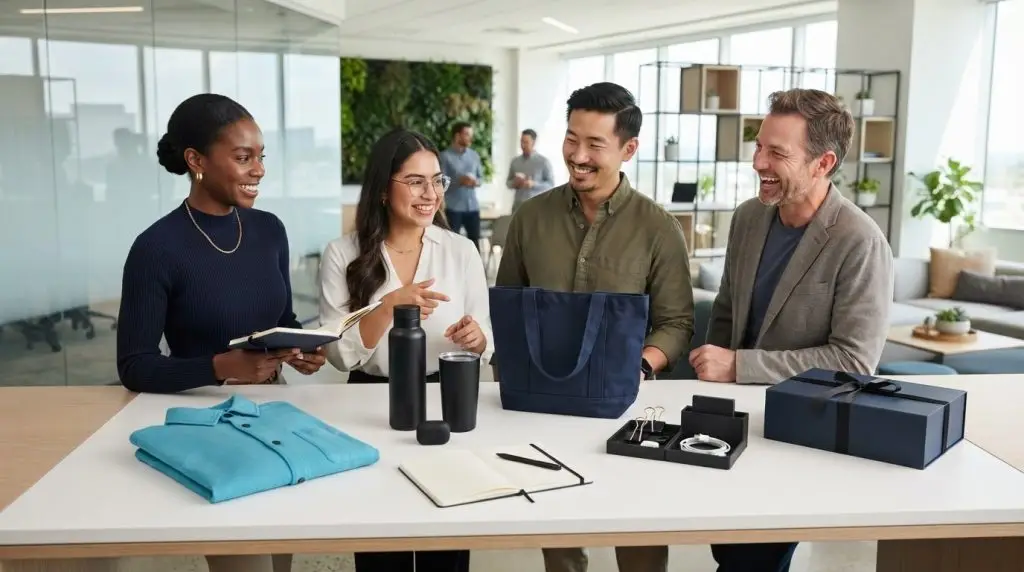
What if the best swag for employee retention isn’t the flashiest gift, but the one someone reaches for every day? Choosing the top swag items for employee retention can feel tricky when generic giveaways risk seeming disposable or one-size-fits-all. Useful, well-made items can make recognition more tangible, but no gift can replace a supportive workplace.
The moment matters, too. A welcome gift should help a new hire feel part of the team; an anniversary or achievement gift should reflect genuine appreciation. Match the item to the person and occasion, and branded merchandise can become a thoughtful reminder of belonging rather than another logo-covered giveaway.
This 2026 buyer’s guide compares practical options, from branded apparel and drinkware to tech accessories, recycled totes, and work essentials. It explains how to choose for varied roles and preferences, then connect each category to onboarding, milestones, or recognition. You’ll come away with a clearer plan for a coherent swag program that supports a positive employee experience without promising retention on its own.
Choosing employee swag is a balancing act. A gift should feel memorable, but branded merchandise handed out without thought can come across as another giveaway. Even a carefully chosen gift can’t solve deeper workplace problems. The top swag items for employee retention make the most sense when they recognize a person, contribution, or meaningful moment, rather than serving as a shortcut to loyalty.
Think of retention-minded swag as useful branded merchandise connected to appreciation, belonging, or an employee milestone. An embroidered polo might mark a team achievement; a notebook could welcome someone joining the organization. The item makes recognition tangible, while a sincere message explains why it matters. For broader context, Employee Retention describes the business focus on keeping employees and limiting turnover.
That distinction matters. Compensation, management, workload, and workplace culture remain central to whether employees choose to stay. Swag can support a positive employee experience, but it can’t replace fair pay, clear expectations, good communication, or meaningful support. Treat the gift as one signal within a wider culture of recognition, not a standalone fix or a guaranteed retention outcome.
Start with the employee’s routine. A tumbler can suit everyday use, a recycled tote can carry work or personal essentials, and a metal pen can be useful for taking notes. Perceived quality matters, too. An item that feels well made is more likely to earn a place in someone’s day than one selected only because it was inexpensive or easy to distribute. Consider whether it suits the recipient’s role, routine, and preferences.
Then make the recognition specific. A short note thanking someone for mentoring a teammate gives a gift context; a logo alone doesn’t explain why it was chosen. A simple item isn’t automatically impersonal. A T-shirt can feel considered when it celebrates a team event or shared achievement. The difference is the intention behind the choice, not the item’s complexity.
Choose moments employees can recognize: welcoming a new hire, marking a work anniversary, celebrating a team achievement, or expressing appreciation after a demanding project. A curated onboarding gift kit can introduce a new employee to the team’s identity, while a shared item for a team milestone can make a collective contribution visible. Match the gift to the moment instead of distributing merchandise on autopilot.
Consistency helps people feel included across departments and locations. Use a coherent presentation and a similarly thoughtful message for comparable occasions, while selecting items that suit each audience. For remote employees, plan distribution so the gift arrives close to the recognition moment. For on-site teams, consider how it fits into the event or workplace routine. The timing and sincerity of the acknowledgment matter as much as the object itself.
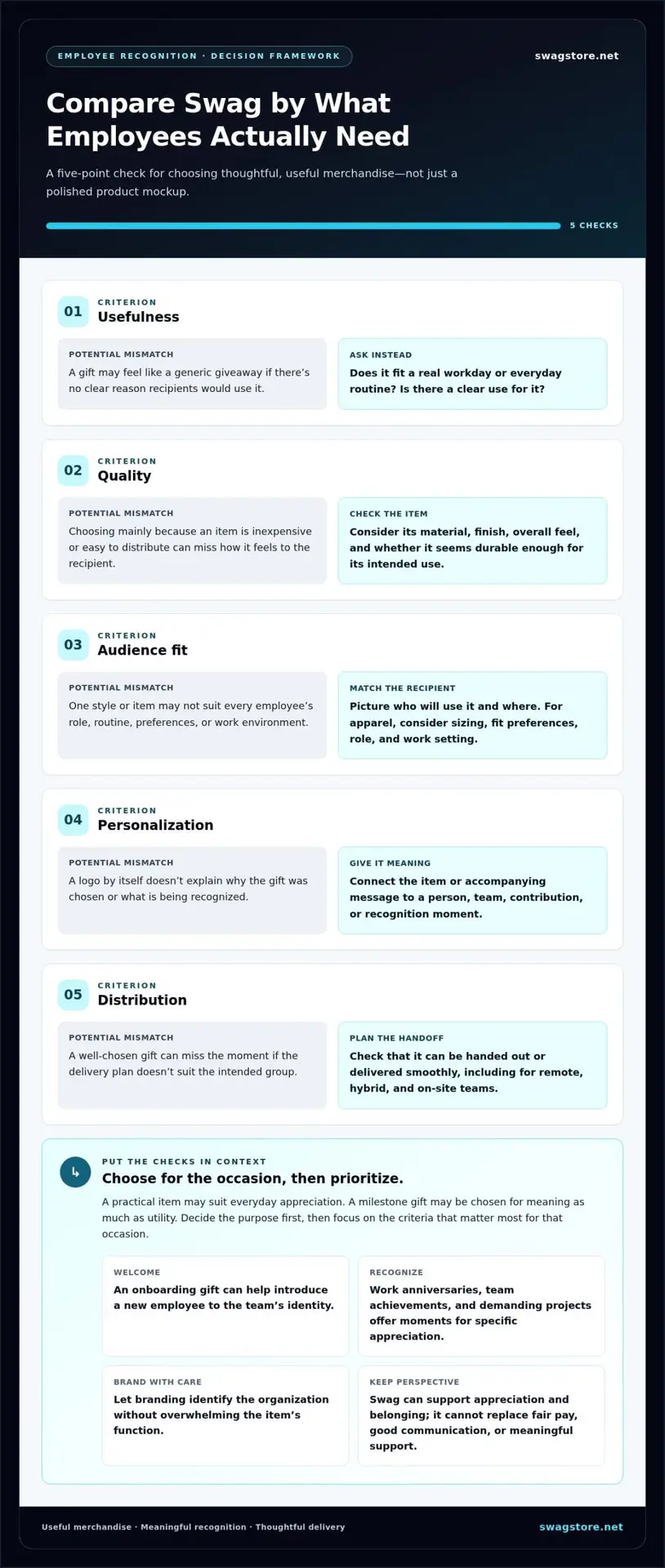
A useful comparison process keeps a bulk order grounded in employee needs, not just what looks striking in a product mockup. Assess each option against the same five criteria: usefulness, quality, audience fit, personalization, and distribution. This makes it easier to compare different categories and spot an item that looks polished but may not suit the people receiving it.
Use this checklist to guide the decision:
Not every gift needs to score equally on every point. A practical item for broad everyday use may work well for general appreciation, while a milestone gift may be chosen for its meaning as much as its utility. Define the purpose before comparing options, then prioritize the criteria that matter most for that occasion.
Picture the item in use, not just on a screen. Consider whether employees can use it regularly, whether the material and finish feel appropriate, and whether it seems durable enough for its intended purpose. Avoid choosing an item only because it follows a trend. A current style can draw attention, but a clear connection to employees’ actual routines gives the choice a stronger practical foundation.
Branding should identify the organization without overwhelming the item’s function. A restrained logo treatment can make branded apparel comfortable to wear beyond a company event, while a prominent mark may limit where some employees feel at ease using it. For a closer look at apparel choices and branding considerations, explore this guide to corporate branded apparel.
Apparel deserves particular care. Consider sizing, fit preferences, role, and whether the garment suits the employee’s work setting. A short, optional preference survey can reveal useful patterns without assuming one style works for everyone. If the order calls for a single category, offering a small range of suitable choices can help recipients feel considered while keeping the program coherent.
Distinguish a dependable everyday item from a gift meant to mark a milestone. The first should earn its place through function; the second can carry a more personal message through thoughtful selection and presentation. Plan distribution alongside the item choice, especially if recipients work across different locations or schedules. With your criteria set, explore branded merchandise options that fit your team and the recognition moment.
The right choice depends on how employees work, what they’ll use, and what the gift is meant to recognize. Compare each category by practical fit and occasion, rather than assuming any item can improve retention on its own.
Choose swag employees can use in their routines, then match the item and message to the recognition moment.
| Item category | Employee fit | Recognition moment | Key consideration |
|---|---|---|---|
| Screen-printed T-shirts | Teams comfortable wearing casual branded apparel | Team events or shared achievements | Check sizing, fit preferences, and dress expectations. |
| Embroidered Nike and Under Armour polos | Employees whose work setting suits polished branded apparel | Role milestones or team recognition | Embroidery offers a distinct branded look; consider comfort and fit. |
| Branded YETI and Stanley tumblers | Employees who would use drinkware during work or daily routines | Appreciation or milestone gifts | Think about whether the recipient’s routine makes a tumbler useful. |
| Custom logo power banks and tech accessories | Employees who value practical tools for workdays | Project recognition or welcome gifts | Choose based on a clear use case, not novelty alone. |
| Recycled tote bags | Employees carrying work or everyday essentials | Events, onboarding, or general appreciation | Consider whether a bag suits recipients’ routines. |
| Moleskine notebooks and laser-engraved metal pens | Employees who take notes or prefer tangible work essentials | Work anniversaries or individual recognition | Pair the item with a message that explains the recognition. |
| Employee onboarding gift kits | New hires who benefit from a coordinated welcome | Onboarding | Keep the selection relevant to the employee’s first days. |
Screen-printed T-shirts can suit casual events and teams whose dress expectations allow them. Embroidered polos offer a more polished option for roles where that look fits the work setting. Neither is automatically right for everyone: sizing, fit, and personal style all affect whether apparel feels useful. Branded YETI and Stanley tumblers are another practical gifting category for employees who would welcome drinkware in their routine.
Custom logo power banks and tech accessories make sense when employees can put them to work during the day. Recycled totes suit people who carry essentials; Moleskine notebooks and laser-engraved metal pens fit note-taking routines or individual recognition moments. For new hires, employee onboarding gift kits bring a coordinated welcome together, with items selected for different purposes.
Use the table as a starting point, then compare the employee group, occasion, and likely use before finalizing a bulk order. A thoughtful match is more valuable than choosing the same category for every team.
A strong merchandise plan starts with the occasion, not a universal gift. The same item may be useful for one group and overlooked by another, so map the recognition moment to a practical choice and consider how employees will receive and use it. This keeps the top swag items for employee retention connected to real team needs rather than a one-size-fits-all distribution.
Use a simple occasion-to-item matrix as a planning tool. It doesn’t lock you into one answer; it helps you choose with intent, then adapt the selection for the people involved.
| Moment | Possible item fit | Planning consideration |
|---|---|---|
| Onboarding | A coordinated employee onboarding gift kit with useful branded essentials | Make the welcome consistent across new hires and align distribution with their start. |
| Work anniversary or individual milestone | A more considered combination, such as a notebook and laser-engraved metal pen | Include a personal message that recognizes the employee’s contribution or journey. |
| Team achievement | Screen-printed T-shirts, embroidered polos, or branded tumblers | Choose apparel only when its fit and style suit the team; consider drinkware as another option. |
| Everyday appreciation | A practical workday item, such as a recycled tote or tech accessory | Keep the gesture easy to use and pair it with a timely, sincere acknowledgment. |
For milestones, added thought doesn’t have to mean more merchandise. A carefully selected item and a specific note can make recognition feel more personal. For team-wide moments, consistency in presentation helps the gesture feel shared while leaving room to choose a suitable item for each group.
Segment choices by role, work setting, and daily routine. Employees who travel between work locations may value different essentials from those who work at a desk; apparel may suit one group, while a notebook or tech accessory may better match another. Ask for lightweight input, such as preferred apparel sizing or a short choice between item categories, and use the responses to refine future orders.
Distribution matters, too. On-site teams may receive gifts during a gathering, while remote employees need items sent in time for the occasion. Hybrid teams may benefit from a shared presentation and a practical plan for people who aren’t in the office that day. Think through accessibility and personal preferences, and provide alternatives when they meaningfully affect usability. A small amount of choice can prevent a well-intended gift from becoming unwanted merchandise.
Match the occasion, audience, and distribution approach before selecting items. To put that framework into action, explore branded employee gift options for welcome moments, milestones, and team recognition.
A workable program has a clear purpose and a feedback loop. Treat each order as one part of a broader employee experience, then use what you learn to make the next one more relevant. This keeps the top swag items for employee retention connected to thoughtful recognition instead of unsupported promises about employee loyalty.
Use this sequence to plan a program from idea to review:
Ask recipients simple questions: Is the item useful? Does it fit the occasion? Would you use it in your routine? Review participation alongside feedback themes and reports of unused items, then compare patterns across program cycles. Treat retention trends as broader workforce outcomes, not evidence that merchandise caused employees to stay. Feedback on swag can guide item choices, but it can’t measure the health of the whole workplace.
SwagStore.NET provides bulk custom branding across apparel, drinkware, tech accessories, bags, notebooks, and gift kits, using screen printing, embroidery, and laser engraving. These categories can serve different moments, from team apparel to practical drinkware or a coordinated welcome. For more detail on planning a new-hire welcome, the custom employee onboarding kits guide offers a focused starting point.
Keep a simple record for each cycle: occasion, audience, item category, participation, feedback, and what you’d change next time. This creates a practical basis for decisions without confusing positive comments about a gift with proof of a retention effect. It also helps teams spot repeated preferences and avoid ordering items recipients don’t find relevant.
Build the program around meaningful employee moments and order quantities suited to the group, rather than treating each gift as a one-off customization. Keep the recognition message sincere, the merchandise useful, and the review process honest. Explore SwagStore.NET’s branded merchandise and gift-kit options to plan a coordinated program for your team.
Start with one upcoming moment on your team calendar. Decide what you want employees to feel and remember, then choose merchandise that supports that message and fits their routines. The top swag items for employee retention aren’t a shortcut to loyalty; they’re an opportunity to make appreciation visible and specific.
After the gifts arrive, make space for honest feedback. Ask what recipients found useful, what felt relevant, and what they’d choose differently next time. Those answers can help you shape a program that grows more thoughtful with each cycle, while your wider workplace practices continue to do the essential work of supporting employees.
Ready to turn a meaningful moment into a cohesive branded experience? Explore custom branded merchandise and employee gift kits and start planning a recognition program that reflects your team.
Swag can support appreciation, but it shouldn’t be treated as a retention fix. The top swag items for employee retention work best as part of a wider employee experience, alongside fair compensation, supportive management, manageable workloads, and a healthy culture. For example, pair a milestone gift with a conversation about the employee’s goals and development. Gather feedback on the gesture, but don’t infer that a gift alone caused someone to stay.
Employees often value items that match their habits and feel thoughtfully selected, but preferences vary. A desk-based employee might use a notebook, while someone who moves between work locations may prefer a tote or tech accessory. Before ordering, ask a representative group to rank a short list of suitable categories. Their input can reveal practical differences that a general assumption about what “everyone likes” would miss.
They can be, especially if recipients regularly use drinkware and the design feels comfortable beyond a company event. Consider the work setting: a tumbler may suit someone who brings a drink to meetings, while another employee may prefer a different kind of gift. Include a note that names the contribution being recognized. That context helps the tumbler feel connected to appreciation rather than handed out without a reason.
Not necessarily. A shared core gift can create a sense of occasion, while a few relevant alternatives can accommodate differences in role, fit, or personal taste. For instance, a recognition program might let employees select from several practical categories rather than offering apparel in a single style. Keep the message and recognition criteria consistent, and make choices easy to understand so flexibility doesn’t make the gesture feel uneven.
There’s no universal schedule. Give merchandise when it has a clear purpose, such as welcoming a new colleague or marking a contribution, rather than adding gifts to every routine event. If employees receive items too often without a meaningful reason, each gesture may feel less distinctive. Review the calendar alongside employee feedback, and space out gifts when recipients say they’d rather have fewer, more relevant items.
Compare the program’s stated purpose with recipient participation, comments, and reported use. If the goal was to make a team event feel more inclusive, ask employees whether the gift suited the event and whether they used it afterward. Track recurring feedback across cycles, including reasons items go unused. Retention reflects many workplace conditions, so treat workforce trends as context, not proof that merchandise produced a particular outcome.