
The most colorful logo isn’t always the best choice for branded drinkware. When comparing laser etched drinkware vs printed decoration, consider your artwork, the drinkware surface, and the impression you want the finished piece to make.
Color, detail, and brand recognition matter, but the decoration method affects how your design looks on a particular product. Laser engraving creates a mark by changing the surface, while printing can accommodate color-led artwork. Neither is automatically better. The goal is a polished result that suits your brand, product, and campaign.
This guide compares the visual effect, artwork flexibility, and practical trade-offs of each method. You’ll learn how to match your logo and audience to the right approach, with branded tumblers as an option for corporate gifts and employee recognition. Use the guidance to shape a bulk drinkware project around the design details that matter most.
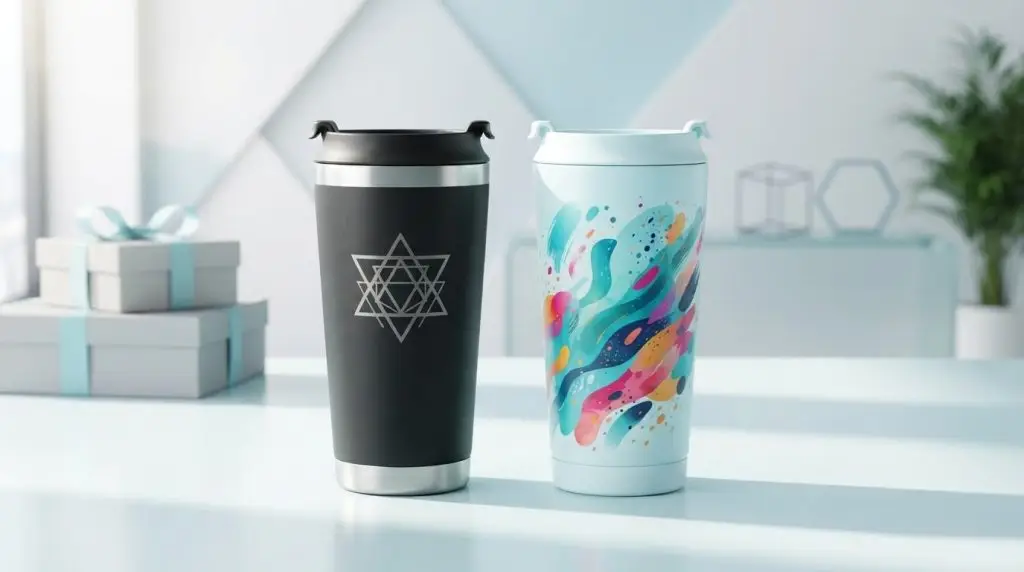
Laser etching or engraving marks drinkware by changing its surface, while printing forms a design on the surface using ink or another image-producing process. That’s the essential distinction behind laser etched drinkware vs printed, but the label alone doesn’t tell you exactly how a logo will look. The material, surface treatment, and production method all shape the finished mark.
The terminology can be confusing. In promotional products, “laser etched” is often used as a broad label for laser-marked designs. Technically, engraving usually removes material to create a deeper mark, while etching commonly refers to a shallower surface change. Sellers and manufacturers may use these terms differently, so focus on the process and the result rather than the wording alone.
A laser directs energy at a selected area to mark the drinkware surface. Depending on the material and finish, it may remove a surface layer or alter the surface itself. On a coated product, for example, the process may expose or change the layer beneath the coating. As a result, etched tumblers don’t all have the same color, texture, or contrast.
For a technical overview of the broader process, see Laser Engraving. The practical takeaway is to consider what “etched” means for the specific drinkware design. The visible effect depends on the product’s material and surface treatment, as well as the laser process.
Printed drinkware uses ink or another image-forming process to place a design on a product surface. “Printing” describes a category, not one universal technique. Processes differ in how they transfer or cure the image, how much detail they reproduce, and which surfaces they suit. A method used on one material may not work for another.
Product shape matters, too. A flat area, curved wall, narrow profile, or textured finish can affect where and how a design is applied. Printing can support multicolor artwork, but the achievable appearance depends on the specific method and product. Treat the artwork and drinkware as a pair: a logo that looks crisp on one surface may need adapting for another.
Here’s a simple way to keep the distinction clear:
Neither label guarantees a particular finish or level of detail. For branded drinkware, the useful question isn’t simply “etched or printed?” It’s how the chosen process will reproduce your artwork on that product’s material and surface. That makes the comparisons ahead more useful.
The design on your screen is only a starting point. On drinkware, the same logo can look different depending on how it’s produced, how large it appears, and the product’s shape and finish. Comparing laser etched drinkware vs printed means looking beyond the method’s name to how it handles your artwork on the intended surface.
The surface and the artwork work together to determine the final look. Use this comparison as a planning guide, not a promise of a specific finish. Actual results vary by product material, finish, and decoration process.
| Factor | Laser marking | Printing |
|---|---|---|
| Visual effect | Forms a mark by changing the product surface; its tone, contrast, and texture depend on the material and finish. | Creates an image on the surface; color and appearance depend on the printing process and product. |
| Artwork suitability | Often a natural fit for a simple logo or mark that remains legible without multiple colors. | Can suit artwork that relies on color, such as a multicolor illustration, depending on the method and surface. |
| Surface compatibility | Depends on how the laser process interacts with the drinkware material and any coating. | Depends on whether the chosen process can reproduce the design on the material, shape, and finish. |
| Planning | Consider which details will remain clear at the final decoration size. | Consider color requirements, placement, and how the design fits the product’s available area. |
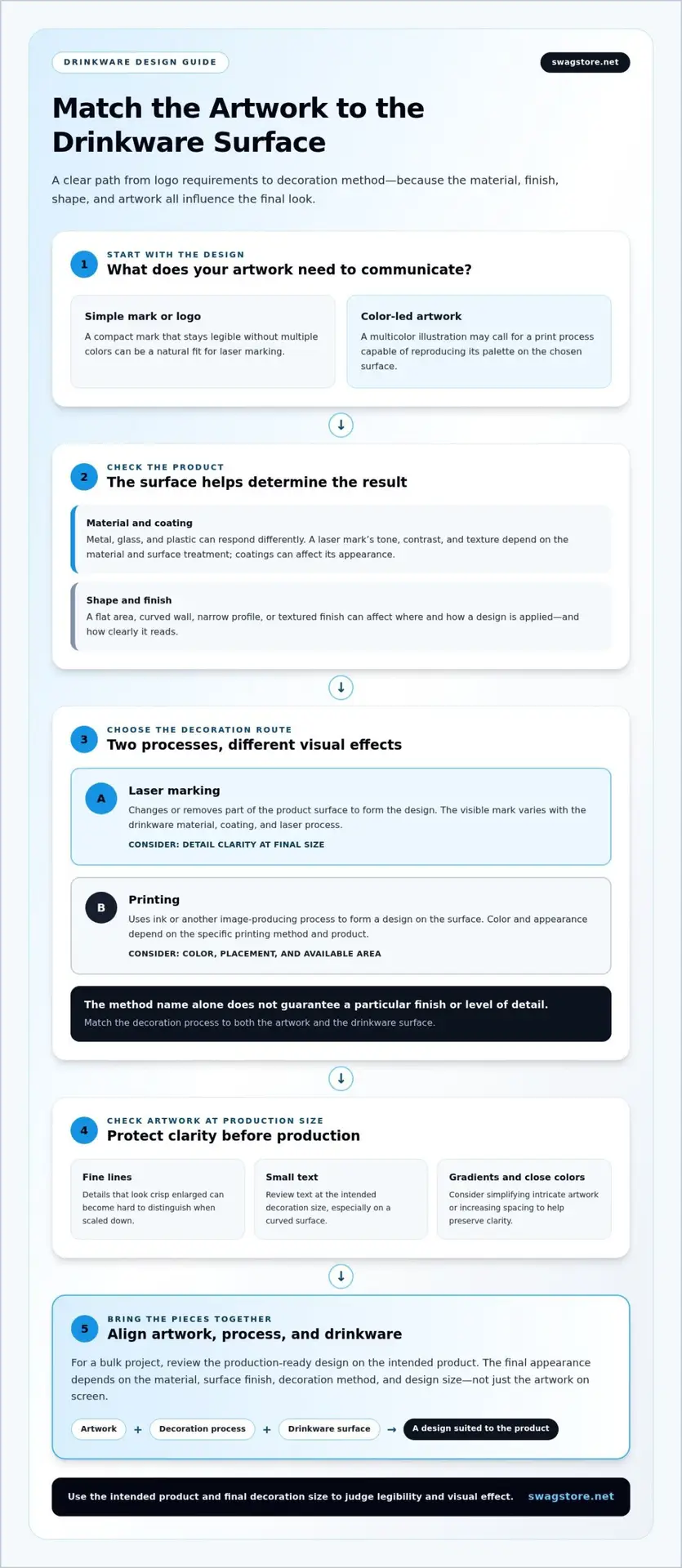
Start with the details that define your identity. A compact, one-color mark may translate cleanly to a laser-marked treatment, while a colorful illustration may call for a print process capable of reproducing its palette. Fine lines and small text need particular attention: details that look crisp when enlarged can become difficult to distinguish when scaled down or placed on a curved surface.
Gradients and closely spaced colors also affect artwork suitability. Simplifying an intricate logo, increasing spacing, or removing very small text can help preserve clarity on some products. Review the production-ready file at its intended decoration size, not just on a large monitor. This preview can show whether the design needs adapting before production begins.
Metal drinkware, glass, and plastic can respond differently to the same decoration process. A laser’s visible mark depends on the material and surface treatment; printing also needs to suit the product’s surface and shape. Coatings can influence how a laser mark appears, while a curved or textured area may affect how a printed image sits or reads. There’s no universal color or contrast outcome across all products.
For a bulk project, align the artwork, process, and drinkware before settling on a final design. If laser engraving fits your direction, explore bulk branded drinkware options as part of your campaign planning.
The best decoration method depends on what the design needs to communicate. A restrained logo and a vivid, illustrative graphic have different priorities, so compare the finished look, color requirements, artwork complexity, and compatibility with the specific drinkware. In the laser etched drinkware vs printed decision, neither method is automatically more premium or more durable. The result depends on the product and how it’s decorated.
Use this table to weigh the practical trade-offs. These are general tendencies, not guarantees: the exact outcome depends on the drinkware material, surface treatment, and decoration process.
| Consideration | Laser etched or engraved | Printed |
|---|---|---|
| Visual character | Can suit a subtle, surface-integrated mark; the visible effect varies by product. | Can make color a prominent part of the design; the appearance depends on the print process. |
| Color | Typically chosen for a mark formed in the surface rather than a multicolor image. | May suit color-led artwork, although color range and reproduction vary by process. |
| Artwork complexity | A simple logo can be easier to assess for clarity at the intended size. | May accommodate more illustrative artwork, depending on detail, method, and surface. |
| Product compatibility | Depends on how the laser interacts with the drinkware material and finish. | Depends on how the selected process works with the material, shape, and finish. |
| Care and longevity | Don’t assume the marking is immune to wear; product guidance still matters. | Don’t assume every printed design wears the same way; the product and process matter. |
Consider laser marking when the brief calls for a restrained branded appearance that feels integrated with the drinkware surface. A straightforward symbol or wordmark is often easier to assess than a highly detailed image: you can focus on its size, spacing, and legibility. The material and finish still shape the visible mark, so judge the treatment against the actual product rather than assuming every metal tumbler will look alike.
Printing may be a better direction if the campaign relies on visible color or an illustration whose impact comes from its palette. A colorful event graphic, for example, may need a print process capable of representing its key visual elements. Methods differ, though. Color range and fine-detail reproduction aren’t identical across all processes, and the drinkware’s shape and surface can affect the outcome.
Care matters whichever direction you choose. Follow the drinkware maker’s care instructions for the specific product; don’t infer cleaning limits or expected lifespan from the decoration label alone. A premium feel comes from a considered match between design, drinkware, and finish, not simply from choosing one method over another.
Make the choice from the campaign outward. First decide what the drinkware should do for the recipient and your brand. Then use that goal to guide the product, artwork, and decoration method. This keeps a preference such as “we like a subtle look” in perspective alongside must-haves such as brand colors or a legible logo.
Start with the impression you want to leave. For employee recognition, an understated treatment may support a polished, personal feel. A client gift could call for a more expressive brand moment, while event merchandise may benefit from artwork that stands out at a glance. These are creative directions, not fixed rules. Let recipient expectations shape the brief, then make sure the product and decoration support the intended look.
Bring together the logo file, brand colors, placement preferences, and drinkware concept before comparing production options. Mark the details that cannot be lost at final size, and identify which elements could be simplified if needed. Then assess the proposed design against the product’s actual surface and finish. For a bulk project, plan your branded drinkware project around the complete brief, not the decoration method alone.
With the essentials in place, “laser etched drinkware vs printed” becomes a practical design decision: choose the process that best supports the campaign’s must-haves on your selected drinkware.
Once you’ve settled on a decoration direction, bring the decision into a coordinated project brief. Branded drinkware can mark an employee milestone, welcome a client, or become part of a wider merchandise program. The right concept connects the recipient, the occasion, and your brand identity, so the item feels considered rather than selected in isolation.
SwagStore.NET provides bulk corporate gifting with branded YETI and Stanley tumblers and laser engraving on premium products. The choice between laser etched drinkware vs printed is one part of planning; a clear audience, artwork, and product brief helps align the order with your campaign.
Begin with the purpose of the gift and the people receiving it. An employee recognition order may call for a personal, understated look; a client gift might carry a more visible brand presence. Set the visual direction, then keep the logo treatment consistent with your requirements, including which elements must stay legible and which details can be adapted.
Bulk customization makes it possible to plan a coordinated order for a team, client group, or gifting initiative. Think through how drinkware fits with the rest of the campaign, especially if it will sit alongside other branded items. For a wider view of how merchandise can support brand-building, explore strategic promotional items.
Turn your decision into a concise brief that gives the project a clear starting point. Include the intended audience and gifting purpose, preferred drinkware category, decoration direction, logo assets, brand colors, placement preferences, and order context. Note must-have design details separately from preferences. This keeps creative choices focused and gives your bulk merchandise project a coherent foundation.
SwagStore.NET provides bulk branded merchandise and corporate gifting, with laser-engraved tumblers as one option for employee recognition, client gifts, or a broader branded merchandise program. Explore branded drinkware with SwagStore.NET to plan your next bulk order.
Make the creative decision work for the campaign. Picture the recipient using the drinkware, then define the impression you want the design to leave. A clear brief connects that moment to your brand identity and keeps the project focused from concept through bulk order.
The question of laser etched drinkware vs printed is most useful when it leads to a confident choice for your artwork, product, and audience. Keep the essentials close: your logo assets, visual priorities, intended recipients, and the role drinkware will play in the campaign. From there, build a branded merchandise plan that feels cohesive rather than improvised.
Ready to shape your idea into a corporate gifting or merchandise project? Explore branded drinkware for your next campaign and take the next step with a clear direction.
Neither method is universally better; the right choice depends on your design priorities and drinkware. For a one-color company mark on a team gift, laser marking may suit the brief. For an event design built around several brand colors, a compatible print process may be a better match. Compare the requirements that matter most, then consider the specific product and its intended use.
Traditional laser engraving doesn’t reproduce a full-color logo like a color print. Some specialized laser processes can create colored marks on certain materials, but that isn’t the same as reproducing every color, gradient, or image detail in a full-color file. If exact brand colors are essential, treat color reproduction as a key requirement and select a decoration approach and drinkware combination suited to it.
Laser engraving forms a mark by changing the surface, rather than adding a conventional ink layer that can peel away. That doesn’t make every engraved mark immune to damage or wear. The material, marking process, and product use all matter. For drinkware that will see frequent handling, follow the maker’s care instructions and don’t assume performance based on the word “engraved” alone.
It depends on the drinkware and the printing process, so there isn’t one dishwasher rule for all printed items. Check the care instructions for the exact product before cleaning it. If the item is a gift or giveaway, sharing those instructions with recipients can help them care for it properly. Don’t assume that a printed design is dishwasher safe simply because the drinkware itself appears sturdy.
It can reproduce some fine artwork, but very small text or tightly packed details may not remain easy to read at the final size. A compact logo with thin strokes, for example, may need more spacing or simplified lettering. Review the artwork at the intended dimensions, and prioritize the words or visual elements people must recognize. The suitable level of detail depends on the product and marking process.
Prepare your current logo file, brand color references, preferred placement, and a note about any elements that must stay intact. Vector artwork is useful for scaling cleanly; a high-resolution raster file may also work depending on production needs. Include a simple mockup or placement reference if you have one, and identify small text or fine details that should remain legible on the finished item.
Yes. SwagStore.NET specializes in bulk custom-branded merchandise and corporate gifting, including branded YETI and Stanley tumblers with professional laser engraving. Companies can plan drinkware as part of employee recognition, client gifting, or a wider merchandise order. A concise brief with the audience, order context, logo assets, and intended look gives a bulk customization project a clear foundation.