

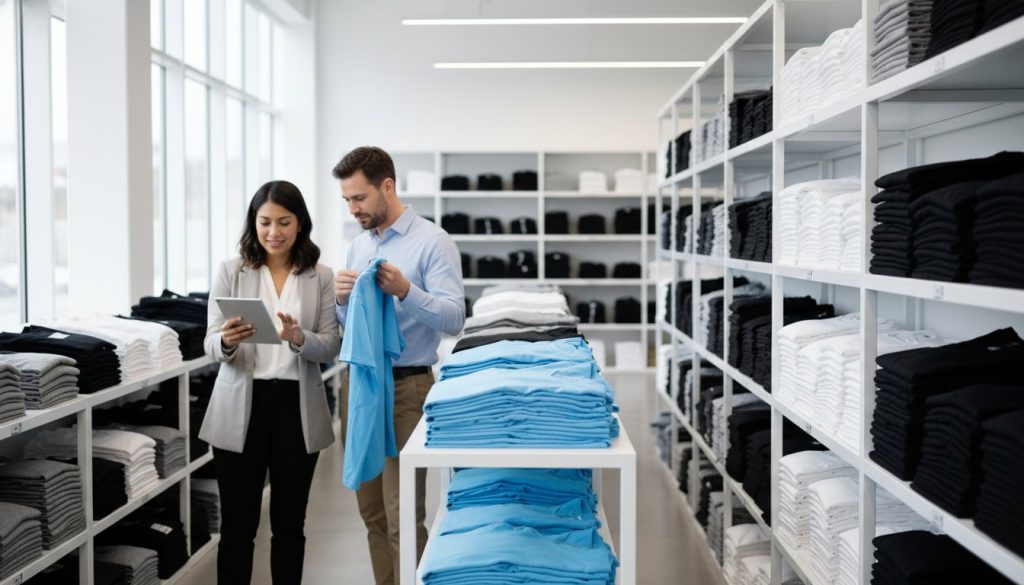
What if your “swag closet” is actually a silent drain on your marketing budget? You’ve invested in the best t-shirts for screen printing bulk to ensure your brand stands out, but poor storage can turn those premium assets into a wrinkled, dusty mess. It’s a common frustration that many high-growth teams face. We know the stress of digging through unlabelled boxes minutes before a major event only to find the sizes you need are missing or the prints are damaged by moisture. Your merchandise represents your brand’s identity, and it deserves better than a cramped corner in the breakroom.
We believe that organizing your inventory is the ultimate form of brand care. In this guide, we’ll show you exactly how to preserve your custom apparel so it stays as vibrant as the day it arrived. You’ll learn professional techniques for maximizing limited office space and protecting fabric from environmental decay. We’re also diving into the latest 2026 inventory trends, including digital tracking systems and compliance with new textile recovery regulations. Let’s transform your storage from a chaotic pile into a streamlined asset center that’s always ready for your next big launch.
Your marketing budget isn’t just a spreadsheet. It’s a collection of tangible brand experiences. When you invest in the best t-shirts for screen printing bulk, you’re making a commitment to your brand’s physical presence. Even the highest quality garments are fragile if they’re left to rot in a neglected corner. Improper storage leads to “inventory decay,” where hidden costs like ink cracking, fabric yellowing, and permanent creasing eat away at your ROI. We’ve seen it happen too often: a box of premium shirts forgotten in a humid storage unit becomes a total financial loss.
View your apparel through the lens of the Swag Life Cycle. This journey begins at delivery and ends when a happy recipient wears your logo with pride. The storage phase is often the longest part of this cycle. If this stage is neglected, the transition to distribution becomes a chaotic nightmare. An organized system doesn’t just save fabric; it reduces the intense stress of high-pressure corporate events. Imagine being able to find a size Large in five seconds instead of digging through a mountain of unlabelled cardboard boxes.
First impressions matter. Handing a potential client a wrinkled, musty shirt at a trade show sends a message of carelessness. It suggests your brand doesn’t value quality. On the flip side, a crisp, well-preserved garment reflects professional precision. This effect extends to your internal team too. A clean, organized swag closet boosts employee morale and turns promotional items into gifts they actually want to wear. High-quality merchandise requires high-quality care to maintain its status as a brand asset.
Managing 1,000 shirts is a different beast than organizing a small retail shelf. Standard folding methods often collapse under the weight of high-volume stacks. In a professional setting, you need vertical accessibility and strict environmental control. Without proper textile conservation, the pressure of heavy boxes can cause plastisol prints to fuse together or become brittle. We prioritize systems that ensure immediate accessibility. Your team shouldn’t struggle to fulfill last-minute corporate gifting needs. Success depends on having your best t-shirts for screen printing bulk ready for action at a moment’s notice.
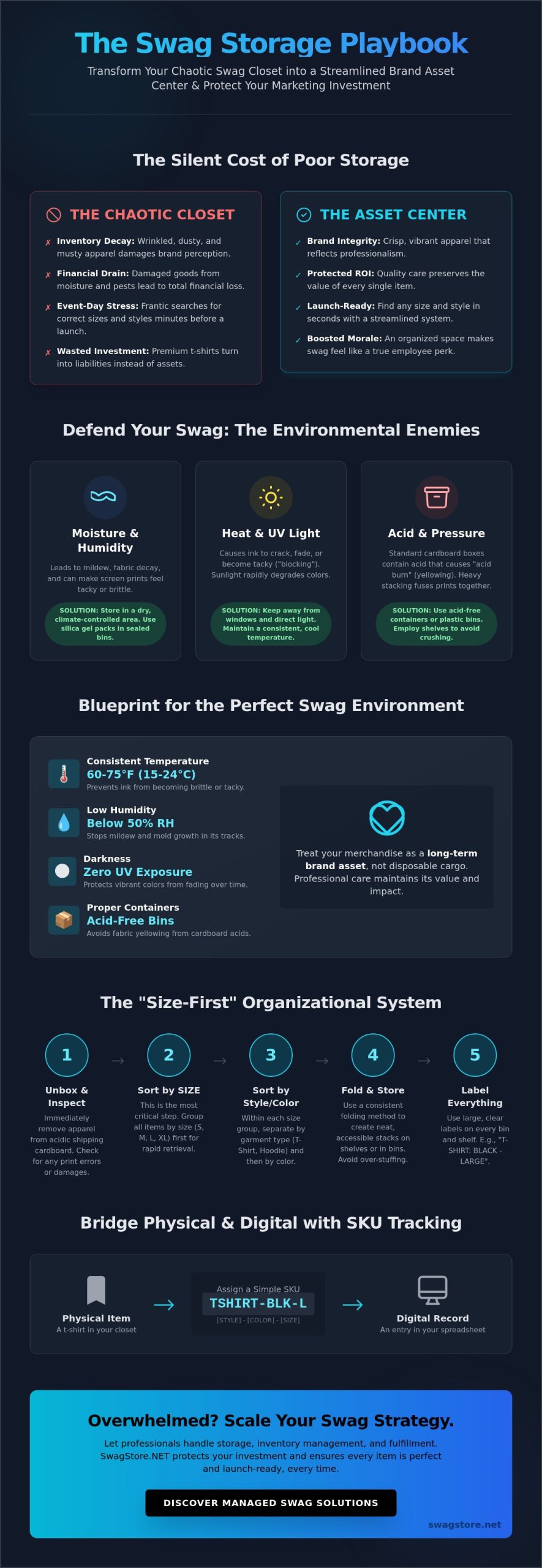
Even when you source the best t-shirts for screen printing bulk, your work isn’t finished once the delivery truck pulls away. Custom apparel faces three relentless enemies: moisture, heat, and UV light. These environmental factors work together to degrade both the fabric and the print quality over time. If you ignore the climate of your storage space, you’re essentially gambling with your marketing budget. Professional inventory management starts with understanding the chemistry of your garments.
Plastisol ink, the industry standard for high-durability prints, is essentially a suspension of PVC particles in a plasticizer. It’s incredibly resilient during daily wear but sensitive to long-term environmental shifts. In extreme heat, the ink can become tacky, causing shirts to stick together in a process called “blocking.” Conversely, extreme cold or fluctuating humidity can make the ink brittle, leading to the dreaded premature cracking. To avoid these issues, we recommend following expert storage guidelines that treat your merchandise as a long-term asset rather than disposable cargo.
One often overlooked risk is the shipping box itself. While convenient, standard cardboard contains acids that can migrate into natural fibers over years of contact. This often results in yellowing or “acid burn,” which is particularly devastating on white or light-colored garments. If you’re planning to hold inventory for more than a few months, it’s time to move beyond the delivery box and into a more stable environment.
The sweet spot for your swag closet is a consistent range between 60-75°F. Avoid damp basements or uninsulated storage units at all costs. High humidity encourages mildew, which is nearly impossible to remove from cotton fibers without damaging the print. We suggest using silica gel packets in every storage container to manage micro-climates. These small additions act as a safety net against seasonal humidity spikes, ensuring your custom screen printed t-shirts remain in pristine, shelf-ready condition.
UV light is a silent thief of brand vibrancy. It breaks down chemical bonds in fabric dyes, leading to uneven fading that’s most noticeable on navy, black, or red garments. Even the fluorescent lights in a standard office can cause “light strike” fading if shirts are left exposed on open shelving for months. Opaque storage containers are far superior to clear plastic bins because they provide a total light barrier. By keeping your inventory in the dark, you ensure the colors remain as punchy and impactful as the day they were printed. Success with the best t-shirts for screen printing bulk depends on this level of detail.
Most corporate storage starts as a temporary fix that quickly evolves into a permanent headache. We’ve all walked into a “swag graveyard” where leftover event gear is piled high in unlabelled boxes. To truly protect your investment in the best t-shirts for screen printing bulk, you need a system that prioritizes visibility and speed. A professional swag closet isn’t just about tidiness; it’s about operational efficiency. When your team can find exactly what they need in seconds, you eliminate the stress of last-minute event preparation.
We recommend adopting the Vertical Fold, also known as the “File Fold” method. Instead of stacking shirts on top of each other, fold them into uniform rectangles and stand them upright in rows. This allows you to see every single item at a glance. You’ll never have to dig to the bottom of a stack again, which prevents the rest of your inventory from becoming a wrinkled mess. This method works perfectly for the best t-shirts for screen printing bulk because it maintains the integrity of the screen print while maximizing every inch of shelf space.
Your organizational logic should follow your distribution style. For most marketing teams, a “Size-First” approach is best for events. This means grouping all Mediums together regardless of design, allowing for rapid-fire distribution during a busy trade show. If you manage multiple distinct brands or departments, a “Design-First” logic ensures that your brand identities never get crossed in the chaos of a large-scale rollout.
This level of categorization is particularly helpful when your inventory includes diverse creative styles. For example, if you explore Jazz-themed T-Shirts for a niche marketing campaign, a design-first strategy ensures that specific artistic themes are preserved and easily accessible.
Choosing the right hardware depends on your turnover rate. Use the table below to determine which method fits your current workflow.
| Method | Best For | Pros | Cons |
|---|---|---|---|
| Open Shelving | High-turnover event swag | Instant visibility and access | Dust exposure; prone to tipping |
| Closed Bins | Long-term employee stock | Total protection; stackable | Requires strict labeling |
| Garment Racks | Premium embroidered polos | Zero wrinkles; high-end feel | High space requirement |
A bin without a label is just a mystery box. Every container and shelf space must be clearly marked with the Design Name, Size, Color, and the Date of the last restock. We love using a color-coding system for size identification. For example, use red labels for XL, blue for Large, and green for Medium. This allows your team to identify stock levels from across the room without ever opening a lid. Ensure your labels are placed on the front and side of every bin so they remain visible regardless of how they’re stacked.
Data is the backbone of a successful swag strategy. You’ve curated the best t-shirts for screen printing bulk, but without a tracking system, those assets are just fabric taking up space. We believe that every piece of corporate branded apparel should be accounted for in real-time. A digital record that doesn’t match your physical shelf count isn’t just a nuisance; it’s a budget leak. If you don’t know what you have, you can’t measure the impact of your distribution.
Setting up a simple SKU (Stock Keeping Unit) system is your first step. Don’t overcomplicate it. Use a logical string like [Design]-[Color]-[Size]. For example, a black “Launch 2026” shirt in Large becomes LNC26-BLK-LG. This clarity allows anyone on your team to update the inventory logs without confusion. We also advocate for the First-In, First-Out (FIFO) method. It ensures your oldest inventory is distributed first, preventing fabric from becoming stale or prints from aging unnecessarily on the shelf.
Establish Par Levels to stay ahead of demand. These are minimum stock quantities that trigger an automatic reorder. If you know a major recruitment fair requires 200 shirts, set your Par Level at 250. This gives you a safety buffer and prevents the panic of empty shelves. When you hit that limit, it’s time to order more custom screen printed t-shirts to keep your momentum going.
Spreadsheets are a great starting point, but dedicated inventory apps offer more power for growing teams. Modern 2026 workflows often include QR codes printed on bin labels. Staff members can simply scan a code with their phone to “check out” a shirt. This creates an instant digital paper trail. We recommend a “Swag Audit” every quarter. It’s a formal physical count to reconcile your digital data and identify any loss or damage before it impacts an event.
Don’t wait until event morning to start packing. Create “Event Kits” within your storage area. These are pre-packed containers holding a curated mix of sizes based on previous attendance data. Protecting your best t-shirts for screen printing bulk during transit is vital. Use weather-sealed bins rather than open boxes to guard against rain during load-in or coffee spills in the van. Once the event ends, perform a post-event reconciliation. Log exactly what came back and inspect for damage. This loop ensures your inventory remains a reliable, high-performance tool for your brand.
Organizing your own office closet is a great start. But what happens when your brand goes national? Managing hundreds of boxes across multiple satellite offices isn’t just a storage problem. It’s a complex logistics challenge. We believe your time is better spent building your brand’s vision than counting boxes in a cramped room. SwagStore.NET bridges that gap. We offer more than just the best t-shirts for screen printing bulk; we provide a complete, vibrant ecosystem for your merchandise management.
Ordering in large quantities is the smartest way to maximize your marketing budget. Even if your current office has limited shelf space, you shouldn’t miss out on volume discounts. We offer professional warehousing and fulfillment solutions that keep your inventory safe, climate-controlled, and ready for action. This approach is particularly effective for launching custom employee onboarding kits. Instead of your team manually packing boxes in the breakroom, we handle the assembly and shipping for you. It’s a turn-key solution that scales alongside your growth.
High-end brands like Nike and Under Armour require more than just a standard shelf. These garments represent a premium brand image and need careful handling to maintain their retail-grade appeal. Our screen printing process is specifically engineered for long-term durability. We ensure that logos stay sharp and vibrant through hundreds of wash cycles. We understand the complexities of nationwide bulk delivery. Whether you’re shipping to a central headquarters or remote teams across the country, we ensure the best t-shirts for screen printing bulk arrive in perfect, event-ready condition.
Our warehousing and kitting services are designed for large, modern corporate organizations. We take the storage headache away from busy office managers and marketing directors. You don’t need to worry about moisture control, UV exposure, or SKU tracking in a dusty corner. We manage the environment, the data, and the distribution with professional precision. It’s about giving you the freedom to focus on your next big creative campaign while we handle the heavy lifting. Ready to streamline your inventory and elevate your brand’s physical presence? Contact SwagStore.NET for your next bulk order and let’s build something remarkable together.
Your merchandise is more than just fabric; it’s a strategic asset that carries your brand’s reputation. By mastering climate control and implementing vertical storage systems, you’ve taken the first step toward professional inventory management. Success in 2026 requires moving beyond the “swag graveyard” and adopting digital tracking methods that ensure every piece is accounted for. Storing the best t-shirts for screen printing bulk correctly ensures your investment remains as vibrant and impactful as the day it was printed.
We’re ready to help you scale your vision with ease. As specialists in high-volume corporate orders, we provide access to premium brands like Nike, YETI, and Moleskine. Our expert kitting and distribution services remove the logistical burden from your shoulders, allowing your team to focus on creative strategy. It’s time to elevate your organization and protect your brand’s physical touchpoints with precision.
Order Your Next Bulk T-Shirt Shipment from SwagStore.NET today and experience the difference of professional-grade logistics. Let’s build an inspiring brand presence together.
You can store high-quality custom apparel for several years without noticeable degradation if the environment remains stable. While the fabric itself stays sound, the print’s longevity depends on avoiding extreme temperature fluctuations. We recommend distributing your stock within 18 to 24 months to ensure the garments feel fresh and the ink remains perfectly flexible for the wearer.
Avoid long-term storage in original cardboard boxes because they contain acidic compounds that can migrate into the fabric over time. This process often leads to yellowing or “box stains,” especially on white garments. Transition your inventory into opaque, acid-free plastic bins to provide a stable, protective environment that shields your brand assets from chemical damage and dust.
The vertical fold, often called file folding, is the most efficient method for maximizing space and visibility. By standing folded shirts upright like files in a drawer, you can see every size and design at a glance. This prevents the messy digging associated with traditional stacking and ensures the best t-shirts for screen printing bulk remain crisp and wrinkle-free for your next event.
Prevent yellowing by keeping white shirts in a dark, climate-controlled area away from direct UV light and acidic cardboard. Yellowing is often caused by a combination of light exposure and chemical reactions with storage materials. Using opaque plastic bins and adding silica gel packets to manage humidity will preserve the bright, professional look of your white apparel for much longer.
Folding is the superior choice for high-volume storage because it prevents the shoulder stretching and “hanger bumps” that occur over time. While hanging is great for premium embroidered polos, bulk t-shirts are best kept in uniform folds to maximize space. If you choose the best t-shirts for screen printing bulk, folding them vertically ensures they stay in retail-ready condition without taking up excessive rack space.
Implement a clear SKU system that identifies the design, color, and size in a single string. Link these SKUs to a digital inventory log or a tracking app that your team can update via mobile devices. Using QR codes on your storage bins allows for instant check-outs, making it easy to reconcile your physical stock with your digital records during quarterly audits.
We strongly advise against using non-climate-controlled units for your custom apparel. Extreme heat can cause screen printing inks to become sticky and fuse together, while high humidity encourages mildew growth. To protect your brand investment, always choose a storage location that maintains a consistent temperature between 60 and 75°F and stays away from seasonal moisture spikes.
Air them out in a well-ventilated, dry room away from direct sunlight if they develop a musty scent. You can also place activated charcoal bags or cedar blocks inside your storage bins to absorb lingering odors. If the smell persists, it’s likely a sign of moisture issues in your storage area, which requires immediate relocation of your inventory to a drier, more stable environment.